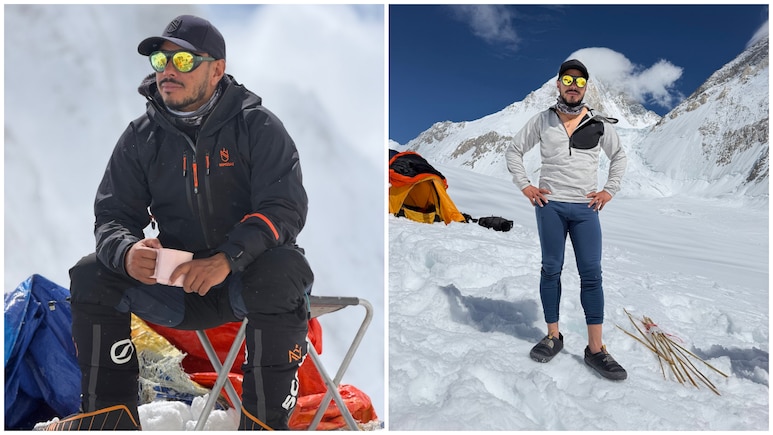
Nepal-born renowed mountaineer and former Royal Marine Nirmal Purja, widely known as "Nimsdai" is among roughly ten climbers feared missing after an avalanche tore through the 8,047-metre Broad Peak in Pakistan on Thursday.
The Alpine Club of Pakistan confirmed the loss of two climbers — Nadhira Al Harthy of Oman and Pur Bahadur Gurung 'Yukta' of Nepal.
Nadhira's body has been recovered and is being transported by helicopter to Skardu. Arrangements for Yukta's transport are underway, said the club.
Also Read | Layoffs Are Rising In Tech, But These Skills Are Helping People Unlock Better Pay
Meanwhile, search and rescue operations are underway for those still missing.
What Happened On Broad Peak
Pakistani mountaineering authorities said all contact with the expedition has been lost since the avalanche struck.
According to The Kathmandu Post, two bodies have since been recovered from the site, though their identities remain unconfirmed, Thaneshwar Guragain, general manager of Seven Summit Treks, said.
Guragain said poor weather had grounded helicopters in the immediate aftermath, forcing rescuers to mount an initial ground search instead.
Some climbers caught in the avalanche were brought back to base camp overland during that operation, he said. A helicopter was expected to take off from Skardu once conditions permitted, Karrar Haidri, senior vice-president of the Alpine Club of Pakistan, told the BBC.
Tracking Device Shows Signs Of Movement
A tracking device carried by Purja has continued to register movement, his business partner said. Mingma Gyabu Sherpa, a member of Nepal's House of Representatives, told Kantipur that the data initially suggested Purja had been swept downhill by the avalanche before his location appeared to shift again.
He cautioned, however, that the signal alone could not confirm Purja's condition.
Who Is Nirmal Purja
Purja shot to global fame in 2019 after scaling all 14 of the world's peaks above 8,000 metres in under seven months, a feat that set a world record, according to the BBC.
Before dedicating himself to mountaineering full-time, he served in the British Army and later the Royal Marines.
His climbing career began almost by chance: during a 2012 trek to Everest Base Camp, he chose to press on to the summit rather than turn back as originally planned.
ALSO READ: Cost Of Bringing Back Bodies From Mount Everest: Why Is It So Expensive To Retrieve Them?
Search Efforts Continue Amid Fading Hope
Guragain noted that Nepali Sherpas have climbed Pakistan's mountains for more than four decades, describing the avalanche as a stark reminder of the risks inherent to high-altitude mountaineering.
The Alpine Club of Pakistan said it remained in constant touch with authorities to mobilise all available resources, and expressed solidarity with the climbers' families.
Guragain added that rescue operations in Pakistan tend to move slower than in Nepal, owing to the military's central role and limited helicopter availability, and admitted that hopes of finding survivors alive were fading fast.
Essential Business Intelligence, Sharp Market Insights, Practical Personal Finance Advice, Daily Fuel, Gold and Silver Prices and Latest Stories — On NDTV Profit.