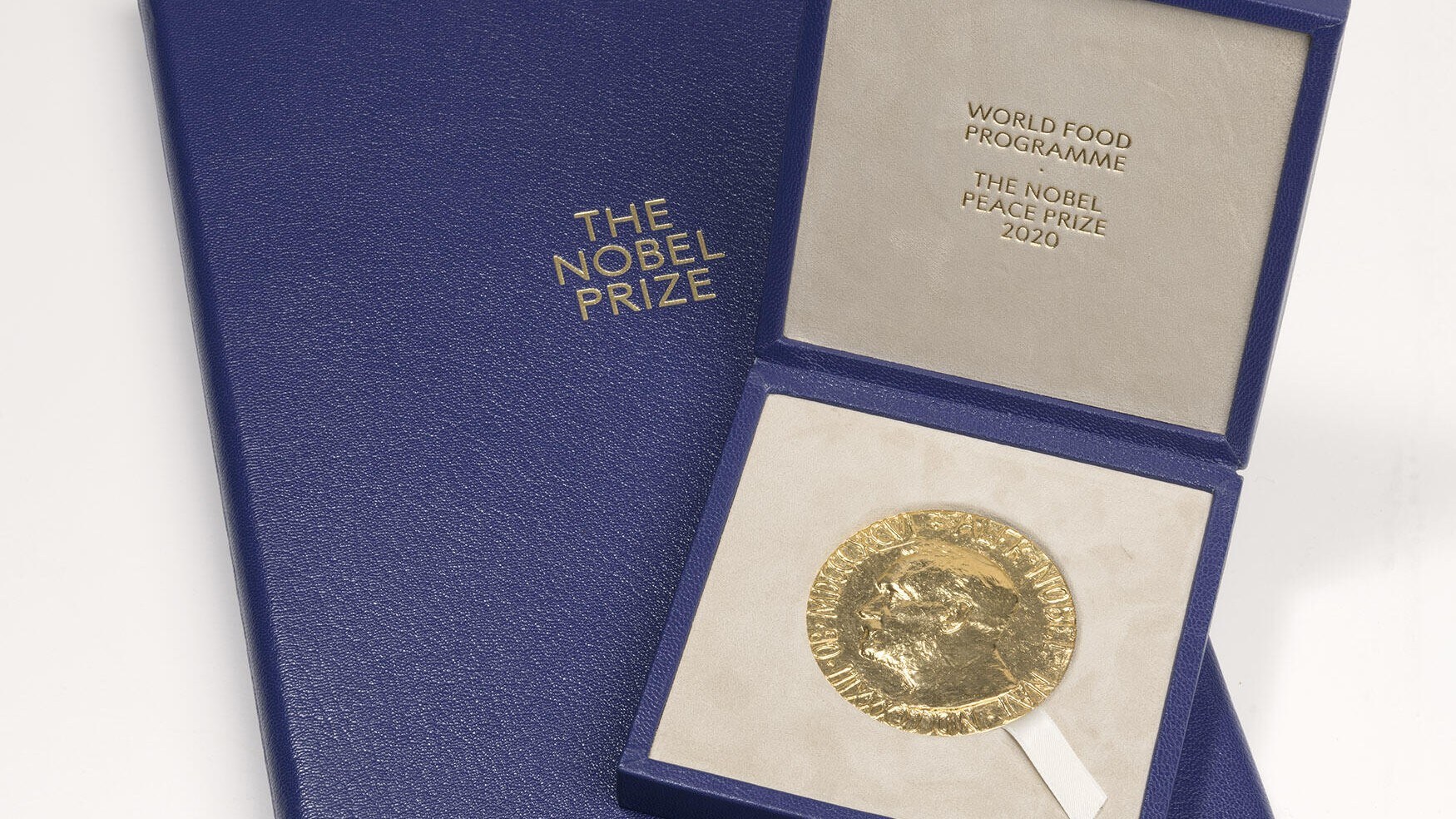
Joel Mokyr, Philippe Aghion and Peter Howitt won the 2025 Nobel Prize in Economics for their work on innovation-driven economic growth, the Royal Swedish Academy of Sciences said on Monday.
Mokyr, a professor at Northwestern University in the US, received half of the 2025 Nobel Prize in Economics. The other half was shared between Aghion, who teaches in Paris, and the London School of Economics, and Howitt, a professor at US-based Brown University.

-
 Indian Markets Turning Corner After Two Tough Years, Says Sandeep Tandon
-
 NDTV Profit Ignite 2026: Experts See Opportunity In Equities, Stay Bullish For Long-Term
-
 Buy Right, Sit Tight Does Not Work for Individual Stocks, Says Dinshaw Irani
-
 'Worst Is Behind': Quant MF Sees Market Bottom, Flags 'Extreme Euphoria' In Midcaps
-
 India's Mutual Fund Industry Could Become A $1 Trillion Opportunity, Say Fund Managers
-
 'Foreign Investors Are Baraatis': Raamdeo Agrawal's Take On LTCG Tax
-
 Stay Invested Through Market Cycles: Raamdeo Agrawal at NDTV Profit Ignite
-
 Ramesh Damani Remains Bullish On India For Next 20-30 Years, Sees Bargains Amid Market Weakness
-
 CAS Came After A Long Consultation Process: SEBI Chairman Tuhin Kanta Pandey AT NDTV PROFIT IGNITE
-
 Aim To Cut FPI Onboarding Time From Mth To Five Days: SEBI Chairman Tuhin Kanta Pandey AT NDTV PROFI
The Nobel committee praised the laureates' work, highlighting that long-term economic growth relies on ongoing innovation and effective policy.
Also Read | Layoffs Are Rising In Tech, But These Skills Are Helping People Unlock Better Pay
"The laureates have taught us that sustained growth cannot be taken for granted. Economic stagnation, not growth, has been the norm for most of human history. Their work shows that we must be aware of, and counteract, threats to continued growth," the prize-awarding body said in a statement.
What Is Innovation-Driven Economic Growth?
According to the committee, the trio's works show how innovation drives sustained economic growth. This phenomenon, the committee noted, has been seen for the first time in history over the past two centuries.
Explaining Mokyr's contributions, the Nobel committee highlighted his use of historical sources to uncover why sustained growth became the norm.
"He demonstrated that if innovations are to succeed one another in a self-generating process, we not only need to know that something works, but we also need to have scientific explanations for why," it noted.
Mokyr's work also emphasises the importance of society being open to new ideas and allowing change.
Aghion and Howitt studied the mechanisms behind sustained growth through their 1992 mathematical model of creative destruction.
“In an article from 1992, they constructed a mathematical model for what is called creative destruction: when a new and better product enters the market, the companies selling the older products lose out," the committee noted.
While this process is creative and introduces progress, it is also destructive as the companies relying on older technologies lose out. Their work focuses on how the cycle of innovation is essential for ongoing prosperity and development.
"The laureates' work shows that economic growth cannot be taken for granted. We must uphold the mechanisms that underlie creative destruction, so that we do not fall back into stagnation," says John Hassler, chair of the committee for the prize in economic sciences.
The prestigious prize, given in Memory of Alfred Nobel, is the last Nobel awarded this year. It carries a prize of 11 million Swedish crowns ($1.2 million).
Essential Business Intelligence, Sharp Market Insights, Practical Personal Finance Advice, Daily Fuel, Gold and Silver Prices and Latest Stories — On NDTV Profit.