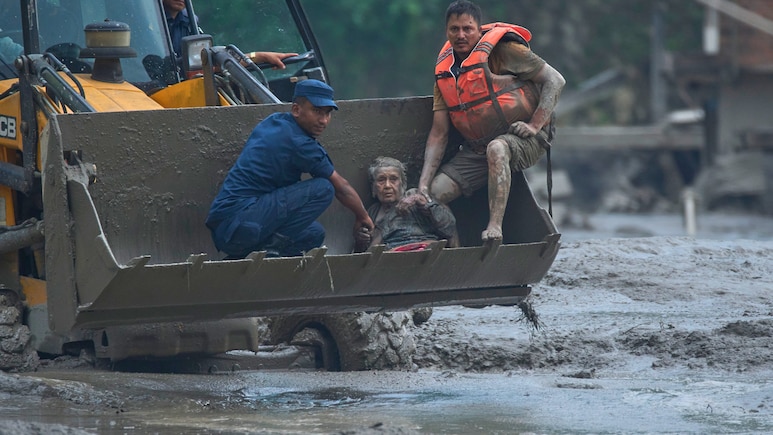
- Dr Brahma Chellaney warned China's Himalayan dam poses risks in this seismically active zone
- Himalayas' seismic activity can trigger devastating floods and downstream damage in Nepal
- Dam failure could impact India’s northeast and Bangladesh with massive water volumes
The deadly flash floods that swept through Nepal after a magnitude 4.4 earthquake along the Tibet-Nepal border have renewed concerns over China's plans for a massive dam in the seismically fragile Himalayas, with strategic affairs expert Dr Brahma Chellaney warning that a major incident at the project could unleash catastrophic volumes of water downstream.
In a post on X, Chellaney, a professor, author and commentator, said the Himalayas are among the world's most seismically active major mountain ranges and have a history of devastating earthquakes.
ALSO READ : Nepal Flash Floods Live: Death Toll Rises To 72, China Steps In For Rescue Operations
Also Read | Layoffs Are Rising In Tech, But These Skills Are Helping People Unlock Better Pay
He said the latest incident demonstrated how even a moderate seismic event in the region could set off a chain of destructive consequences, with flash floods causing damage in parts of Nepal.
The episode, he said, could also renew international scrutiny of China's plans to build the world's largest dam in the Himalayan seismic zone.
The Himalayas are the world's most seismically active major mountain range, with a record of triggering devastating earthquakes. How even a moderate seismic event can trigger massive cascading effects was illustrated today when a magnitude 4.4 quake along the Tibet-Nepal border…
— Dr. Brahma Chellaney (@Chellaney) August 26, 2026
Chellaney described the proposed project, located near the Indo-Tibetan border, as a potential “water bomb”, warning that a major disaster involving the structure could have consequences far beyond Tibet.
ALSO READ : '109 Indians Missing': Flood Wreaks Havoc In Nepal, Death Toll Mounts To Eight
According to his assessment, a catastrophic failure or seismic-triggered incident could send enormous volumes of water downstream, potentially affecting India's northeastern states and causing severe disruption farther downstream in Bangladesh.
The remarks come amid growing concern over the environmental and geological risks associated with large infrastructure projects in the fragile Himalayan region, which is characterised by active tectonic movement, steep terrain and highly vulnerable river systems.
The latest earthquake and subsequent flash floods have once again underscored the need for rigorous assessment of seismic risks and downstream consequences before major dams and other large-scale projects are constructed in the Himalayan belt.
Essential Business Intelligence, Sharp Market Insights, Practical Personal Finance Advice, Daily Fuel, Gold and Silver Prices and Latest Stories — On NDTV Profit.