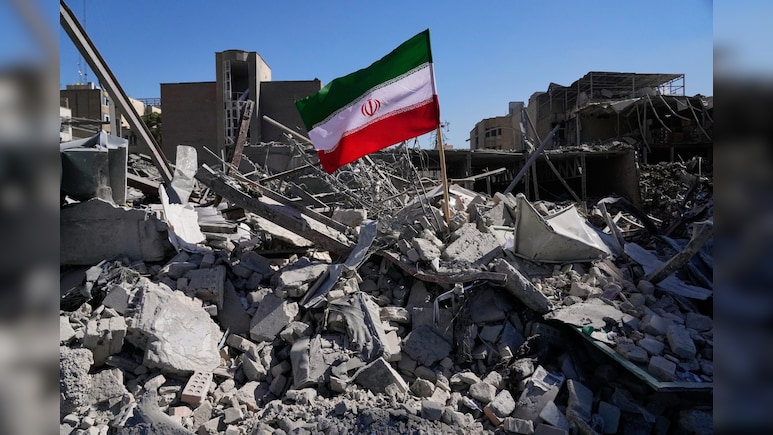
Iran will not agree to a ceasefire with the United States and Israel while the conflict continues, Foreign Minister Abbas Araghchi said, stating that Tehran will keep fighting unless the war ends permanently.
Speaking to NBC News' “Meet the Press,” Araghchi said Iran cannot halt military operations while attacks on its territory continue.
“There needs to be a permanent end to the war,” he said. “Unless we get to that, I think we need to continue fighting for the sake of our people and our security.”
Also Read | Layoffs Are Rising In Tech, But These Skills Are Helping People Unlock Better Pay
The comments come as the United States and Israel continue air strikes on Iranian targets, including an attack on an oil depot on Saturday. The conflict has expanded beyond Iran and Israel, with military activity reported across the Gulf region, as well as Lebanon and Iraq.
Iran has responded with missile strikes targeting Israeli sites and US military installations in countries including Kuwait, Qatar, Saudi Arabia and the United Arab Emirates.
ALSO READ: Iran Warns Conflict May Halt Oil Production, Sales
Araghchi said Iran cannot accept calls for a temporary truce while attacks on its territory persist.
“The US and Israel are killing our people, they are killing girl students, you know, they are attacking hospitals,” he said. He also said previous ceasefire arrangements had already collapsed.
“They shattered the ceasefire reached after the last 12-day war. And now you want to ask for a ceasefire again? This doesn't work like this,” Araghchi said.
US President Donald Trump has demanded what he described as “unconditional surrender” from Iran and said the military campaign would continue for “a little while.” Trump also said Washington was not seeking a negotiated settlement with Tehran at this stage.
Iran has warned that the United States will face consequences for the conflict. Iranian forces have also said they could target American and Israeli ships in the Strait of Hormuz, though the military confirmed the strategic shipping route remains open.
President Masoud Pezeshkian said on Saturday that Iran would avoid attacks on neighbouring Gulf states unless their territory is used for operations against Iran. Araghchi said Iranian strikes had focused on American military facilities in the region.
“We are attacking American bases, American installations, American assets, which are unfortunately located in the soils of our neighbors,” he said.
Global markets are closely monitoring the conflict because of the risk to oil supply from the Gulf. Brent crude has moved beyond $90 per barrel amid concerns that the war could disrupt shipments through the Strait of Hormuz, a key route for global energy trade.
ALSO READ: US-Iran War: White House Says Rising Oil Prices Are 'Short-Term Disruption'
Essential Business Intelligence, Sharp Market Insights, Practical Personal Finance Advice, Daily Fuel, Gold and Silver Prices and Latest Stories — On NDTV Profit.