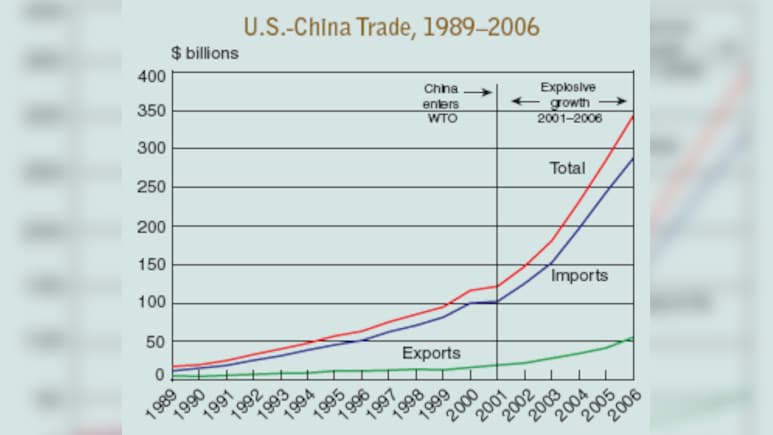
The United States and China have agreed to ease tariffs on roughly $60 billion in goods, a move that could lower trade barriers for exporters on both sides and provide businesses with greater certainty as Washington and Beijing seek to steady an economic relationship strained by years of trade tensions, Reuters reported.
The agreement covers a wide range of products, including US farm goods and medical devices as well as Chinese household appliances, toys and other consumer products.
ALSO READ : Chips, Toys, And Tariffs: Inside The Xi-Trump $30 Billion Trade Accord And AI Safety Hotline
Also Read | Layoffs Are Rising In Tech, But These Skills Are Helping People Unlock Better Pay
Each side has identified about $30 billion worth of non-sensitive products that could qualify for lower tariffs, US Trade Representative Jamieson Greer said, potentially widening access to each other's markets.
The move is expected to improve market access for a significant share of US exports to China and forms part of a broader effort by Washington and Beijing to stabilise their trade relationship.
The tariff reductions were among the key outcomes of the meeting between US President Donald Trump and Chinese President Xi Jinping in Washington last week.
The two sides have also agreed to extend their existing trade truce, giving negotiators additional time to work on unresolved economic and trade issues.
ALSO READ : China-US AI Talks: Beijing Respects US 'Super Intelligence', Seeks Consensus
China is set to cut tariffs on several US agricultural products, including corn, wheat, sorghum, meat, dairy products, vegetable oils and meals. However, soybeans, one of the biggest US agricultural exports to China, have been left out of the tariff-reduction list, Reuters reported.
Beijing will also consider lowering tariffs on other US products, including seafood, timber and wood products, cosmetics and medical devices.
The US, meanwhile, plans to reduce tariffs on a range of Chinese consumer goods. The list includes coffee makers, toasters, tableware, blankets, bed linen, toys, fireworks, artificial flowers, Christmas-tree lights, holiday decorations and children's car seats.
Trade truce extended
China and the US have agreed to extend their trade truce by two months, through January 10. China's Commerce Ministry said the extension would give both sides more time to review existing arrangements and continue talks on trade and investment.
The ministry said the move would also provide businesses with a more stable and predictable policy environment.
As part of the agreement, China will import 10 million metric tonnes of US coal each year in 2027 and 2028, according to the White House. That volume is equivalent to around 2% of China's annual coal imports. Oil and liquefied natural gas are not part of the deal.
The two countries will also set up an agriculture working group to discuss market access and regulatory issues.
AI and financial services
Washington and Beijing have also agreed to keep communication channels open to deal with AI-related incidents. The two sides are expected to hold another round of talks on artificial intelligence by the end of November.
China will also review applications from foreign financial institutions, including US-backed firms, seeking to operate and establish branches in the country.
Make the trade update more conversationalTighten the lists for easier reading
Essential Business Intelligence, Sharp Market Insights, Practical Personal Finance Advice, Daily Fuel, Gold and Silver Prices and Latest Stories — On NDTV Profit.