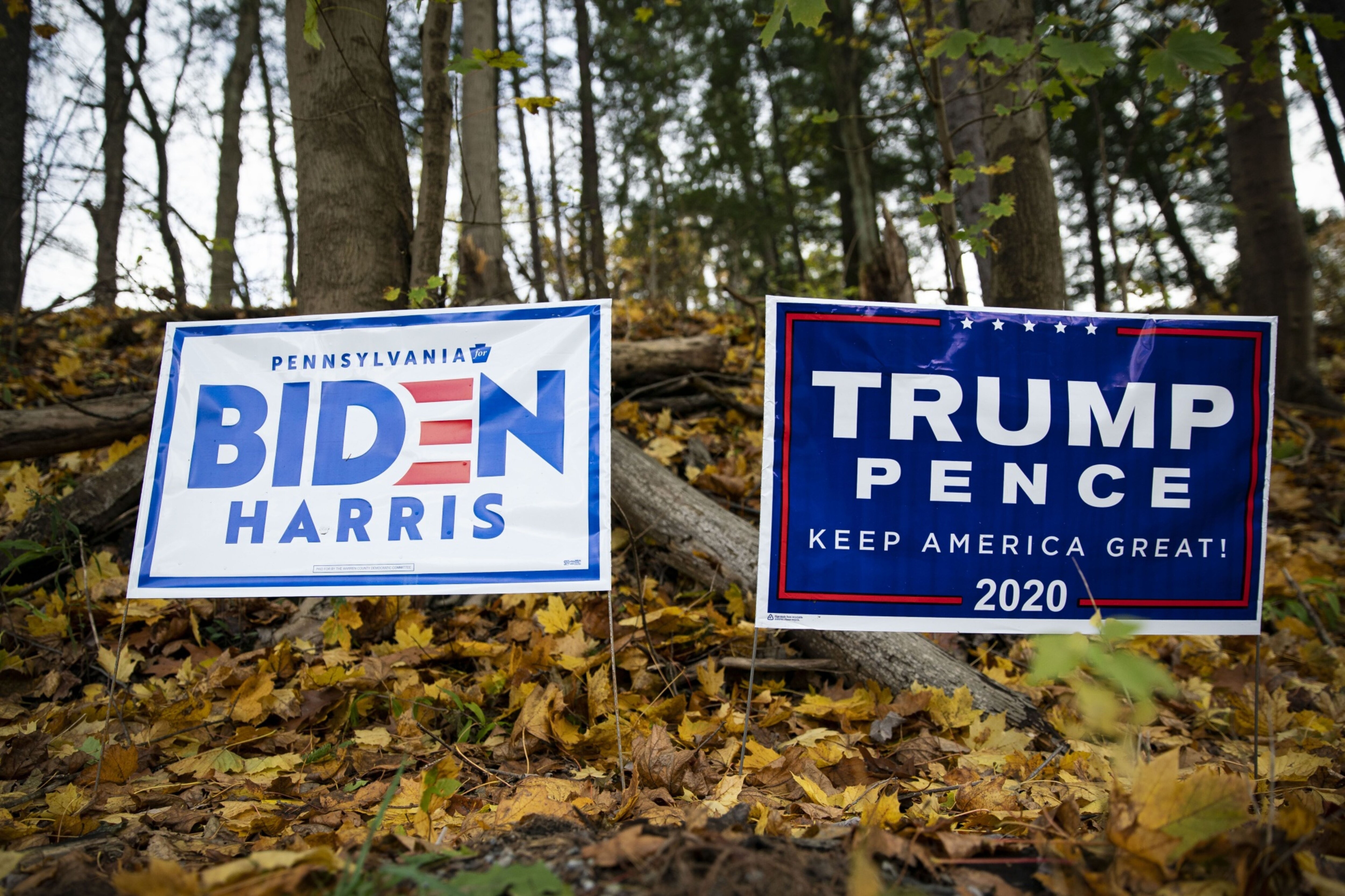
The months-long presidential contest in the United States between Republican incumbent Donald J Trump and his Democratic challenger, Former Vice President Joseph R Biden, will conclude by Wednesday. Or will it?
This Time Is Different
While the last pocket of voting will close in the state of Alaska around 1 a.m. U.S. Eastern Time (11:30 a.m. Nov. 4 in India), the counting of votes is likely to take much longer than past elections. The coronavirus pandemic has prompted nearly one hundred million voters to cast their ballot early—either by mail or early in-person—and not wait for the election day. In some states, a complete count of all votes cast could, possibly, take days. The states where the counting is expected to proceed the slowest are the very states that hold the balance of power—which would carry either Trump or Biden to the finish line.
This has raised the prospect of not just a prolonged wait for a winner, but also legal challenges from one campaign or both, and neither willing to concede the election to the other. Wall Street analysts have called that outcome a “terrifying risk”.
Also Read | Layoffs Are Rising In Tech, But These Skills Are Helping People Unlock Better Pay
The Path
Unlike in India, American elections are not administered by a single federal body, even for the post of the President of the United States. The 50 states in the country have set their own rules on the voting process. This includes, among others, the format of the ballot; the certification required for a voter to be seen as legitimate; the conditions under which early voting shall be permitted; as well as when and how those early votes can be counted.
What does remain the same from past elections is the manner in which either candidate moves toward winning the presidency, securing a majority of 538 electoral votes. 270 is the magic number that Trump and Biden need to reach or cross. To do so, they have to notch up more votes than their rival in each state, to be allocated that state's quota of electoral college votes on a winner-takes-all basis (save two that do so by congressional district).
The Map
Both parties enjoy robust support in large pockets of the country that the other has traditionally found difficult to overcome. The Democratic Party tends to carry the states on the west coast and north-eastern seaboard. The Republican Party's numbers come from a number of states between those coasts, and in the American south.
Here's how that map looked in the early hours of Nov. 9, 2016, when Hillary Clinton conceded the race to Donald Trump as he moved toward the 270-mark:
Here's a look at the current electoral map https://t.co/LkytTPwAtV #ElectionNight pic.twitter.com/TPT0yMoYLm
November 9, 2016On that map are ‘swing' states that moved from Barack Obama in 2008 and 2012 to Trump in 2016. As a result, these battleground states tend to matter more than others, because they are the path to securing the 270 Electoral College votes to win the presidency. This Wednesday, those are the states to keep an eye on.
- In the South: Florida, Georgia, North Carolina, and, to an extent, Texas.
- In the South-West: Arizona, Colorado and Nevada.
- In the Mid-West: Ohio, Michigan, Wisconsin, Minnesota, Iowa.
- In the North-East: Pennsylvania and New Hampshire.
When Trump pulled off his upset win in 2016, he carried many of these states by wafer-thin margins—Florida by a little over 100,000 votes, and Michigan, Wisconsin, and Pennsylvania combined by as less as 80,000 votes.
The Speed Bumps On The Path
Starting 7 p.m. Eastern Time on Tuesday in the U.S. (5:30 a.m. on Wednesday in India), polls will start closing as per the laws in each state and the time zone it is in. Find a comprehensive hour-by-hour guide on what to watch for, here.
Remember, states called in favour of either candidate are projections made by specific cable networks or the Associated Press, not official results.
As the Covid-19 pandemic ravaged many communities in the U.S. over the course of 2020, officials in some states grappled with complex issues of safe voting ballot processing. Rules in some states allow for officials there to keep all those early votes cast before election day to be processed, scanned, counted before election day, while others don't.
Early votes in Florida, Colorado, Arizona, North Carolina, and large counties in Texas will be kept counted, while those in Michigan, Georgia, Iowa, Minnesota, Nevada, Ohio, Pennsylvania, and Wisconsin can only be counted starting Tuesday.
Ballots cast in early voting are expected to favour Biden and the Democrats, while Trump hopes to respond by driving up Republican turnout in his favour on election day.
As a result, in states like Florida, Texas, and North Carolina that will have kept early voting ballots counted, preliminary rounds of results would likely favour the Democratic Party giving the appearance of a ‘Blue Surge', and then move in the direction of the Republican Party.
Conversely, Trump may show a big lead in early rounds of results from Pennsylvania, and Wisconsin, which would narrow and then potentially turn from red to blue if Biden takes the lead, as early ballots get counted over hours or days. Michael Bloomberg-backed Democratic data analytics firm Hawkfish has warned of a ‘Red Mirage' on election night that may show Trump leading heavily in states because the early-ballots have not been counted yet.
Very useful guide to have on hand next Tuesday from @FiveThirtyEight: When To Expect Election Results In Every State https://t.co/2Ke6wyN7s6 pic.twitter.com/g4hAuM46Ph
October 30, 2020Florida was where the 2000 election photo-finish between then-Vice President Al Gore and Texas Governor George W Bush led to a U-turn by TV networks, a withdrawn concession by Gore, and a 37-day legal battle on recounts that ended with the U.S. Supreme Court ruling 5-4 in Bush's favour.
Twenty years later, as President Trump signaled on Sunday, such legal challenges may not be limited to a single state.
Essential Business Intelligence, Sharp Market Insights, Practical Personal Finance Advice, Daily Fuel, Gold and Silver Prices and Latest Stories — On NDTV Profit.