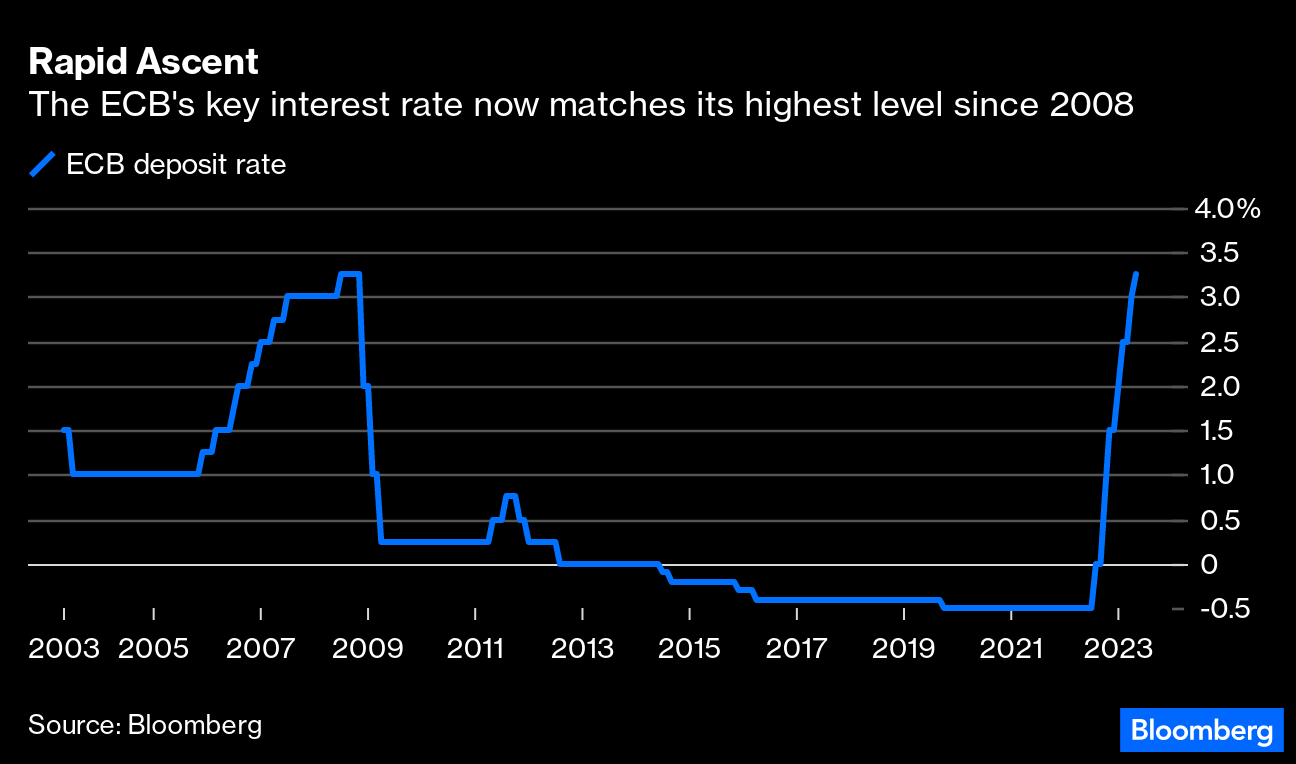
(Bloomberg Opinion) -- It may not be the end, but it is certainly the beginning of the end of the European Central Bank's hiking cycle. The governing council decided to raise its official deposit rate by a modest 25 basis points to 3.25% on Thursday. In a further dovish move, forward guidance was left suitably vague, simply saying that borrowing costs will be “sufficiently restrictive.” Policymakers are smart to relax their tightening stance.
This reduction in scale, following three half-point hikes this year, brings the ECB into line with the Federal Reserve and the Bank of England. The Fed also lifted official rates by 25 basis points on Wednesday, and the BOE is expected to follow suit on May 11. These could prove to be their last upward moves in this cycle, and while the ECB probably isn't done yet, it clearly didn't feel sufficiently confident to continue blazing away with a bigger move today when the Fed is probably pausing for the foreseeable future. “We are not pausing, that is very clear,” ECB President Christine Lagarde said in Thursday's press conference. “We know that we have more ground to cover.”
The governing council also decided to stop reinvesting maturing bonds from the larger of its two quantitative-easing portfolios — in effect doubling the monthly pace of balance sheet reduction to around €30 billion ($33 billion). This was the only moderately hawkish element, though it was widely expected.
Also Read | Layoffs Are Rising In Tech, But These Skills Are Helping People Unlock Better Pay
This more reflective approach is to be welcomed after the past year or so of sharp increases in central bank benchmark interest rates, which are causing problems in the banking sector. While bank failures — or a blowout in the differentials between core and peripheral European sovereign yields — have yet to manifest in the euro area, it makes sense not to test where the frailties lie. With the bulk of the ECB's €1.3 trillion bank liquidity program, Targeted Longer-Term Refinancing Operations, running off next month, the governing council needs to be vigilant that credit continues to be available to keep the economy afloat.
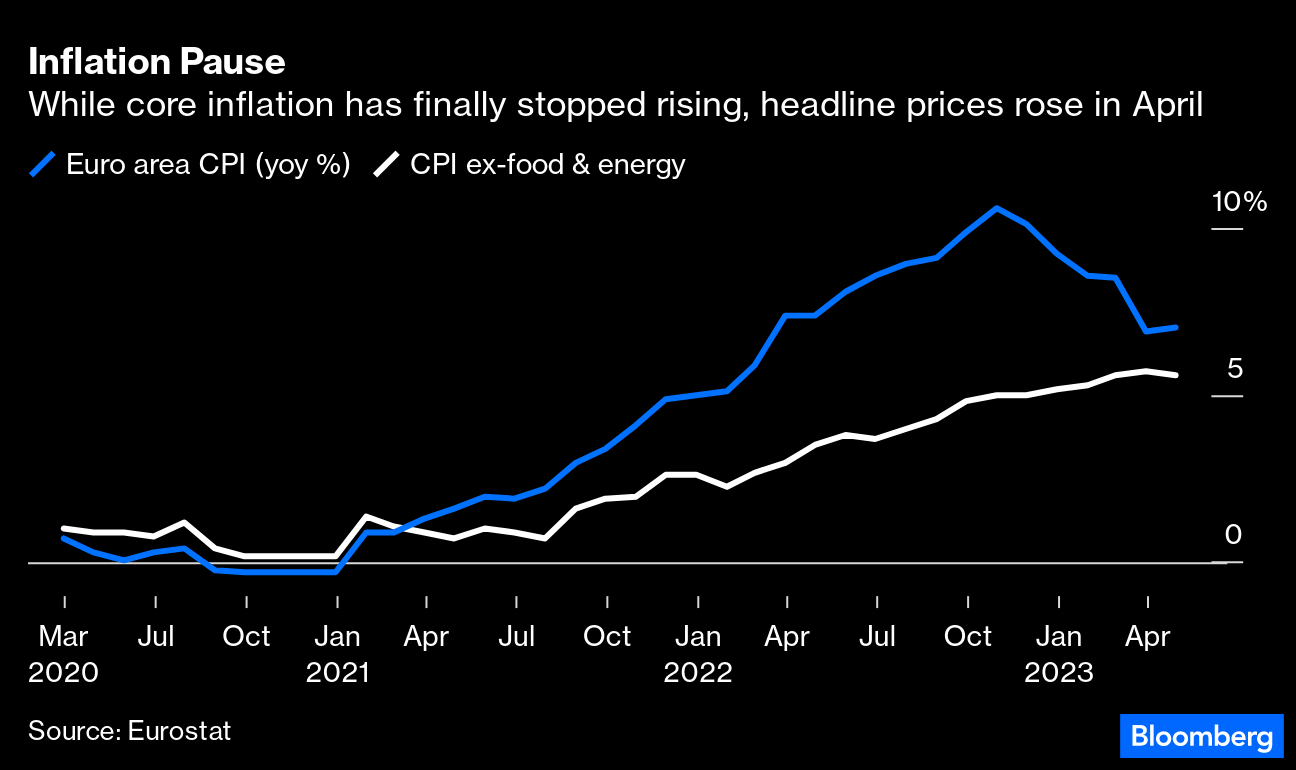
Flatlining growth, slowing bank lending, inflation moderating and global banking wobbles all contributed to the ECB's decision to dial down the volume on monetary tightening. It points to a shift in the balance of risks and therefore how policymakers will respond in future. Euro area first-quarter growth only just crawled into the positive column, expanding by 0.1%. Record core inflation, excluding food and energy costs, saw a downtick to 5.6% in April, even as the headline consumer price measure accelerated to 7%. The battle against inflation is far from won, as the 2% inflation target remains a considerable way off. But there are signs the worst is over. With well-known lags to monetary policy, it is time to assess whether enough has already been done to curb inflation.
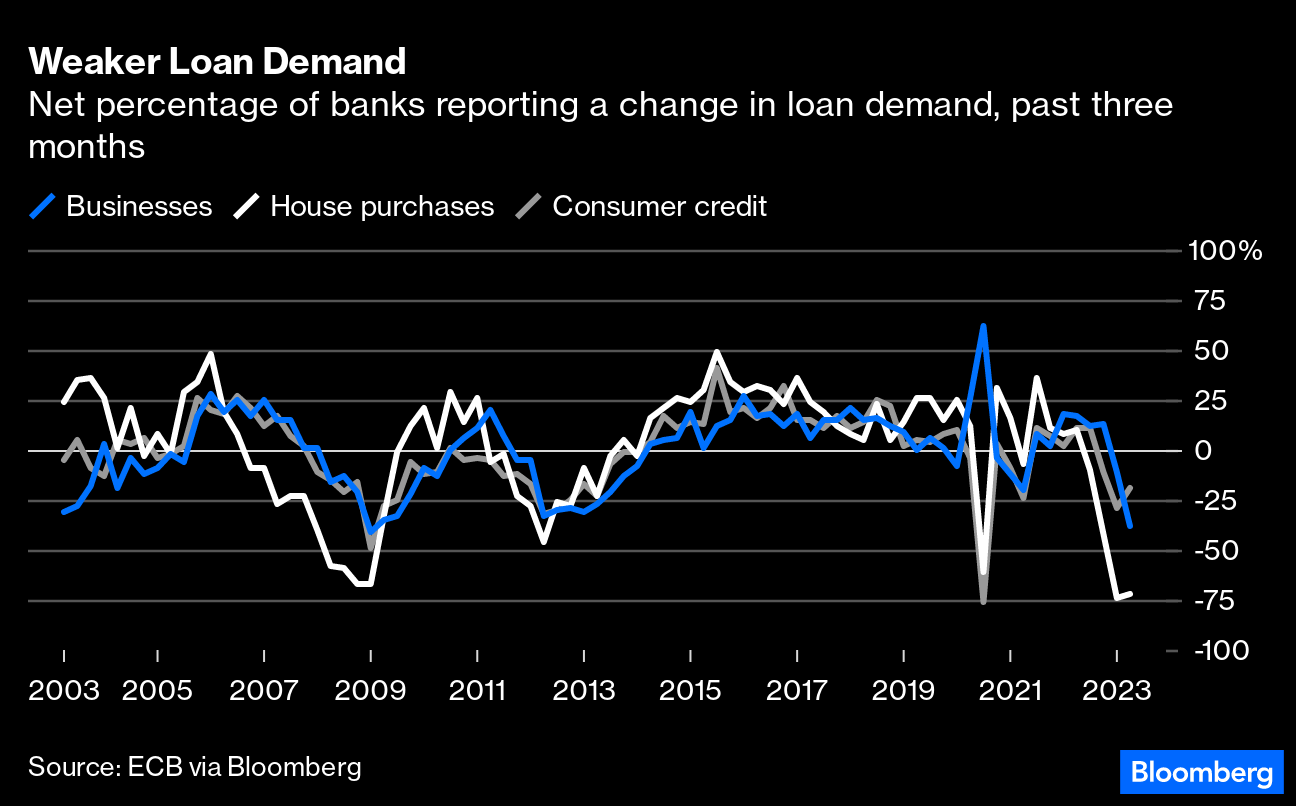
It is the sharp contraction in bank lending that ought to worry the ECB the most as it highlights the risk of overtightening, possibly leading to a credit crunch. Banks reported net declines for mortgages, loans to companies and household consumer credit in the first quarter as they tightened credit standards substantially. March M3 money supply annual growth fell by a record -3.9%, while the narrow money M1 measure is contracting at a 10% pace. Recession may be avoided — but if it isn't, policymakers can't claim that there haven't been plenty of warning signs.
As the blunt tool of interest rates nears its peak then balance sheet reduction will steadily take over. The next ECB meeting on June 15 will see its quarterly economic review when more substantive decisions are usually made. The passive version of quantitative tightening, which commenced in March, has had no discernable impact so far. However, the direction of travel for swifter balance-sheet reduction is clear. With more than €5 trillion of QE bonds, the ECB is still running a balance sheet substantially larger than prior to the pandemic. The first stage of pandemic stimulus withdrawal is slowing down, but the emphasis is changing to where monetary tightening can be safely deployed.
More From Bloomberg Opinion:
- Powell's Narrative Fallacy Revives Talk of a Pivot: John Authers
- Stock Bulls Won't Be Cheering This Fed Pause: Jonathan Levin
- BOE Shows ECB How to Shrink a Balance Sheet: Marcus Ashworth
This column does not necessarily reflect the opinion of the editorial board or Bloomberg LP and its owners.
Marcus Ashworth is a Bloomberg Opinion columnist covering European markets. Previously, he was chief markets strategist for Haitong Securities in London.
More stories like this are available on bloomberg.com/opinion
©2023 Bloomberg L.P.
Essential Business Intelligence, Sharp Market Insights, Practical Personal Finance Advice, Daily Fuel, Gold and Silver Prices and Latest Stories — On NDTV Profit.