South Korea's economy grew faster than expected in the third quarter as an artificial intelligence-fueled chip boom powered exports and investment, but a contraction in consumption underscored an increasingly uneven expansion that may complicate the trajectory for further interest-rate hikes.
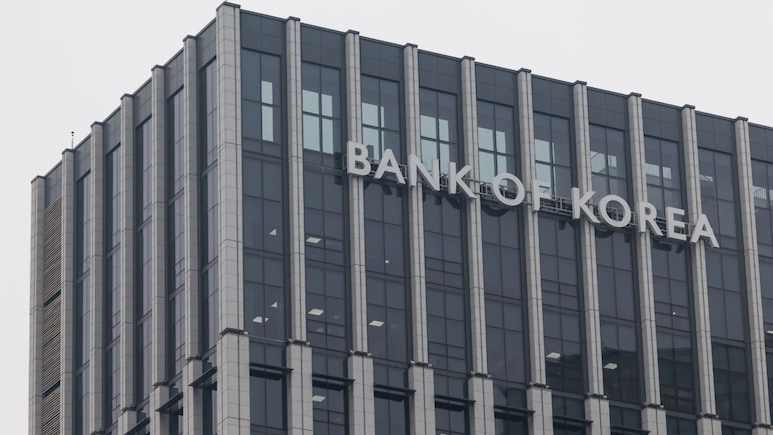
Gross domestic product expanded 1% in the three months ended September from the previous quarter, the Bank of Korea said Tuesday, after growing 0.6% in the April-June period. That exceeded the median estimate of 0.8% in a Bloomberg survey of economists.
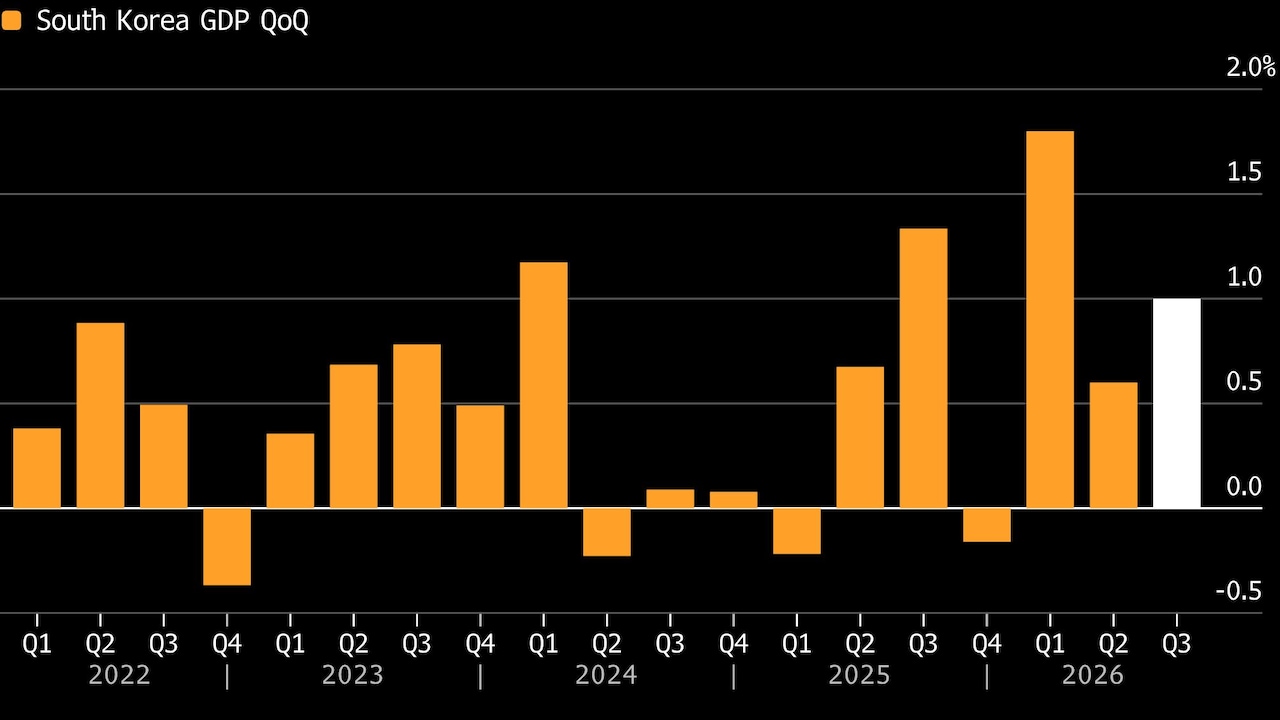
| The economy grew 3.4% from a year earlier, compared with a forecast of 3.1%. This followed 3.7% year-on-year growth in the second quarter. Still, the headline strength masked a widening divergence in the economy. Private consumption fell 0.2% from the previous quarter, reversing a 0.4% increase in the April-June period. Government consumption, by contrast, jumped 1.9% after edging up 0.1%. Also Read | Layoffs Are Rising In Tech, But These Skills Are Helping People Unlock Better Pay ALSO READ | Chip Stocks Push Nasdaq On Course To One-Month High On Anthropic IPO Buzz: Nvidia, Micron Lead Gains "The headline number is strong, but you have to look at the quality of growth," said Jeong-Woo Park, an economist at Nomura Holdings Inc. "Companies and the government are benefiting from and spending the money generated by the semiconductor boom, but households are being left behind." Weak consumption highlights how little of the semiconductor-driven boom has filtered through to households even as exports and investment surge, potentially giving policymakers reason to move more cautiously with further rate increases. Park pointed to tighter financial conditions following interest-rate increases, negative wealth effects from the stock-market correction and persistent weakness in employment as factors weighing on spending. Tuesday's report follows the BOK's decision last week to hold its benchmark interest rate at 3% after consecutive quarter-point increases in July and August. Governor Shin Hyun Song has said policy will remain restrictive until the bank is confident inflation will converge to its 2% target. The BOK said growth for this year and next is expected to be considerably higher than its previous projections. The central bank is set to update its economic projections on Nov. 26.  Exports and investment are expected to maintain strong gains as the semiconductor cycle expands, while improving incomes should gradually broaden the recovery in consumption, the BOK said. The export boom is putting South Korea on track to cross $1 trillion in annual shipments for the first time this year, Shin added. That would make it only the fourth economy after the US, China, and Germany to reach the milestone, according to the Trade Ministry. Still, Park said consumption is likely to remain sluggish in the fourth quarter, arguing that the lack of a broader trickle-down from the chip boom reflects structural forces that are unlikely to be resolved by semiconductor strength alone. Facility investment rose 4.1% after a 0.2% increase in the second quarter, while construction investment gained 0.7%. Before the release, Bloomberg Economics had expected stronger spending on advanced chip production capacity to help drive the expansion. ALSO READ | SpaceX Agrees To $40 Billion Chip-Financing Deal With Apollo The chip boom has been bolstering public finances. The government expects national tax revenue to reach a record 478.6 trillion won this year, up 28% from 2025. For next year, Seoul has proposed a 12.8% increase in government spending, with heavy funding earmarked for AI and chip infrastructure. Persistent inflation complicates the policy outlook. Consumer prices rose 2.9% in September from a year earlier, while core inflation excluding food and energy registered 2.8%. Both remained well above the BOK's target despite easing from August. Before the GDP release, Citigroup Inc. and Nomura had projected quarter-point rate increases in November and February, taking the benchmark to 3.5%. The strength of growth and the extent to which it feeds domestic price pressures will help determine the pace of further tightening. "The pace of further rate hikes could be a source of considerable disagreement at the BOK's November meeting," Park said. |
(This story has not been edited by NDTV staff and is auto-generated from a syndicated feed.)
Essential Business Intelligence, Sharp Market Insights, Practical Personal Finance Advice, Daily Fuel, Gold and Silver Prices and Latest Stories — On NDTV Profit.