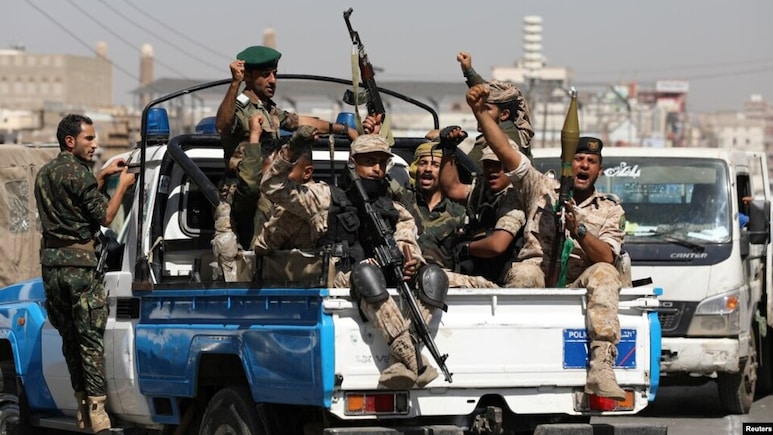
Saudi Arabia is facing growing challenges in defending its territory against Houthi missile and drone attacks despite spending around $83 billion on defence in 2025, equivalent to around 6.5% of its gross domestic product (GDP). The attacks have raised concerns about the effectiveness of its air-defence network and the protection of critical infrastructure.
Tensions escalated after a ceasefire collapsed earlier this year between the Saudi-backed government and the Iran-backed Houthis, who control roughly one-third of Yemen's territory and about 80% of its population, prompting Saudi Arabia to ramp up its military action.
The Houthis have used ballistic missiles, cruise missiles and drones to target strategic locations, highlighting the difficulties faced by even advanced military systems in countering evolving aerial threats.
Also Read | Layoffs Are Rising In Tech, But These Skills Are Helping People Unlock Better Pay
ALSO READ: Deadly Attacks On Saudi Arabia Risk Wider War That Draws In US
Capabilities, Weapons And Strategy
According to war studies expert Nawaf Obaid, the Houthis' missile stockpile is primarily derived from Iranian arms, incorporating elements of Chinese technology, Al Jazeera reported.
The Houthis possess a range of weapons, including the Palestine-2 ballistic missile, reportedly capable of travelling approximately 2,000 km, and the Toufan missile, whose estimated range is between 1,350 km and 1,950 km.
Their strategy involves combining drones, cruise missiles and ballistic missiles in coordinated attacks. By launching weapons with different speeds and flight profiles, they can complicate detection and interception, placing additional pressure on air-defence operators.
This combined-arms approach has also shaped the ground war in Yemen, with Houthi forces bombarding government positions before capturing territory along the Red Sea coast last month.
Air Defence And Interception Challenges
Saudi Arabia operates advanced air-defence systems, including Patriot and Terminal High Altitude Area Defence (THAAD) batteries. However, even multilayered systems cannot guarantee the interception of every incoming projectile.
Repeated attacks also put pressure on interceptor stockpiles, which can be expensive and difficult to replenish quickly. The cost difference between relatively inexpensive drones and sophisticated interceptor missiles presents an additional challenge.
Saudi Arabia's vast territory further complicates defence operations. Protecting airports, oil facilities, military installations and other strategic sites requires extensive resources, while attacks launched from neighbouring conflict zones can leave defenders with limited reaction time.
Strategic And Economic Impact
Houthi attacks targeting critical infrastructure, including King Khalid International Airport in Riyadh, pose risks to national security and economic stability.
The attacks could also undermine Saudi Arabia's Vision 2030 ambitions to attract international investment, expand tourism and establish the kingdom as a global business destination.
The challenge extends beyond military spending, as traditional defence systems must adapt to increasingly decentralised missile and drone warfare. Saudi Arabia may need to reassess how it allocates air-defence resources, particularly against threats originating in Yemen.
Future Challenges And Outlook
The scale of the Houthis' remaining missile and drone stockpiles remains unclear. Their ability to sustain attacks may depend on available weapons and developments in the conflict in Yemen.
ALSO READ: Houthis Escalate Attacks, Plane Hit At Riyadh Airport; Videos Surface Online
Ultimately, Saudi Arabia's challenge lies in balancing territorial coverage, interceptor supplies and the cost of defence against evolving aerial threats. Its ability to adapt will be crucial to protecting critical infrastructure and maintaining regional security.
Essential Business Intelligence, Sharp Market Insights, Practical Personal Finance Advice, Daily Fuel, Gold and Silver Prices and Latest Stories — On NDTV Profit.