Saudi Arabia's East-West pipeline was carrying 5.8 million barrels of crude as of Tuesday morning, Energy Minister Prince Abdulaziz bin Salman said.
It is a sign that the kingdom's Red Sea export route is recovering after a month-long outage. Reuters reported the minister's statement on Tuesday.
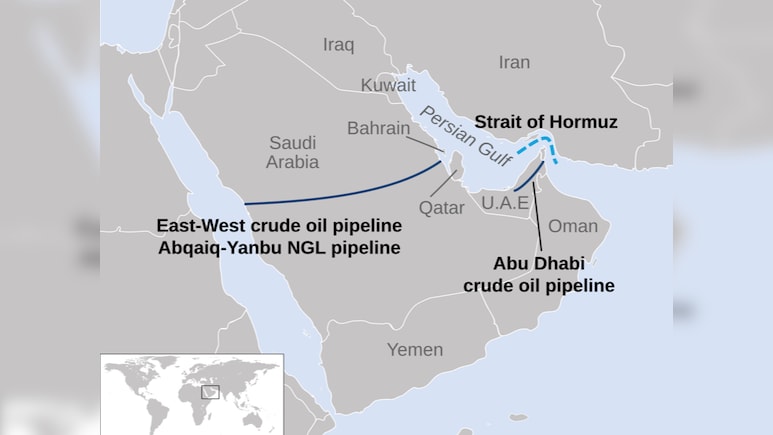
The pipeline runs across the kingdom to the Red Sea port of Yanbu. It has become Riyadh's main way of working around the Strait of Hormuz since the US-Israeli war on Iran disrupted shipping through the narrow waterway.
Also Read | Layoffs Are Rising In Tech, But These Skills Are Helping People Unlock Better Pay
According to Reuters, Saudi Arabia has been rerouting about 4 million barrels a day through the line, equal to roughly 4% of global supply.
The route was shut on September 11 after drone attacks, which Riyadh blamed on Iraqi militias, halted crude loadings at Yanbu.
Three sources told the agency that operations had since restarted. Aramco then brought the line back on September 22, initially at reduced rates, and that loadings from Yanbu have resumed.
The restart matters for Saudi export earnings.Standard Chartered estimates that Saudi crude exports rebounded to about 6.9 million barrels a day in September from just 2.45 million in August.
The bank attributed much of the recovery to East-West pipeline flows and a pick-up in tanker traffic through Hormuz.
ALSO READ: Saudi Arabia's East-West Oil Pipeline Struck By Drones Originating From Iraq: Report
The wider Gulf picture is improving but remains unsettled. Standard Chartered estimates that Gulf crude and condensate exports, excluding Iran, reached about 16.5 million barrels a day in September, close to pre-war levels.
However, only around 60% of those barrels passed through Hormuz, against 83% before the conflict, Oilprice.com reported. The remainder moved through bypass pipelines, alternative ports and complex ship-to-ship transfers.
That workaround comes at a cost. Freight rates and war-risk insurance premiums remain elevated, tanker availability is stretched and some voyages now take considerably longer.
Yanbu also carries its own security risk. The Houthis in Yemen have threatened shipping linked to Saudi Arabia in the Red Sea and claimed an attack on an Aramco facility in Riyadh over the weekend. Saudi officials disputed the claim.
ALSO READ: Saudi Oil Shock: Pipeline Outage Risks 4% Of Supply Worldwide, Says Report
Reuters, citing a source, reported on Monday that East-West pipeline flows had not been interrupted, amid hostilities between Riyadh and the Houthis.
The minister's figure suggests the pipeline is being used at high volumes again, but the Houthi threat and the continued dependence on bypass routes mean supply from the Gulf remains exposed to fresh disruption.
For India, which sources a large share of its crude from West Asia, the stability of both Hormuz and Red Sea routes remains a key factor in import costs.
Essential Business Intelligence, Sharp Market Insights, Practical Personal Finance Advice, Daily Fuel, Gold and Silver Prices and Latest Stories — On NDTV Profit.