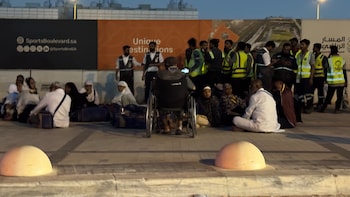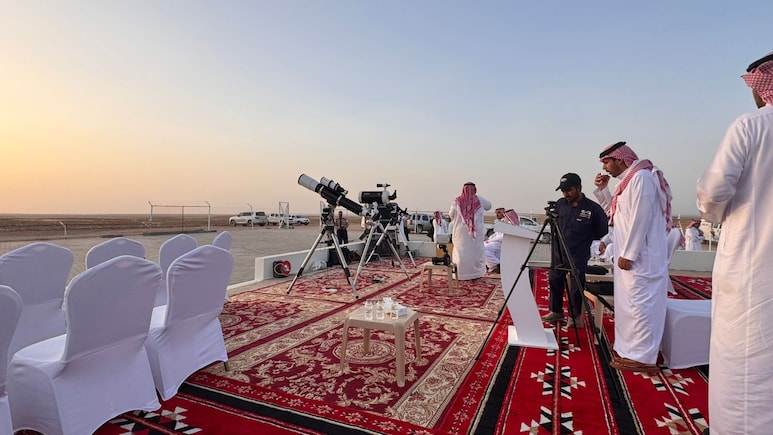
Depending upon the sighting of the crescent moon, the Muslim holy month of Ramadan, also called Ramzan in India, will begin on February 18 or 19 in most parts of the world, and a day later in the Indian subcontinent.
Throughout the lunar month, which lasts either 29 or 30 days, Muslims across the world abstain from eating or drinking between dusk and dawn. The fasting people also intensify their supplications, and a significant increase in charity is witnessed in the Muslim world, as per the Islamic tenets.
What Are The Fasting Hours?
Also Read | Layoffs Are Rising In Tech, But These Skills Are Helping People Unlock Better Pay
The fasting hours in the month of Ramadan can last between 12 and 15 hours, depending on the location of the person fasting. The logic is simple: One has to fast between the break of dawn and the setting of the sun, the total duration of which varies across the world.
Because it is winter in the Northern Hemisphere, people living there will be witnessing the shortest fasting periods, not more than 12 to 13 hours. The duration of their fast will keep on increasing as the days progress. These countries include India, Pakistan, Bangladesh, and others.
In contrast, the people living in the Southern Hemisphere will have to fast for some extra hours. In countries like Chile, New Zealand, and South Africa, the fasts are the longest, lasting between 14 and 15 hours. The duration of their fasts, however, will keep on decreasing as Ramadan progresses.
This essentially means that as Ramadan progresses, the duration of the fast will be averaged to around 13 hours across the world.
Here are some of the longest fasting durations from across the world:
Christchurch, New Zealand: 15 hours, 22 minutes.
Puerto Montt, Chile: 15 hours, 13 minutes.
Canberra, Australia: 14 hours, 48 minutes.
Montevideo, Uruguay: 14 hours, 42 minutes.
Buenos Aires, Argentina: 14 hours, 42 minutes.
Shortest durations will be experienced in countries including India, Pakistan, Bangladesh, and the Middle East (Saudi Arabia, Qatar, UAE, and other countries).
Ramadan keeps rotating, starting on different dates every year. Here is why!
The Islamic calendar is based on the Lunar Hijri calendar, with 29 or 30-day months. This makes Ramadan begin 10 to 12 days earlier than the past year. Given the fact that the lunar year is shorter than the solar year by 11 days, Ramadan will be observed twice in the year 2030, in January and December of the same year.
Who Fasts?
Fasting is obligatory for Muslims. There, however, are exceptions or situations wherein the Muslims are not required to fast.
Sick: People with medical conditions that can be worsened by not eating or drinking are not required to fast.
Travellers: People on long journeys, which can cause hardships, can skip fasting.
Pregnant, breastfeeding, or menstruating women: Women in any of these three conditions are not required to fast.
Children: Ones yet to reach puberty do not have an obligation to fast.
Elderly, weak: People who are old and frail or experience physical (or mental) weakness can also be exempted from fasting.
Such people, however, have to make up for the missed fasts, either by fasting on days after Ramadan or feeding a poor person for each missed fast (generally, people with conditions where they can never fast).
Essential Business Intelligence, Sharp Market Insights, Practical Personal Finance Advice, Daily Fuel, Gold and Silver Prices and Latest Stories — On NDTV Profit.