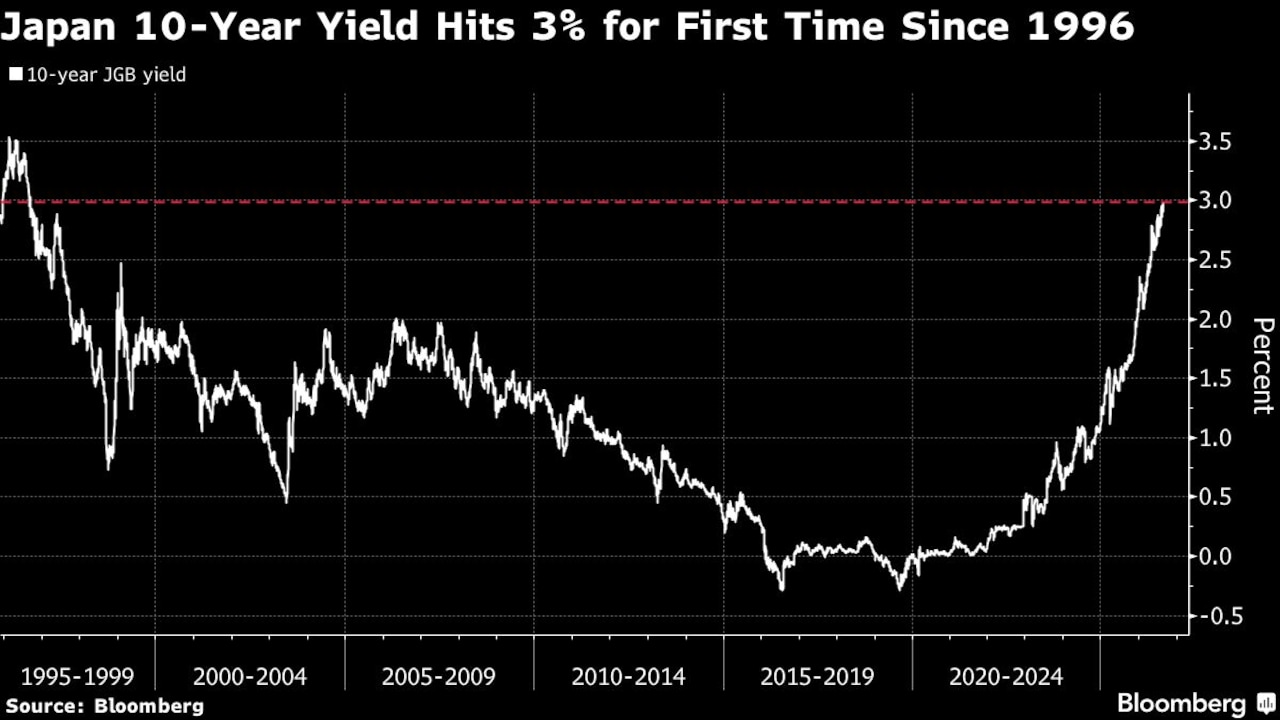
- Japan’s 10-year government bond yield reached 3% for the first time since 1996
- Tuesday’s bond auction had a bid-to-cover ratio of 3.29, higher than the last auction
- BOJ Deputy Governor hinted at a possible interest rate hike in September
A sale of Japan's 10-year government debt passed smoothly after the yield on the key maturity hit the milestone of 3% and investors positioned for an interest rate hike. The bid-to-cover ratio at Tuesday's sale was 3.29, compared with 2.56 at the last auction and a 12-month average of 3.26.
The 10-year yield touched a three-decade high of 3% on Tuesday shortly before the auction and ahead of the central bank's Sept. 18 policy decision. Bank of Japan Deputy Governor Ryozo Himino kept the door open to an increase this month in a speech last week.
"The result was as expected by the market, or perhaps slightly weaker than anticipated," said Miki Den, senior rates strategist at SMBC Nikko Securities Inc. "The auction showed that investors are looking for a yield above 3% on 10-year JGBs."
Also Read | Layoffs Are Rising In Tech, But These Skills Are Helping People Unlock Better Pay
Japan 10-Year Yield Hits 3% for First Time Since 1996
Photo Credit: (Photo: Bloomberg)
Japan's bond market has changed dramatically since the central bank ended the world's last negative interest-rate policy in 2024. Rising yields are increasing borrowing costs for the government, companies and households, while making domestic bonds more competitive with overseas assets for Japanese investors.
An auction of two-year debt last week saw weak demand, with overnight index swaps showing around a 90% chance of a BOJ rate increase in September. Prime Minister Sanae Takaichi's government is supportive of a near-term rate hike, with the next move likely either in September or October, according to people familiar with the matter.
US Treasury Secretary Scott Bessent told Japanese Finance Minister Satsuki Katayama and BOJ Governor Kazuo Ueda that the Asian country's next step should be to raise interest rates, public broadcaster NHK reported, citing an interview with a US official. The pressure to tighten has intensified as the yen hovers around 160 per dollar even after Japan spent a record $96.4 billion over the past month to support the currency.
Investors will be closely watching a 30-year JGB auction on Thursday as concerns over Takaichi's fiscal policy continue to weigh on super-long debt. Poor demand may spur a selloff that could ricochet around the world and challenge Bessent's efforts to subdue longer-maturity Treasury yields.
"The ultra-long end remains a different story. Uncertainty is higher there, particularly given the risk of fiscal expansion and additional bond supply," said Rinto Maruyama, senior rates and FX strategist at SMBC Nikko Securities. "Investors should keep a close eye on the pace of any further rise in 30-year yields and remain cautious heading into the auction."
(This story has not been edited by NDTV staff and is auto-generated from a syndicated feed.)
Essential Business Intelligence, Sharp Market Insights, Practical Personal Finance Advice, Daily Fuel, Gold and Silver Prices and Latest Stories — On NDTV Profit.