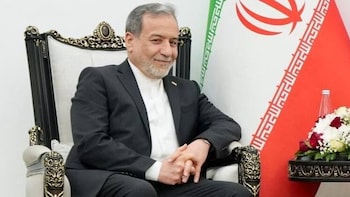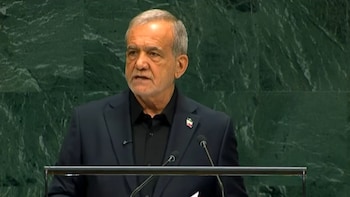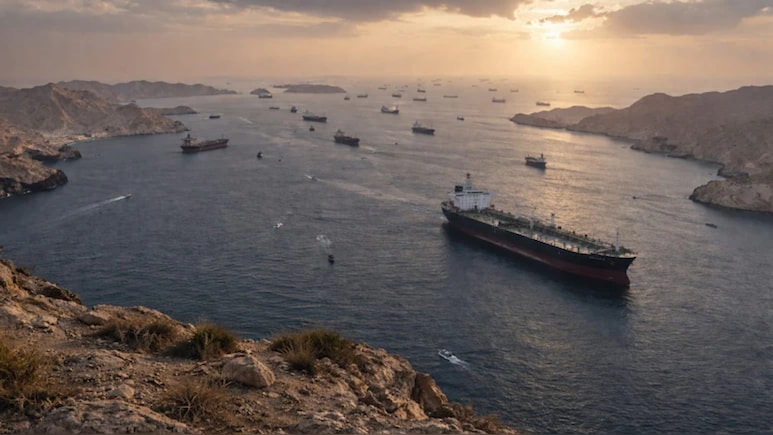
Iran's Parliament Speaker Mohammad Bagher Ghalibaf said the Strait of Hormuz will now be managed exclusively under Iranian arrangements, declaring that the waterway will never function the way it did before the war.
The remarks came even as Tehran agreed to set up a hotline with Washington to defuse tensions in the strategic chokepoint.
Speaking to Iranian state media aboard a flight following negotiations in Switzerland, Ghalibaf said the Strait of Hormuz will be managed by Iran, in accordance with Iranian laws and under arrangements established by Iran.
Also Read | Layoffs Are Rising In Tech, But These Skills Are Helping People Unlock Better Pay
Iranian Parliament Speaker Ghalibaf:
— Open Source Intel (@Osint613) June 22, 2026
The Strait of Hormuz will be managed by Iran under Iranian terms. "I was among the first to say clearly at the start of the war, everyone should know that management of the Strait of Hormuz will never return to the way it was before the… pic.twitter.com/lUSTHgL666
He added that problems may arise in the strait, and that both sides had agreed to establish a coordination center and a telephone hotline so that any issues during the 30-day period could be resolved more quickly.
Iran's Ghalibaf:
— Clash Report (@clashreport) June 22, 2026
The Strait of Hormuz will be managed by Iran, in accordance with those laws and under arrangements established by Iran.
Problems may arise in the Strait of Hormuz. Therefore, we agreed to establish a center and a telephone hotline so that, during the 30-day… pic.twitter.com/fRm64JHDM3
Ghalibaf, who has led Iran's negotiating delegation alongside Foreign Minister Abbas Araghchi, said he had warned from the outset of the conflict that the strait's management would be permanently altered. He reiterated that management of the Strait of Hormuz will never return to the way it was before the war, and said Iran has never trusted the Americans and never will.
ALSO READ: 12 Indians Among 13 Dead In Explosion At Qatar's Ras Laffan Industrial City
The remarks come amid a fragile push to stabilise the vital waterway, through which roughly a fifth of the world's oil and gas supply passes. The strait has long been a flashpoint between the US and Iran, with closures driving up global fuel costs and straining agricultural sectors worldwide.
Iran and the US signed a memorandum of understanding on Friday aimed at ending the broader Middle East war, under which the strait was to reopen toll-free for at least 60 days, the US would end its naval blockade, and sanctions on Iranian oil exports would be eased, alongside 60 days of follow-on nuclear talks.
However, implementation has been uneven. Iran's military briefly re-declared the strait closed, even as US tracking data showed commercial traffic continuing to flow.
Ghalibaf's latest comments suggest Tehran intends to use its continued control over the strait as leverage even as broader peace talks proceed.
ALSO READ: No New Nuclear Commitments: Iran Counters Vance's Claim On Switzerland Talks
Essential Business Intelligence, Sharp Market Insights, Practical Personal Finance Advice, Daily Fuel, Gold and Silver Prices and Latest Stories — On NDTV Profit.