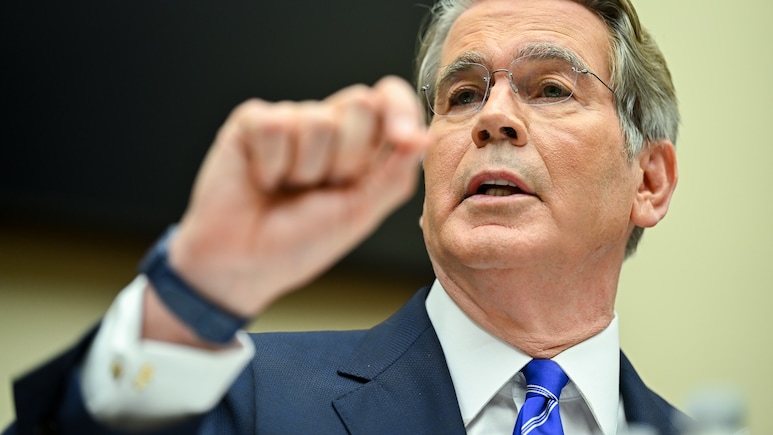
US Treasury Secretary Scott Bessent has criticised the Commerce Department for not restricting exports to Singapore-based Megaspeed, which is being investigated over allegations that advanced Nvidia AI chips were diverted to China.
Speaking to CNBC's Squawk Box on Friday, Bessent said the Treasury, Defence and State departments, along with the US Trade Representative's office, had supported adding Megaspeed to the Commerce Department's trade blacklist for several months.
However, the department headed by Commerce Secretary Howard Lutnick had not taken the step.
Also Read | Layoffs Are Rising In Tech, But These Skills Are Helping People Unlock Better Pay
"But Commerce has the pen. You will have to ask them about their internal processes," Bessent said, indicating that the authority to impose the trade restrictions rests with Lutnick's department.
ALSO READ : The Mystery Of 445 Rows: Jensen Huang's Affairs Are Only Half The Nvidia Story
The comments have brought Commerce Secretary Howard Lutnick's handling of US chip export controls under scrutiny, particularly over allegations that advanced Nvidia processors reached China through third-party companies.
The Commerce Department's Entity List restricts designated companies from accessing certain US technologies without government approval. Washington uses it to prevent sensitive American technology from reaching organisations considered security threats.
According to Axios, Bessent questioned Lutnick during a White House Situation Room meeting last week over his reported reluctance to tighten restrictions on companies such as Megaspeed. However, Commerce Department spokeswoman Kristen Eichamer told CNBC that no such conversation had taken place.
Asked about the reported exchange, Bessent declined to share details, saying, "We don't repeat conversations in the Situation Room."
He was more direct about his concerns over chip exports to China. "I am frustrated when President Trump made it very clear that China should not receive any Nvidia chips above H100s," he said. Bessent warned that chip leakage could hurt American companies competing in the AI race while giving China access to advanced technology.
Bessent also questioned whether Nvidia had done enough to check its customers and prevent restricted processors from reaching unauthorised buyers.
"I think that there is a lot of leakage in the system, and we are constantly working to close that down," he said.
Turning to Nvidia's due diligence, he asked, "The real story here should be, did Nvidia know their client, and was there a robust effort at Nvidia to make sure that there was no leakage and that they were selling to what were obviously pass-through shell companies?"
He added that individuals at the company should be held accountable if investigations found that proper safeguards had not been followed.
The dispute comes as Washington faces questions over its broader policy on chip exports to China. In December, Trump said Nvidia could sell its H200 processors to approved Chinese customers, with the US government receiving a share of the proceeds.
The controversy has also put Lutnick's position under pressure. Reuters reported on Thursday that senior White House officials were discussing whether he should leave his post.
Meanwhile, Senator Tim Scott said Nvidia CEO Jensen Huang and Lutnick had been asked to testify before the Senate Banking Committee next month. Huang has also been invited to a closed-door briefing with several House committees on December 1.
Bessent said new legislation was not needed to address the problem, arguing that the administration already had the authority to act.
"We have all the authorities that we need. They just need to be implemented," he said.
ALSO READ : Why Are US Stock Futures Down? Three Reasons, And Nvidia Is Only The First
Essential Business Intelligence, Sharp Market Insights, Practical Personal Finance Advice, Daily Fuel, Gold and Silver Prices and Latest Stories — On NDTV Profit.