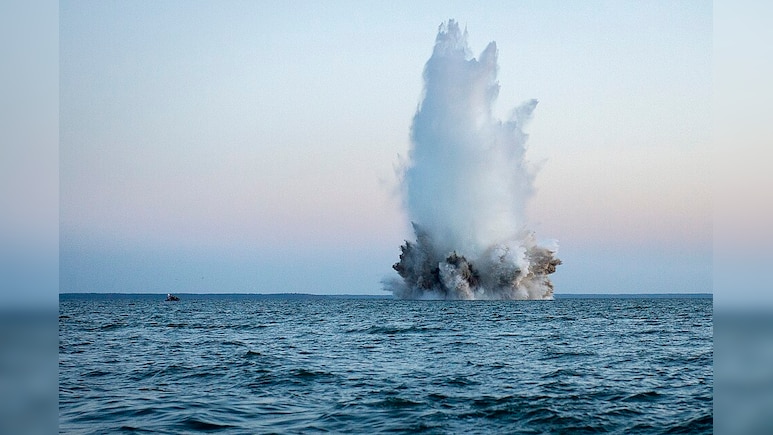
It will take about 40 to 50 days of intensive mine-hunting and sweeping using drones and conventional vessels to ensure safe passage following a US-Iran deal to reopen the Hormuz Strait, Western maritime security officials said.
According to evaluations from five Western maritime security sources, the operation by traditional minesweepers and cutting-edge underwater drones may take more than a monthbefore many insurance, shipping, or oil corporations are confident enough to sail through, reported Reuters.
According to a U.S. Energy Information Administration estimate last week, inventories in the world's top economies are on the verge of reaching their lowest levels since at least 2003, making every barrel exported from the Gulf vital.
Also Read | Layoffs Are Rising In Tech, But These Skills Are Helping People Unlock Better Pay
ALSO READ | Wall Street Mega Rally On Cards; Nasdaq Futures Spike 2% On US-Iran Peace Pact
Shipping officials continued to advise caution after the United States and Iran announced on Sunday that they had struck a preliminary agreement to end their dispute and reopen the strait, despite the fact that the two countries had covertly assisted ships in passing through the blockaded waterway in recent weeks.
Jakob Larsen, chief safety and security officer at the maritime association BIMCO, said: "We still consider it very risky for ships to begin transits at this point." Mine-free paths must be constructed because the threat of mines in the area is still a concern both now and in the future.
Before the conflict that started on Feb. 28, the strait handled 20% of the world's daily supply of oil and liquefied natural gas. It is unknown how many mines Iran may have placed there.
Iran has threatened to use naval mines in an attempt to establish control over the canal during the conflict, but it has not stated whether its forces have actually buried them. The United States claimed to have targeted Iranian mine-laying vessels and has stated that mines pose a threat.
At a Senate Foreign Relations Committee hearing on June 2, U.S. Secretary of State Marco Rubio stated that Iran has "mined large segments of Hormuz — international waters" without providing further details.
Germany's navy stated in a June 11 letter that mines were found in four areas around the strait, citing information from the British and American navies. However, Germany was unable to confirm the mine placements.
ALSO READ | Iran Army Calls Peace Deal A Victory; Says US, Israel Had 'No Option But Surrender'
Companies may be discouraged even by the potential for mines. According to shipping industry officials, war risk insurers, oil firms, and tanker companies would need guarantees that passage is secure before attempting to cross the strait because a supertanker and its load of crude are worth over $300 million.
"One sea mine is enough to have fatalities," stated Rene Kofod-Olsen, CEO of V.Group, a leading technical ship and crew management company with 13 ships stranded in the Gulf. That's undoubtedly a huge problem for international shipping," he stated.
Essential Business Intelligence, Sharp Market Insights, Practical Personal Finance Advice, Daily Fuel, Gold and Silver Prices and Latest Stories — On NDTV Profit.