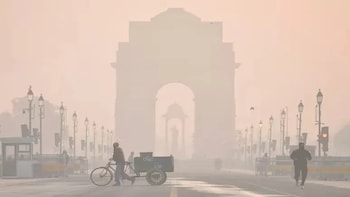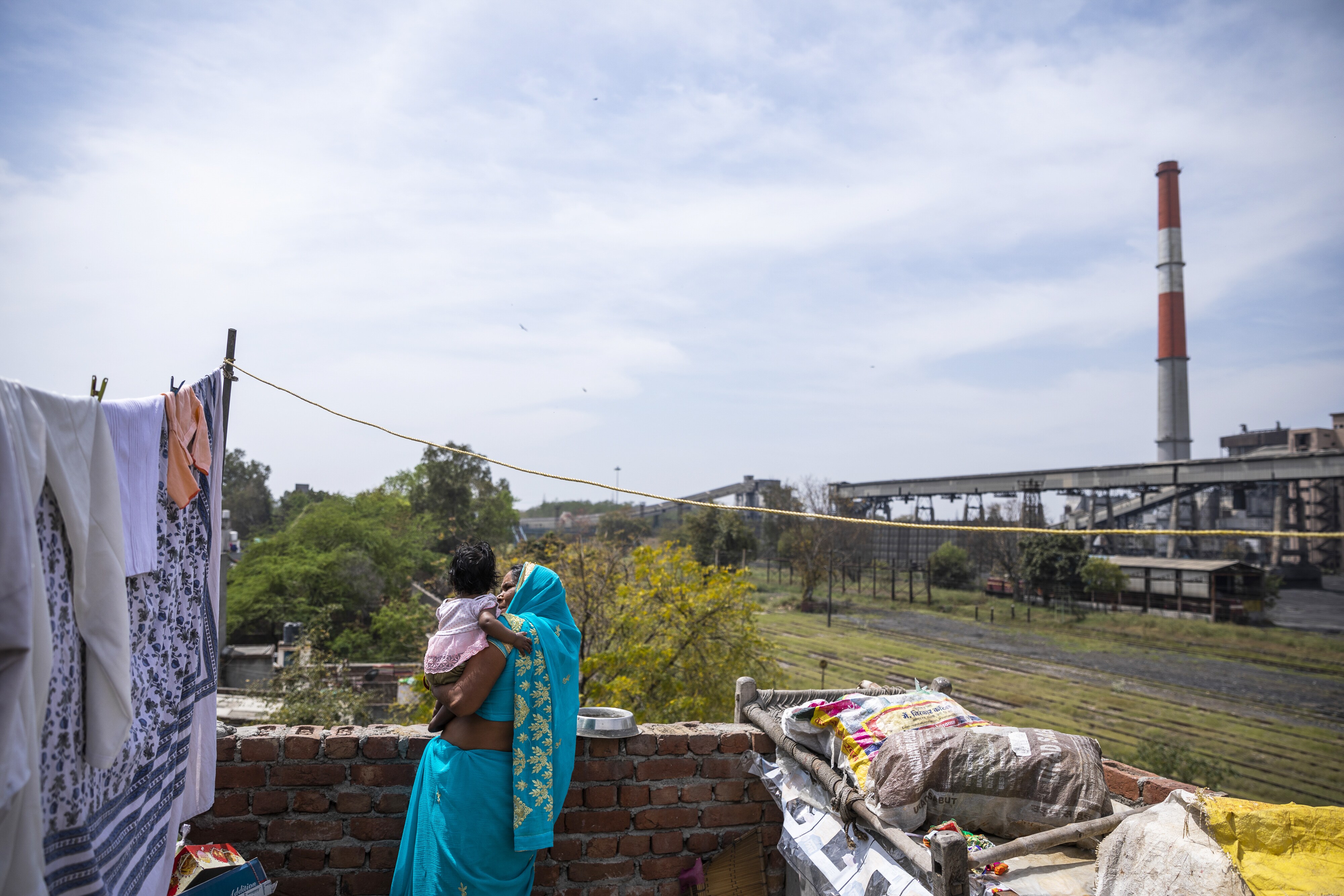
Air pollution has become a national emergency as it is killing one lakh children under the age of five in India every year and is responsible for 12.5 percent of all deaths in the country, according to a study released on the World Environment Day.
The Centre for Science and Environment's State of India's Environment report said that on an average, 8.5 out of every 10,000 children in India die before they turn five, while the risk was higher for girls as 9.6 out of 10,000 girls die before five years of age due to bad air.

-
 Indian Markets Turning Corner After Two Tough Years, Says Sandeep Tandon
-
 NDTV Profit Ignite 2026: Experts See Opportunity In Equities, Stay Bullish For Long-Term
-
 Buy Right, Sit Tight Does Not Work for Individual Stocks, Says Dinshaw Irani
-
 'Worst Is Behind': Quant MF Sees Market Bottom, Flags 'Extreme Euphoria' In Midcaps
-
 India's Mutual Fund Industry Could Become A $1 Trillion Opportunity, Say Fund Managers
-
 'Foreign Investors Are Baraatis': Raamdeo Agrawal's Take On LTCG Tax
-
 Stay Invested Through Market Cycles: Raamdeo Agrawal at NDTV Profit Ignite
-
 Ramesh Damani Remains Bullish On India For Next 20-30 Years, Sees Bargains Amid Market Weakness
-
 CAS Came After A Long Consultation Process: SEBI Chairman Tuhin Kanta Pandey AT NDTV PROFIT IGNITE
-
 Aim To Cut FPI Onboarding Time From Mth To Five Days: SEBI Chairman Tuhin Kanta Pandey AT NDTV PROFI
“Air pollution is responsible for 12.5 percent of all deaths in India. Its impact on children is equally worrying. Over 1,00,000 children below the age of five die due to bad air in the country,” said the CSE report.
Also Read | Layoffs Are Rising In Tech, But These Skills Are Helping People Unlock Better Pay
The think tank said that the government's schemes to fight air pollution have not been successful yet, a fact also accepted and acknowledged by the Environment Ministry. Recently, a senior official at the ministry had accepted that the situation was not a happy one and schemes have not been as successful as they were expected to be.
Earlier this year, global reports on air pollution revealed that over a million people died in India due to air pollution in 2017. According to a report by Greenpeace, New Delhi is the most polluted capital city in the world.
The reports, however, were rejected by previous Environment Minister Harsh Vardhan, who is now Health Minister, saying such studies only aim to cause panic among people and were not true.
India, in 2013, had pledged to phase out non-electric vehicles and achieve a target of cumulative sale of 15-16 million hybrid and electric vehicles by 2020.
“Against the target of 5-6 million e-vehicles by 2020, the country had 0.28 million vehicles till May 2019,” the State of India's Environment, an annual quantified statement of environmental statistics and analysis, said.
While India was one of the first countries to pledge the phasing out of non-electric vehicles, its national scheme to promote the sale of electric vehicles is yet to pick up.Centre for Science and Environment report
The study, which has covered wide range of topics, also said that the country is yet to identify indicators to track its climate change preparedness, a concern which is under the United Nations Sustainable Development Goals 2030.
The CSE said there has been a 22 percent increase in India's greenhouse gas emissions between 2010 and 2014, adding that the energy sector was responsible for three-fourth of the total emissions.
India phased out ozone depleting substances such as chlorofluorocarbon by 2011, it shifted to substances such as hydro-chlorofluorocarbon, which have high global warming potential.Centre for Science and Environment report
India continues to bear the brunt of extreme weather events. Around 11 states recorded major extreme weather events that claimed 1,425 lives in 2018, it said.
Regarding the state of forests, the CSE's analysis observed that India recently shifted to a powerful forest fire monitoring and alert system, SNPP-VIIRS, which could capture forest fires with better accuracy and precision. However, in April 2019, the new technology recorded 69,523 forest fires, which was 9.5 times more than that recorded by the earlier technology, said the report.
Essential Business Intelligence, Sharp Market Insights, Practical Personal Finance Advice, Daily Fuel, Gold and Silver Prices and Latest Stories — On NDTV Profit.