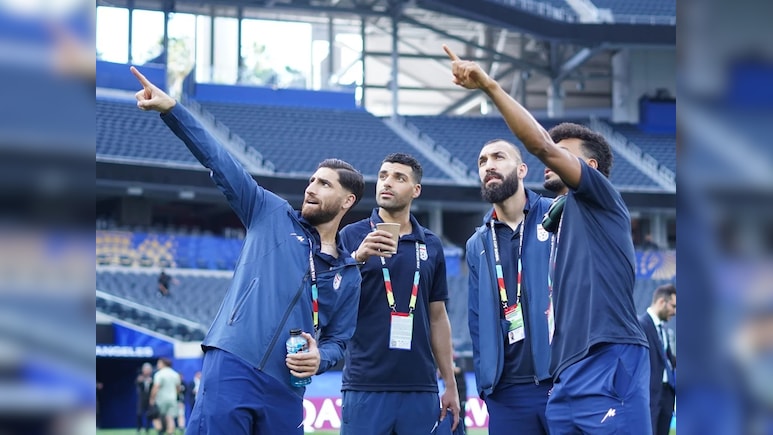
Iran's participation at the ongoing FIFA World Cup 2026 comes after months of uncertainty triggered by the conflict involving Iran, Israel and the United States earlier this year.
In the aftermath of the war, the West Asian nation even threatened to withdraw from the 48-team tournament.
"What is certain is that after this attack, we cannot be expected to look forward to the World Cup with hope," Mehdi Taj, president of Iran's football federation, said in early March.
Also Read | Layoffs Are Rising In Tech, But These Skills Are Helping People Unlock Better Pay
ALSO READ | Who Are Cabo Verde? 10 Facts About Spain's First Opponents At 2026 FIFA World Cup
Following negotiations with FIFA, Iran eventually agreed to participate. However, the challenges facing the team have only grown since then.
Iran are based in Mexico, one of the three co-host nations, despite playing all three of their group-stage matches in the United States. Players and support staff have been instructed to fly in and out of the country on match days, meaning they will cover more travel distance than any other team at the tournament.
To put that into perspective, Iran's World Cup opener against New Zealand on Tuesday (Monday local time) will be played in Los Angeles, while the team is based nearly 220 kilometres away in Tijuana.
Further complicating matters, several Iranian officials were reportedly denied entry into the United States, while visa issues also affected individuals connected to the tournament. According to a BBC report, 15 Iranian officials and support staff were denied visas altogether.
Star striker Mehdi Taremi has acknowledged that the circumstances surrounding Iran's World Cup campaign have overshadowed the tournament's traditional spirit of unity and celebration.
"This kind of tension undermines that joy and it undermines the message of FIFA and our people, which is about football and bringing about peace," Taremi said ahead of Iran's opening match.
The team has also faced challenges away from the pitch. According to The Guardian, protesters gathered outside Iran's hotel in Manhattan Beach shortly after the squad arrived in Los Angeles.
The demonstrations reflected deep political divisions within Southern California's large Iranian diaspora community. Many Iranian expatriates have long opposed the government in Tehran and do not view the national team as representing the broader Iranian population.
Similar protests are expected around SoFi Stadium during Iran's matches.
Head coach Amir Ghalenoei has sought to shield his players from the political noise and insists the team's focus remains firmly on football.
"We are here to play football and we are here to represent the respectful people of Iran, be it the Iranians inside Iran or the diaspora," Ghalenoei said. "We are not political people."
The coach also admitted that travel complications disrupted preparations and left the squad with less time to settle before the tournament.
"We arrived late and we didn't have enough time to adjust. Of course that will affect us," he said during his pre-match press conference.
FIFA is also monitoring potential disputes involving supporters displaying Iran's pre-revolutionary lion-and-sun flag, which is prohibited inside World Cup stadiums.
Iran's campaign in the United States serves as a reminder that football and politics are often difficult to separate, even at a tournament designed to bring nations together through sport.
Essential Business Intelligence, Sharp Market Insights, Practical Personal Finance Advice, Daily Fuel, Gold and Silver Prices and Latest Stories — On NDTV Profit.