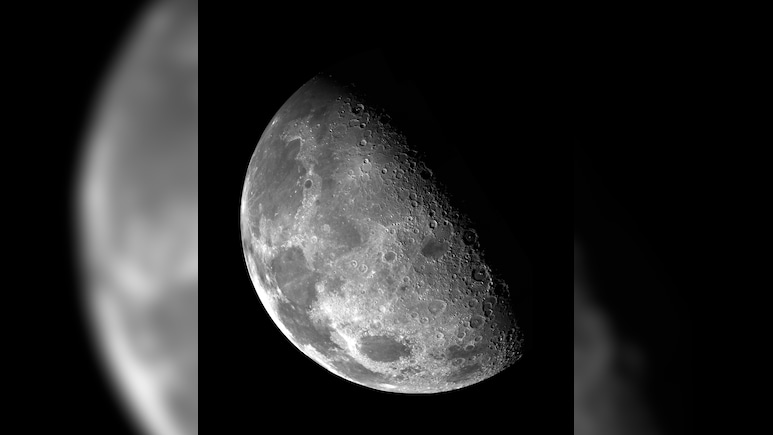
A discarded SpaceX Falcon 9 upper stage made an unplanned impact on the lunar surface in the early hours of Wednesday after spending more than a year drifting through space following the completion of its mission, according to a video shared by NASA on X.
According to NASA, a combination of solar activity and gravitational forces prompted the unplanned impact. The upper stage of the Falcon 9 rocket was launched in January 2025 in order to deploy two commercial lunar landers before it was left in an uncontrolled orbit.
In the early hours of Wednesday, Aug. 5, a portion of a @SpaceX rocket impacted on the Moon's surface. In this video, we answer some of your questions. pic.twitter.com/BhWcGfRYMO
Also Read | Layoffs Are Rising In Tech, But These Skills Are Helping People Unlock Better Pay
— NASA (@NASA) August 5, 2026
ALSO READ: SpaceX Says It Can Reach $1 Trillion In Revenue By 2030. Here's What's Driving It
NASA stated that the rocket stage lacked enough fuel to return to Earth or move into a stable disposal orbit after completing its mission, causing it to drift through cislunar space for more than a year. The rocket struck the Moon at a speed of roughly 5,400 mph (about 8,700 km/h).
According to NASA, the impact occurred near the Einstein Crater on the Moon's western limb, an area that is difficult to observe directly from Earth.
Scientists were unable to witness the impact directly because the crash site was close to the Moon's edge from Earth's perspective, The Associated Press reported. However, a telescope in Chile detected a plume containing sodium and lithium, providing strong evidence that the impact occurred as predicted.
NASA said that it has '100% confidence' that the impact occurred based on spacecraft tracking data and observations collected before and after the expected collision.
According to NASA, its Lunar Reconnaissance Orbiter will image the impact site in the coming days to confirm the newly formed crater and study the effects of the high-speed collision.
Researchers cited by The Associated Press have stated that the impact is expected to have created a new crater measuring roughly 40 to 60 feet (12 to 18 metres) across.
NASA stated that the incident posed no threat to Earth or public safety because it involved an inactive rocket stage striking the Moon. The impact will provide scientists with a valuable opportunity to study how the lunar surface responds to high-speed collisions by comparing images taken before and after the event.
NASA also said that the incident highlights the growing challenge of managing space debris beyond Earth orbit, especially as the number of lunar missions continue to increase under programmes such as the Artemis.
The Falcon 9 upper stage had originally launched Firefly Aerospace's Blue Ghost lunar lander, which landed successfully, and ispace's Resilience lander, which later crashed during its lunar landing attempt, The Associated Press reported.
ALSO READ: SpaceX's AI Splurge Puts a Damper on Debut Earnings After IPO; Shares Fall 7%
Essential Business Intelligence, Sharp Market Insights, Practical Personal Finance Advice, Daily Fuel, Gold and Silver Prices and Latest Stories — On NDTV Profit.