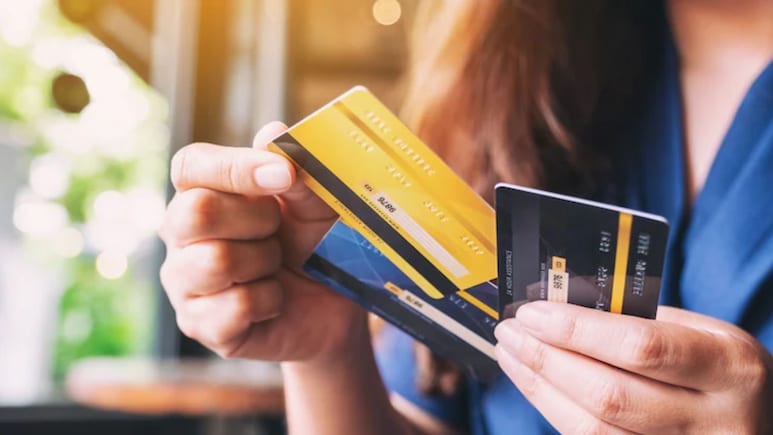
Online spending in India has become a normal part of everyday life. Groceries, bills, travel bookings, subscriptions, fashion - many of these expenses happen online every month. And if you're already spending this money, a cashback credit card can help you get a little back on some of it.
To be clear, no single credit card works best for everyone. It mostly comes down to where you spend, how much you spend, and whether you're okay with things like annual fees, etc. In this guide, we'll explain how cashback works, how it differs from reward points, and the most popular options on the market.
How Cashback Credit Cards Work on Online Spends
Also Read | Layoffs Are Rising In Tech, But These Skills Are Helping People Unlock Better Pay
Cashback is a percentage of an eligible purchase that the credit card issuer returns to you. If a card offers 2% on an eligible ₹5,000 online purchase, you will get ₹100 in cashback.
Flat-rate vs tiered structures
Structure | How it works | Example |
Flat-rate | One percentage on eligible spends | A credit card giving the same % on every eligible online purchase |
Tiered | The cashback increases as spending crosses a limit | IDFC FIRST Hello Cashback: Earn 3% cashback on every eligible online payment, up to ₹10,000 in a statement cycle. Once you cross ₹10,000, every online payment after that earns 5%. Online cashback is capped at ₹1,000 per statement cycle. Quantum+: A lifetime free card that gives you 1% cashback on every eligible online payment, up to ₹10,000 in a statement cycle. Once you cross ₹10,000, every online payment after that earns 2%. Total cashback is capped at ₹500 per statement cycle. |
Merchant-specific | Higher rate at a named platform | Amazon Pay ICICI Bank Credit Card: 5% for Prime members, 3% for non-Prime members on Amazon.in |
Broad online rate with a cap | Higher rate on all online merchants, limited per cycle | SBI Card's Cashback SBI Card: 5% on eligible online spends with no merchant restriction, subject to a monthly cap |
How cashback is credited: Most cashback cards automatically add the cashback to your credit card account. Some cards work differently. For example, the Amazon Pay ICICI Card adds cashback to your Amazon Pay balance. If you cancel or get a refund for a purchase, the cashback may also be reversed.
Cashback Versus Reward Points for Online Shopping
Feature | Cashback | Reward points |
What you earn | A rupee amount | Points, converted at a set value |
Redemption | Often automatic statement credit | Usually needs a redemption request via a portal or app |
Validity | Usually credited each cycle | Validity and redemption value vary by card |
Simplicity | High | Depends on conversion rules |
Best for | Regular, predictable spending | Cardholders who like to redeem for vouchers, travel or products |
Cashback is generally easier to track for regular online spending, because there is no conversion rate to work out. Overall, this decision depends on your needs and how much effort you want to spend managing reward points.
 Cashback Credit Card Options for Online Shoppers
From groceries to travel and shopping, there are four popular credit cards by different lenders that can help online shoppers earn cashback on regular spending. They are FD-backed, meaning you place a fixed deposit with the bank, and the card's credit limit is linked to that deposit.
1. IDFC FIRST Quantum+ Credit Card
Online cashback: 1% on online spends up to ₹10,000 in a statement cycle, and 2% on incremental online spends above ₹10,000.
UPI: 1% cashback on UPI payments made through the IDFC FIRST Bank mobile app. There is no cashback on UPI payments through other third-party apps, EMI transactions or ATM withdrawals.
Travel bonus: A bonus 1% cashback on hotel and flight bookings made through the IDFC FIRST Bank app.
Cap: Total cashback is capped at ₹500 per statement cycle across all categories combined.
Deposit: FD starting at ₹5,000, with a credit limit equal to 100% of the FD value.
Crediting: Cashback is credited on the payment due date plus one day, provided at least the minimum amount due is paid by the due date.
2. IDFC FIRST Hello Cashback Credit Card
Online cashback: 3% on online spends up to ₹10,000 per statement cycle, and 5% on incremental online spends beyond ₹10,000.
Cap: Total Cashback capped at ₹1,500 in a statement cycle.
In-store, contactless and UPI: 1% cashback, which also extends to categories such as utilities, education and insurance.
Fees: Annual fee of ₹1,000 + GST from the second year, with 100% reversed on annual spends of ₹2 lakh and 50% reversed on spends between ₹1 lakh and ₹2 lakh. The joining fee is ₹0 under an introductory offer.
Condition: Cashback is forfeited for a statement cycle if the minimum amount due is not paid by the payment due date.
3. Kotak 811 #DreamDifferent Credit Card
Online cashback: The 811 #DreamDifferent Credit Card is a VISA Platinum Card that offers 2% cashback on eligible spends up to ₹6,000 per year. Cashback is applicable on both online and offline transactions, including eligible UPI transactions.
Interest on FD: 6.35% for 1 year
Eligibility: To qualify for cashback in a billing cycle, the Cardholder must incur minimum total eligible spends of ₹15,000 during that billing cycle.
Cap: Cashback capped at ₹500 every billing cycle, with a ₹100 per-transaction cap.
Deposit: You can apply for a Dream Different Credit Card with a minimum Fixed Deposit of ₹10,000.
Fees: The joining fee for this card is ₹500, inclusive of GST. There is no annual fee.
Condition: You must incur a minimum total eligible spend of ₹15,000 during the billing cycle to qualify for cashback.
4. ICICI Bank Coral Credit Card against FD
Reward: Earn 2 reward points for every ₹100 spent on retail purchases and 1 reward point for every ₹100 spent on utility bills and insurance payments, subject to card terms.
Joining fee: ₹500 + taxes.
Annual fee: ₹500 + GST. It is waived if it spends cross ₹1.5 lakh in the previous financial year.
Minimum FD: ₹50,000
FD tenure and renewal: A minimum tenure of 180 days, with the deposit held on auto-renewal.
Credit limit: up to 90% of FD amount
Condition: Your Fixed Deposit amount must be ₹50,000 or more. A minimum tenure of 180 days, with the deposit held on auto-renewal.
No Regular Income? You Can Still Get a Credit Card
A deposit-backed or secured credit card is issued against a fixed deposit (FD), so you may not need to provide regular income proof or have an established credit history. This can make these cards useful for people who are new to credit or may find it difficult to qualify for a regular credit card. This can suit:
First-time credit card users
Students, homemakers and freelancers
People with a limited or no credit history
Anyone looking for a simpler way to access a credit card without meeting traditional income requirements
The card usually comes with a credit limit linked to the FD amount. Since the deposit acts as security for the bank, approval is generally easier. The FD also continues to earn interest while it is held as security, so your money does not simply sit unused.
Building Credit Through Regular Online Spending
Using a credit card regularly and paying it back on time can help you build a good credit history. Two things are especially important here:
Pay your bills on time: Missing payments can hurt your credit score. Try to pay the full bill by the due date instead of carrying it forward.
Keep your credit utilisation low: This is how much of your total credit limit you use. A common rule is to keep it below 30%.
For example, if your credit limit is ₹50,000, try to keep your outstanding amount below ₹15,000.
With an FD-backed card, the limit is linked to your deposit. If you link additional FDs, the limit can be raised. For example, IDFC FIRST Bank's Hello Cashback, through its “Instant Credit Limit Enhancement" feature, gives you the option to link additional FDs to increase the limit. A higher limit can also lower your utilisation ratio, as long as your spending stays the same.
Important: Unpaid balances attract interest and fees, which can outweigh any cashback.
Estimating Annual Returns
The figures below are worked out from both card's published rates. They are illustrations, which means that your actual cashback depends on eligible spends and the terms.
The table assumes that your spendings are online, have a constant amount and dues are paid in full. UPI, in-store and travel bonus cashback are not included, and fees are shown separately.
Monthly online spend | Cashback from Quantum+ (1% up to ₹10,000; 2% above; ₹500 monthly cap) | Cashback from Hello Cashback (3% up to ₹10,000; 5% above; ₹1,000 monthly cap) |
₹5,000 | ₹50/month → ₹600/year | ₹150/month → ₹1,800/year |
₹10,000 | ₹100/month → ₹1,200/year | ₹300/month → ₹3,600/year |
₹20,000 | ₹300/month → ₹3,600/year | ₹800/month → ₹9,600/year |
₹30,000 | ₹500 (cap reached) → ₹6,000/year | ₹1,000 (cap reached) → ₹12,000/year |
₹50,000 | ₹500 (cap) → ₹6,000/year | ₹1,000 (cap) → ₹12,000/year |
How this works: At ₹20,000, Quantum+ gives ₹100 on the first ₹10,000 plus ₹200 on the next ₹10,000. Hello Cashback gives ₹300 plus ₹500.
Fee check for Hello Cashback: The ₹1,000 + GST annual fee applies from year two. At ₹10,000 a month (₹1.2 lakh a year), 50% is reversed. At ₹20,000 a month (₹2.4 lakh a year), the full fee is reversed. At ₹5,000 a month (₹60,000 a year), no waiver applies.
Online Shopping Credit Cards Compared
Feature | Quantum+ | Hello Cashback | Kotak 811 #DreamDifferent | ICICI Bank Coral Credit Card |
Card type | FD-backed | FD-backed | FD-backed | FD-backed |
Online cashback | 1% up to ₹10,000; 2% above, per cycle | 3% up to ₹10,000; 5% above, per cycle | 2% on eligible online and offline spends, including eligible UPI | No cashback. 2 points per ₹100 on retail |
Cashback cap | ₹500 per cycle (all categories) | ₹1,000 per cycle (online) | ₹500 per cycle, ₹100 per transaction, ₹6,000 per year | Not applicable |
UPI | 1% via IDFC FIRST Bank app | 1% on UPI, in-store and contactless | 2% on eligible UPI | Not rewarded (1 point per ₹100 on utilities and insurance only) |
Joining fee | ₹0 | ₹0 under intro offer (₹1,000 + GST standard) | ₹500 including GST | ₹500 + taxes |
Annual fee | ₹0 | ₹1,000 + GST from year 2; spend-based reversal | ₹0 | ₹500 + GST; waived above ₹1.5 lakh spend |
Minimum FD | ₹5,000 | ₹10,000 | ₹10,000 | ₹50,000 (180 days minimum, auto-renewal) |
Credit limit | 100% of FD | 100% of FD | 90% of FD | Up to 90% of FD |
Zero forex markup | Yes | Yes | No | No |
IDFC FIRST Quantum+ is a good fit if you:
Want a lifetime-free card with no joining or annual fee
Shop online and like earning up to 2% cashback
Pay through UPI in the IDFC FIRST Bank app and want 1% cashback on those payments
Travel abroad or shop on international sites and want zero forex markup
Book flights and hotels on the bank app and want an extra 1% cashback
Are new to credit cards and want an easy start with an FD that keeps earning interest
IDFC FIRST Hello Cashback is a good fit if you:
Shop online often and want up to 5% cashback
Want cashback on your online, in-store and UPI spends
Pay rent, utility bills or education fees and want 1% cashback on those too
Travel abroad or shop on international sites and want zero forex markup
Book flights and hotels on the bank app and want an extra 1% cashback
Want a cashback limit of up to ₹1,500 every statement cycle, and can spend ₹2 lakh a year to waive the ₹1,000 + GST annual fee
Kotak 811 #DreamDifferent may suit someone who:
Spends at least ₹15,000 in a billing cycle and can qualify for cashback
Wants cashback on eligible online, offline and UPI payments
Prefers a card with no annual fee
Can work within the ₹100 cashback limit per transaction
Is comfortable placing an FD of at least ₹10,000
ICICI Bank Coral Credit Card against FD may suit someone who:
Prefers collecting reward points on retail purchases instead of earning direct cashback
Regularly spends on shopping and other everyday retail purchases
Can place an FD of at least ₹50,000 for a minimum of 180 days
Can spend more than ₹1.5 lakh a year to get the annual fee waived
Does not mind having a credit limit of up to 90% of the FD amount
How Safe are Online Transactions: What to Know
Paying with a credit card is usually safe. Here's what happens when you pay online, and how your transaction stays secure on shopping apps and websites:
1. Tokenisation: Tokenisation is basically a way to avoid sharing your actual card number with every website or app you pay on. Instead, your card details are replaced with a unique code called a token. You also need to give your consent and complete an extra authentication step when you tokenise your card.
For example, when you save your card on a shopping app, the app doesn't keep your full card number. It gets a token instead. Under RBI rules, merchants generally cannot store your actual card details.
2. Two-factor authentication: RBI's Authentication Mechanisms for Digital Payment Transactions Directions, 2025 required compliance from 1 April 2026. You need to pass two different security checks before certain digital payments go through. For online card payments, at least one of these checks has to be dynamic. This means that it should be unique to that particular transaction. An OTP is one common example. So, even if someone gets hold of your card details, they may still need the second authentication step to complete the payment. [3]
3. In-app controls: RBI directions require issuers to let cardholders switch card usage on or off and set or change transaction limits for domestic and international, ATM, point-of-sale, online and contactless transactions.
Turn off international and contactless use if you do not need them
Set a lower online transaction limit
Block the card immediately if it is lost, or if you see an unfamiliar transaction
Enable transaction alerts [4]
Conclusion
Choose a credit card based on your buying habits. The right card can give you cashback on purchases you already make, helping you save more. If you cannot get a regular credit card, an FD-backed card can be a good place to start. Compare your options and choose a card that best suits the way you spend.
FAQs
Which credit card is good for online shopping in India?
It depends on how and where you spend. Look at the cashback rate, spending limits, fees and the type of online purchases that qualify.
Can I get a credit card without income proof?
Yes. FD-backed cards like IDFC FIRST Bank's Quantum+ and Hello Cashback are linked to a fixed deposit, so income proof may not be needed. The bank still has to approve the application.
Is cashback added automatically?
Usually, yes. Depending on the card, cashback may be added to your card account or a wallet.
Does the FD still earn interest?
Yes. The fixed deposit continues to earn interest at the applicable rate even while it is linked to your credit card. The FD simply acts as security for the card, so your money continues to grow while you use the card.
Is it safe to use a credit card online?
Online card payments have extra security measures such as tokenisation and two-factor authentication. Still, it is recommended to never share your OTP and keep an eye on transaction alerts.
Disclaimer: The above sponsored content is non-editorial and has been sourced from a third party. NDTV Profit does not guarantee, vouch for or necessarily endorse any of the above content, nor is responsible for it in any manner whatsoeve.
Essential Business Intelligence, Sharp Market Insights, Practical Personal Finance Advice, Daily Fuel, Gold and Silver Prices and Latest Stories — On NDTV Profit.