Profits aside, there is nothing importers, exporters, and investors desire more than a stable environment. Uncertain, unpredictable economic, political, or legal climates undermine international comparative advantages businesses seek to exploit for profit-maximising ends.
American Presidents George Bush and Barack Obama gave Indian Prime Ministers Atal Bihari Vajpayee and Manmohan Singh few surprises about Chinese-American relations. That is not to say these Indian prime ministers agreed with every aspect of America's China policy, but they could rest assured those U.S. Presidents valued a stable climate in which companies could foster a transactional relationship with China.
No such luck for Prime Minister Narendra Modi. President Donald Trump blows hot and cold about China.

U.S.-China Unpredictability
- Will President Trump resolve the Section 301 trade war he launched when his self-declared truce deadline ends on March 1? Indian businesses cannot be sure.
- Will he confront the Chinese military more directly across the Nine Dash Line, and send more U.S. naval vessels through the Formosa Straits more often? Indian businesses cannot be sure.
- Will he intervene in the judicial process involving detained Huawei executive Meng Wanzhou? Indian businesses cannot be sure.
Amidst these uncertainties, Modi seeks to rebalance Indo-Chinese ties. Following China's October 1962 invasion of India— which put paid to the concept of Hindi-Chini bhai-bhai (Indians and Chinese are brothers) that India's first Prime Minister, Jawaharlal Nehru, fancied—those ties have never been that great.
India is suspicious of China's Belt and Road Initiative and Pakistan's BRI participation. Indo-Chinese clashes continue along two disputed borders: in the east, on the Doklam plateau in Arunachal Pradesh, south of the McMahon Line which China rejects, and in the west, in the remote-high altitude area of Aksai Chin.
Nevertheless, the bilateral ties have improved since 1962. India and China collaborate on several World Trade Organization controversies, especially regarding special and differential treatment for developing countries and seating new judges for the appellate body. They collaborate in the fight against climate change.
So, why not advance India's interests by rebooting relations between the world's two most populous marketplaces to rekindle the stability Indian importers, exporters, and investors enjoyed in the Bush-Obama years – and reduce exposure to Trump-era volatility, to boot?
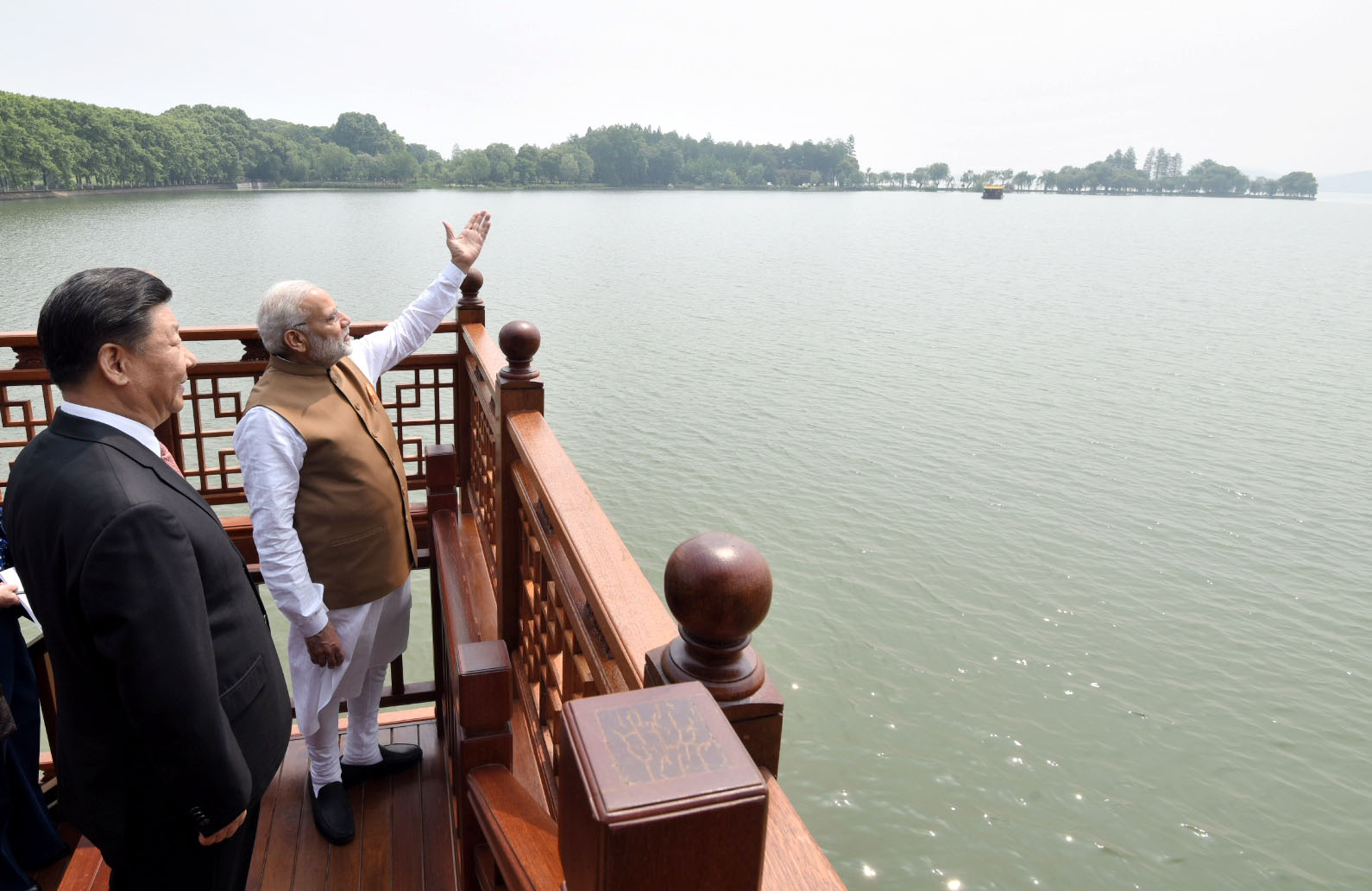
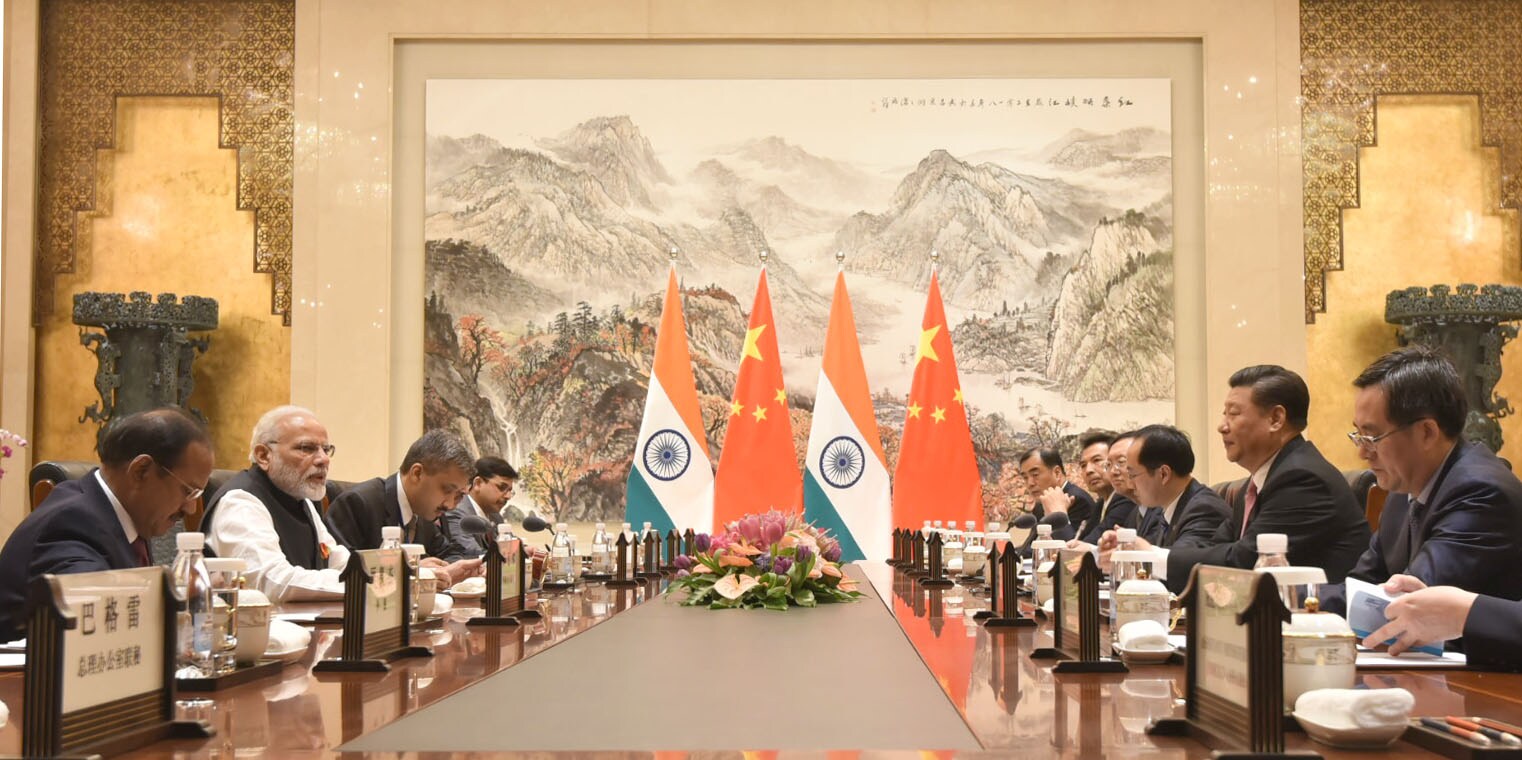
This rhetorical question is India's logic behind Chinese President Xi Jinping's September 2014 state visit to India, and Modi's five visits to China, starting with a May 2015 state visit, and including the April 2018 Wuhan Summit.
Absent from Delhi's strategic calculus on the ‘People's Republic of China' has been the ‘Republic of China', or Taiwan. Modi has not been to Taiwan. His government agreed to a change on Air India's website from ‘Taiwan' to ‘Chinese Taipei'. Just global practice, the globetrotting prime minister's government said. That country, or customs territory, or autonomous region, or whatever Delhi and Air India call it, should matter to India.
Economic, political, and legal rationales all support a relationship between Delhi and Taipei as robust as that between Delhi and Beijing.
The Economic Rationale
With 23.5 million people, Taiwan is the 55th most populous country on earth, but the world's 22nd largest economy, the 15th largest exporter, and 18th largest importer. Its enviable $50,500 per capita gross domestic product at purchasing power parity is the 28th highest, and had a venerably low poverty rate of just 1.5 percent in 2012 (All data is from the CIA World Factbook, except poverty rate). Taiwanese companies own and/or operate over 100,000 facilities in China.
Taiwan remains the world's leading producer of semi-conductors, and is the origin for Tesla's early electric vehicle technology.
The 3,013 members of the Taiwanese Electric and Electronic Manufacturing Association have about 10,000 factories on the Chinese mainland.
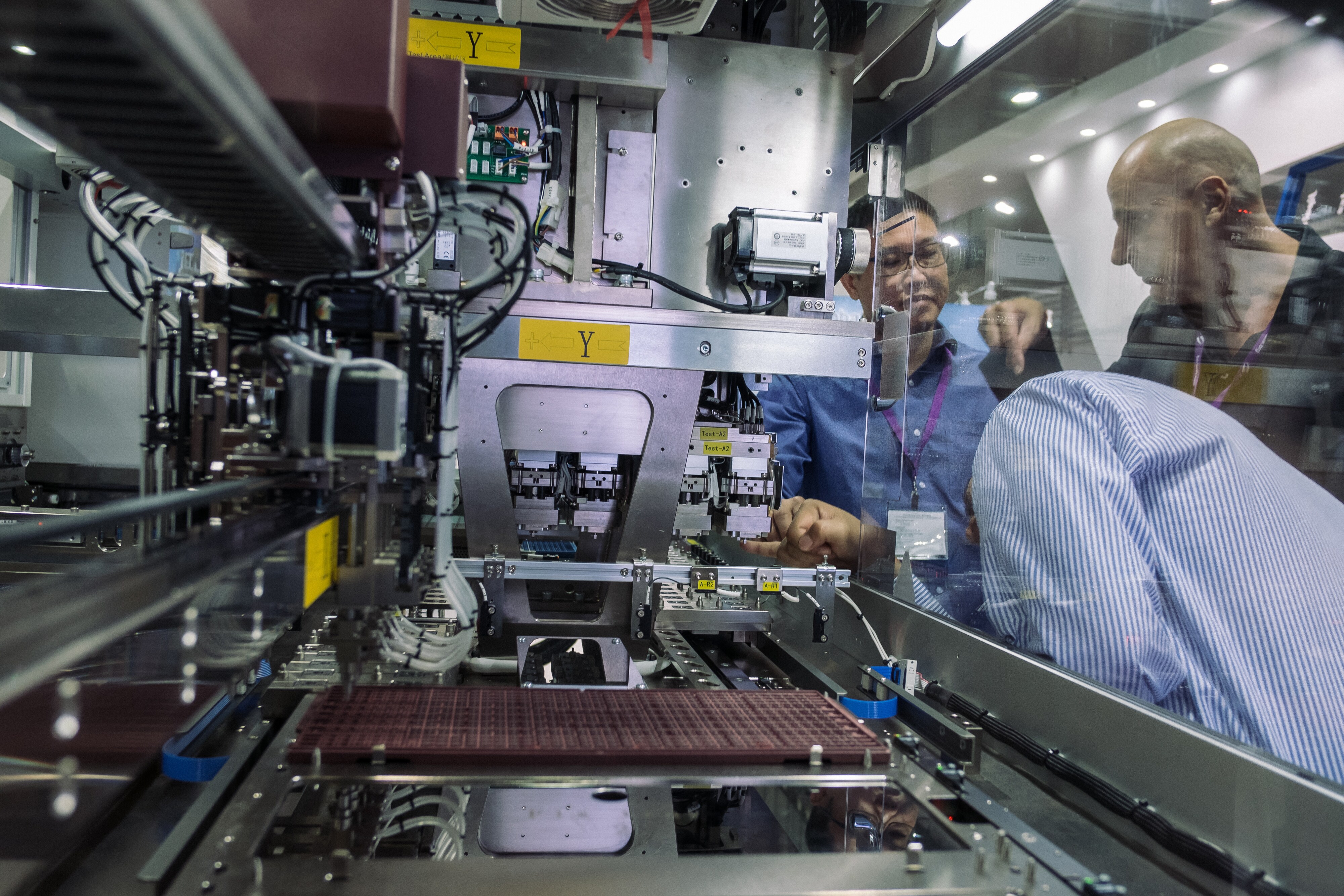
Yet, amidst the U.S.-China trade war, further expansion on the mainland is problematic. Why produce there, export to the U.S., and then get whacked with a 25 percent tariff?
Other than reopening facilities in Taiwan, which may be expensive thanks to labour costs, Taiwanese companies can avoid being collateral damage in the trade war by expanding in Thailand or Vietnam… or India!
Indeed, cutting dependence on the mainland is the goal of Taiwan's ‘Southbound Policy', and India counts as ‘south' of Taiwan. India's new Bilateral Investment Treaty with Taiwan, signed on December 18, 2018, is an important step to attracting Taiwanese foreign direct investment
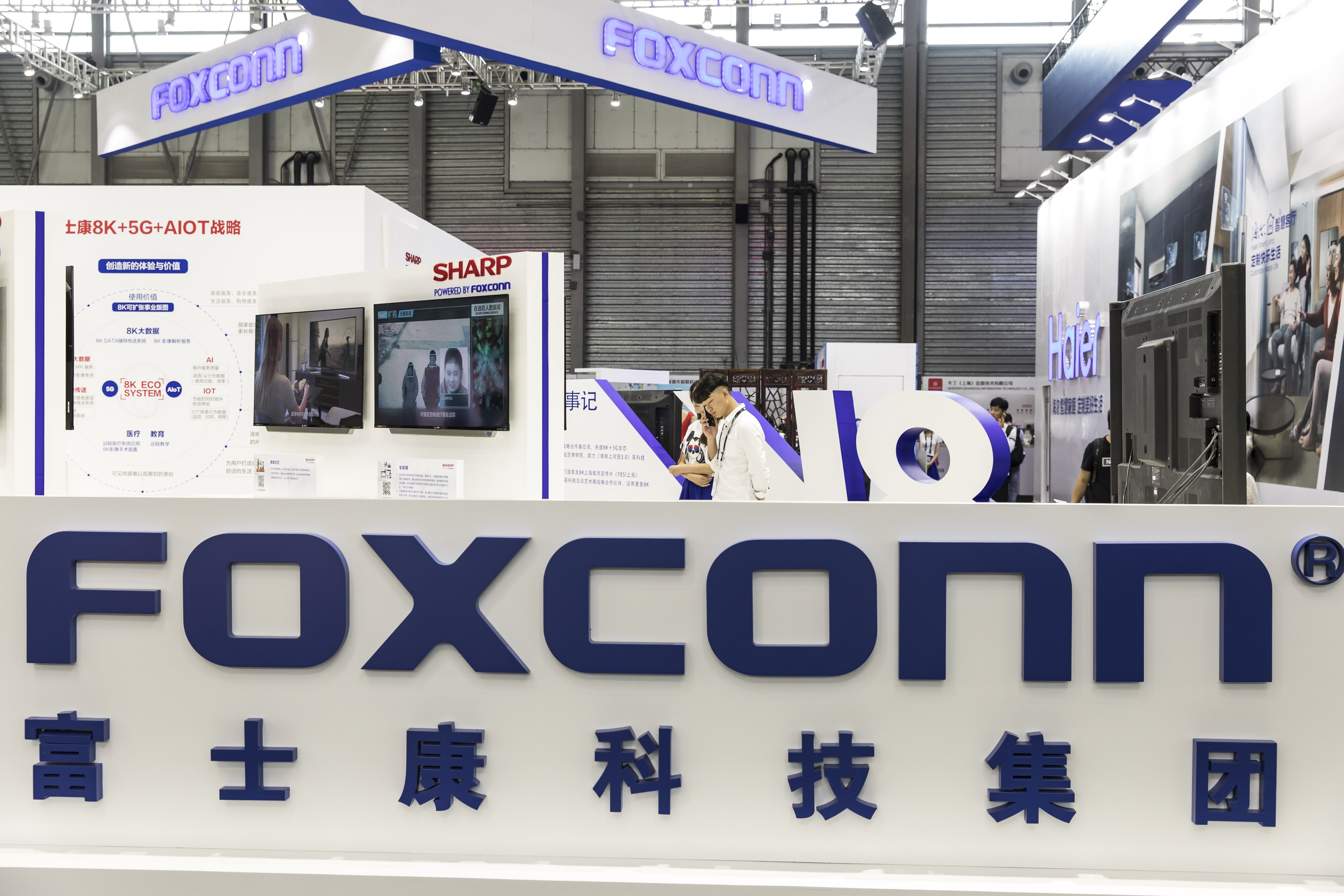
Foxconn's announcement that same month that it would make high-end iPhone models in 2019 in Tamil Nadu is a positive development.
But, India must take the needs of Taiwanese investors more seriously if it is to reinforce its relationship with Taipei.
The new BIT was part of an overhaul of all of India's investment agreements, not a targeted strategy to develop free trade ties with Taiwan. India's free trade agreement policy is China-centric, focused on the Regional Comprehensive Economic Partnership.
Fearing a flood of Chinese products, Delhi tries to wring out tariff phase-out periods from Beijing that are longer than the standard 20 years, already insanely long. Delhi also urges Beijing to acquiesce to limited product coverage. This maddeningly lowers the ambition of RCEP.
Meanwhile, Taiwan is available for an FTA with India. Taiwan has six deals – with Panama, 2004; Guatemala, 2006; Nicaragua, 2008; El Salvador-Honduras, 2008; New Zealand, 2013; and Singapore, 2014. The fact that India has a 2005 Comprehensive Economic Cooperation Agreement with Singapore might be a practical starting point for a bilateral, or even trilateral, deal.
Taiwanese investors share the yearning of the Indian electorate for reliable power, clean water, and sanitation. Those are the infrastructural ingredients for semiconductors, and electrical and electronic merchandise.
Delhi should not forget that Foxconn cannot achieve its planned $5 billion investment expenditure in Maharashtra by 2020, because that state couldn't provide these ingredients.
Extremely elated to witness the signing of 5 billion dollarMoU between GoM&Foxconn with employment generation of50000 pic.twitter.com/F7eKOSisJg
Deliver on his 2014 campaign promises, and Prime Minister Modi not only might win re-election in May 2019, but also solidify the position of the BJP as the investment-friendly regime that turns India into a production and export hub for top-tier Taiwanese companies.
The Political Rationale
Emerging from British colonialism, and enduring an Emergency period, India now is the world's largest free-market democracy. Emerging from Japanese colonialism and enduring a dictatorship period, Taiwan, too, is an authentic free-market democracy. Both boast a free press to cover contesting political philosophies and personages. The stability of Taiwanese democracy lies partly in an economic structure to which India aspires.
Taiwanese companies are not all behemoths. One of the most remarkable features of Taiwanese economic growth following the 1949 defeat of the Chinese Nationalist Party on the mainland is the over-sized role small and medium sized enterprises have played. Chaebols, zaibatsu, and state-owned enterprises – these large business conglomerates and state-dominated entities were the key agents, respectively, of Korean, Japanese, and mainland China growth strategy.
Not so in Taiwan. Mom-and-pop family-owned firms grew into major original equipment manufacturers and then into multinational giants.India, too, aspires to move past its legacy of titanic families dominating the commanding heights of its economy. In fostering SME-driven growth, India will find in Taiwan a model. That model of contested markets impedes the formation of, and governance by, an oligarchy or plutocracy – which are unacceptable forms of political organisation in India and Taiwan.
The Legal Rationale
It is apparently the case that Taiwanese investors on the Chinese mainland must declare their acceptance to the ‘One China' policy if their proposed deals are to proceed. That's a problem. On January 2, 2019, Chinese President Xi Jinping said Taiwan “must and will be” reunited with China, preferably peacefully based on “one country, two systems.” Taiwanese President Tsai Ing-wen—a law professor who helped negotiate Taiwan's entry into the WTO—replied “Taiwan will never accept one country, two systems,” and that “[t]he vast majority of Taiwanese public opinion also resolutely opposes one country, two systems.”
Tsai, who by her January 2016 election victory became Taiwan's first female leader, has good reason to be concerned. She worries that ‘One Country, Two Systems' is no guarantee of the rule of law, thanks to the Chinese Communist Party's post-1997 record in Hong Kong. She and many Taiwanese, especially young people, perceive a steady erosion of governmental checks and balances, and individual civil liberties, that the Basic Law, to which the Chinese mainland agreed with Britain, framed for Hong Kong for 50 years after the handover.
Prime Minister Modi should be worried, too, that ‘One Country, Two Systems' means ‘One Country, Eventually One System'.Suppose, God-forbid, China decides to encircle Taiwan militarily, and force its defeat through the threatened or actual use of force. There has never been an armistice or peace treaty signed by the authorities in Beijing and Taipei. In other words, the Chinese Civil War, which dates from August 1, 1927, arguably and technically continues.
How will Delhi respond to such an event? Will Prime Minister Modi have tacitly conveyed to Beijing that India would do nothing, because he kowtowed to President Xi's insistence that Cross-Strait relations were “part of China's domestic politics,” that “foreign interference is intolerable,” and that Beijing “reserves the option of taking all necessary measures” against such interference?
What blot might that be on India's understanding of itself, and its global appeal, as a rule-of-law nation?
Raj Bhala is the inaugural Brenneisen Distinguished Professor, The University of Kansas, School of Law, and Senior Advisor to Dentons U.S. LLP. The views expressed here are his and do not necessarily represent the views of the State of Kansas or University, or Dentons or any of its clients, and do not constitute legal advice.
The views expressed here are those of the author, and do not necessarily represent the views of BloombergQuint or its Editorial team.
Essential Business Intelligence, Continuous LIVE TV, Sharp Market Insights, Practical Personal Finance Advice and Latest Stories — On NDTV Profit.