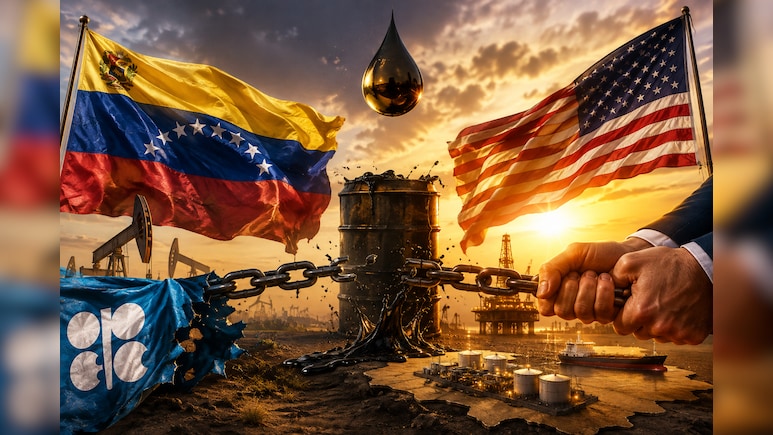
Venezuela is considering whether it should quit OPEC, according to people familiar with the matter, potentially delivering a fresh blow to the oil cartel it helped create more than six decades ago.
The idea of an exit has been a topic in conversations with US officials, and no final decision has been made, said some of the people, asking not to be identified discussing private information.
A decision to pull out of the Organization of the Petroleum Exporting Countries would underline the sweeping political realignment in Caracas since President Donald Trump ousted the longtime leader Nicolás Maduro and took control of the nation's oil sales.
Washington's growing influence is also reflected in US talks with Venezuelan leaders to take a large stake in the nation's oil fields — a development that would have been unthinkable just two years ago.
Negotiators from both countries are discussing that proposal, according to people familiar with the matter who asked not to be identified because the discussions are private. Some of them said a possible arrangement that has been discussed is a 100-year-lease on several oil fields.
A White House spokesperson had no immediate comment on the possible OPEC move. The White House also declined to comment on the oil field negotiations, which were first reported by Axios. The Venezuelan Information Ministry didn't immediately respond to requests for comment.
Taking a stake in Venezuela's oil reserves would mark an almost unprecedented intervention by the US in another country's economy, but it's also in keeping with Trump's so-called Donroe Doctrine of extending American influence in the Western Hemisphere.
He has described Venezuela as the 51st state and said the US controls its oil.
The move also aligns with the increasingly interventionist approach to business under Trump, whose administration has taken stakes in companies ranging from Intel Corp. to rare earths producer MP Materials Corp. and lithium miner Lithium Americas Corp. Trump has also pursued natural resources overseas. Last year his administration established a joint investment fund with Ukraine backed by revenues from that country's minerals, oil and gas projects.
The possibility of the US government taking a direct role in Venezuelan oil projects underscores how the industry is getting upended during a period of political transition. Major international oil producers are mostly taking a cautious approach to Venezuela, while more risk-tolerant independent drillers and investors are flocking to what many view as the biggest oil opportunity since the fall of the Soviet Union.
Faded Glory
Once a prominent member of the Organization of the Petroleum Exporting Countries, Venezuela's importance has ebbed as US sanctions and domestic turmoil have gutted its petroleum industry. The country pumped 1.16 million barrels a day in July, according to a Bloomberg survey, less than half the amount it produced a decade ago. Output, however, has risen this year.
Given its diminished production, Venezuela's potential exit is unlikely to have much immediate effect on global oil markets, which are currently dominated by the shockwaves of the US war with Iran.
Yet the idea is gaining traction amid public frustration with the obligations of membership expressed by Iraq and others. Just four months ago, the United Arab Emirates announced it would leave the cartel, threatening the group's unity and its sway over crude prices.
A Venezuelan exit would heighten doubts over whether OPEC — led by Saudi Arabia — can continue to hold together and influence crude prices. A further breakdown could plunge members into a fierce contest for market share, reprising the brief price war of 2020.
Some American officials envision an oil powerhouse built from an alliance between the US and Venezuela that would greatly diminish OPEC's influence, one of the people said.
Caracas isn't subject to any OPEC production limits now given the scale of its slump in recent years, and another person said that freeing the country from any potential quotas would help it maximize production over the longer-term and thus lower prices. Washington would be able to pursue its plans for the country's oil sector unfettered by obligations to another group, the person said.
Opportune Moment?
Venezuela's potential withdrawal from OPEC could clear the way for international oil companies from the US and elsewhere to play a larger role in helping rebuild the nation's oil industry, potentially adding to the global oil surplus anticipated in coming years by the International Energy Agency and other prominent forecasters.
Caracas' potential separation would be a victory for Trump, a long-time critic of OPEC and its ability to push up oil prices and fuel costs for American consumers.
Since US forces captured Maduro on Jan. 3 and acting President Delcy Rodríguez took power, relations between Washington and Caracas have shifted from isolation and acrimony to a deepening partnership as Trump exerts significant leverage over the nation and its vast natural resources.
The Trump administration has restored diplomatic ties, reopening the US embassy in Caracas and engaging in direct talks with Rodríguez and her top ministers, using a combination of sanctions relief, access to global finance and control over oil revenues to steer policy. Chevron Corp., the second-largest US oil producer, in April agreed to an asset swap with Venezuela that will significantly expand the company's operations there.
Venezuela was one of the five oil producers that founded OPEC in 1960 and is widely considered the most influential country in the group's creation, because of the assiduous diplomatic efforts of its oil minister at the time, Juan Pablo Perez Alfonzo.
The cartel and its partners have played a significant role in world oil markets ever since, from the Arab oil embargo of the 1970s, to massive output cuts that stabilized prices and aided much of the global petroleum industry during the coronavirus pandemic.
Venezuela was also instrumental in the birth of OPEC+, the alliance formed in 2016 between core cartel members and outsiders including Russia that revived the then-fading organization.
In recent years, however, the coalition's influence has appeared to wane again. US shale drillers and other rivals around the world have eroded its ability to influence prices. And massive discoveries in Guyana and Brazil have diluted its dominance over production.
Essential Business Intelligence, Sharp Market Insights, Practical Personal Finance Advice, Daily Fuel, Gold and Silver Prices and Latest Stories — On NDTV Profit.