Five of the 10 largest banks in the US have entered bear market territory, with shares of Bank of America, Wells Fargo, Goldman Sachs, Morgan Stanley and Capital One falling more than 20% from their respective peaks.
The KBW Nasdaq Bank Index has also declined around 16% from its peak, raising concerns about the health of the US banking sector and the broader economy.
However, analysts believe the sell-off may reflect pressure from rising bond yields and trading-related headwinds rather than an imminent banking crisis, with consumer credit conditions emerging as a key indicator to watch.
Also Read | Layoffs Are Rising In Tech, But These Skills Are Helping People Unlock Better Pay
Bank of America shares have fallen 26.51%, Wells Fargo 22.94%, Goldman Sachs 23.8%, Morgan Stanley 21.84% and Capital One 25.1%, according to the figures provided.
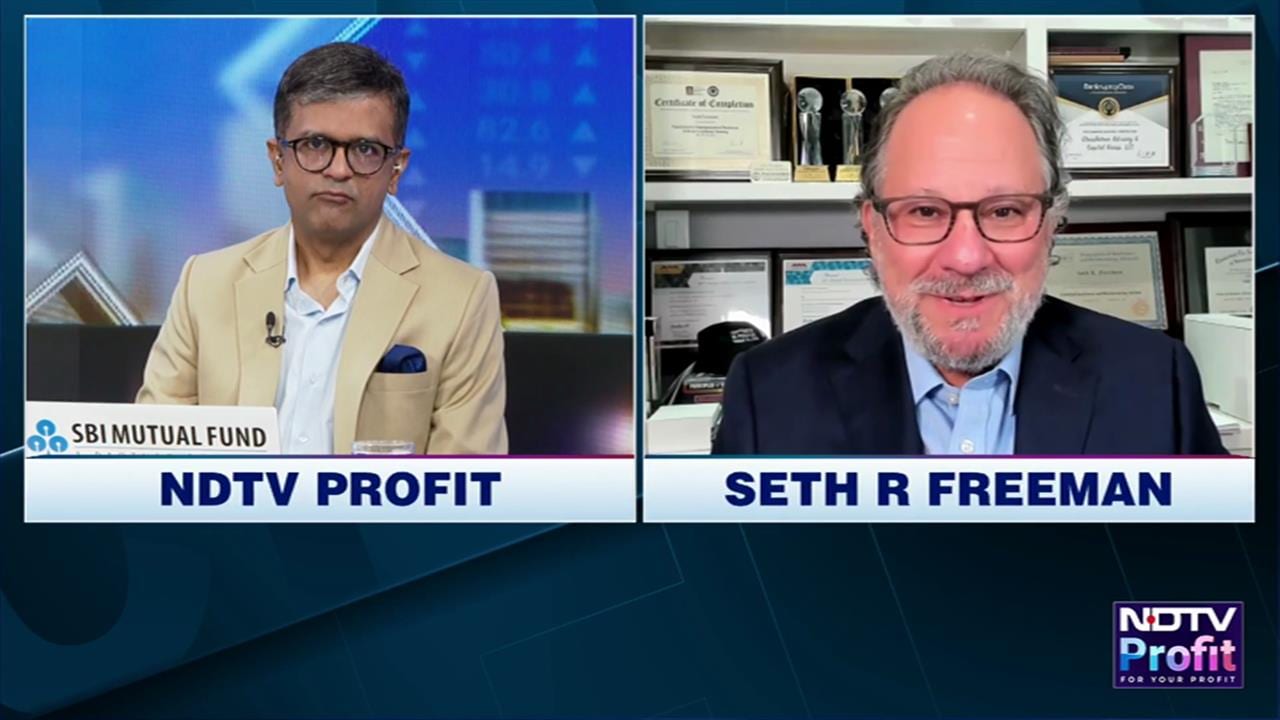
Veteran market analyst Deepak Jasani said rising bond yields and sharp cuts in trading profits have weighed on US banking stocks. As long as yields continue to rise, the sector is likely to remain under pressure, he said.
Gains in artificial intelligence (AI) and defence stocks have helped offset weakness elsewhere in the market. However, Jasani cautioned that the sustainability of the AI-led rally remains uncertain.
“How far the AI engine will keep running, we don't know,” Jasani said, warning that valuations and earnings could eventually come under pressure. If the rally slows or reverses, the resulting weakness could spread across several sectors and potentially push US indices into bear market territory.
US Bank Stocks Sell-Off: Why Bond Yields And Credit Risks Matter
Harshal Dasani, business head at INVAsset PMS, said the decline reflects a combination of interest-rate pressures, falling bond valuations and weakness in capital markets activity. He cautioned against interpreting the sell-off as an immediate signal of a recession.
According to Dasani, higher long-term bond yields affect banks through three principal channels: they reduce the market value of existing bond holdings, increase funding costs relative to the pace at which loan yields adjust, and potentially weaken investment banking and initial public offering (IPO) activity.
He pointed to unrealised losses on bank securities, rising funding costs and pressure on capital markets-related businesses as factors behind the weakness in bank shares. Goldman Sachs and Morgan Stanley, which have greater exposure to capital markets activity, are among the banks that have experienced substantial declines, he noted.
However, Dasani said the available earnings signals do not yet point to a broad-based deterioration in credit quality. While some lenders have reported higher provisions, he argued that the current sell-off more closely resembles an interest-rate repricing episode than a banking crisis driven by widespread loan defaults.
Capital One is a particularly important stock to watch, according to Dasani, given its exposure to consumer credit, especially credit cards. A deterioration in repayment trends among lower-income borrowers could provide an early indication of stress in the US economy.
US Bank Stocks And Recession Risk: Five Indicators To Watch
Dasani said bank stocks have historically weakened ahead of recessions, but a sell-off alone is not sufficient to predict an economic downturn. He cited the 2023 banking-sector decline as an example of how concerns about bond valuations and deposits can trigger substantial losses without necessarily leading to a recession.
The key distinction, he said, is whether bank stocks continue to fall even after long-term bond yields begin to ease. Such a divergence could indicate that investor concerns are shifting from interest rates towards credit quality and the possibility of an economic slowdown.
Dasani identified five indicators investors should monitor over the coming months.
First, net charge-offs and loan-loss provisions at lenders such as Capital One, Citigroup and Discover could reveal whether consumer credit conditions are deteriorating.
Second, the Federal Deposit Insurance Corporation's (FDIC) data on unrealised losses on bank securities will help investors assess the impact of movements in bond yields on banks' balance sheets.
Third, the Federal Reserve's Senior Loan Officer Opinion Survey will offer clues about whether banks are tightening lending standards. A sustained tightening in credit availability could affect business investment and consumer spending.
Fourth, the investment banking pipeline, particularly IPO activity, will indicate whether companies can access capital markets and whether investor risk appetite is recovering.
Fifth, initial jobless claims will provide a timely measure of labour-market conditions and help establish whether financial-market weakness is translating into a broader economic slowdown.
For investors, the distinction between a rate-driven sell-off and a credit-driven downturn is crucial. If bond yields ease and bank stocks stabilise, the current weakness could prove to be a repricing of interest-rate risks. If bank shares continue to decline alongside rising defaults and tighter lending standards, recession concerns would become more pronounced.
US Bank Stocks Crash: What It Means For Indian Markets
Jasani said investors should closely track bond yield movements, companies' ability to raise debt, particularly newer-age businesses, and the outcome of the US midterm elections. He added that an unexpectedly weak or mixed result for Republicans could make the market reaction difficult to predict.
Dasani said the implications for Indian equities will depend on the nature of the US banking sell-off. A rate-driven decline could encourage some capital to move towards emerging markets, while a credit-driven shock could trigger a broader risk-off response and prompt foreign investors to withdraw funds from markets such as India.
He also pointed to foreign investor selling in Indian equities as an important part of the backdrop, although the direction of future flows will depend on global risk appetite and the movement of bond yields.
For now, the main question is whether the US bank stock sell-off remains a response to higher yields or develops into a broader deterioration in credit conditions. Investors will need to watch consumer loan performance, lending standards, bond yields and labour-market data before drawing conclusions about the risk of a US recession.
READ | Bank of America Hit With $1.2 Billion Penalty Over $5 Billion In Unreported Transactions
Essential Business Intelligence, Sharp Market Insights, Practical Personal Finance Advice, Daily Fuel, Gold and Silver Prices and Latest Stories — On NDTV Profit.