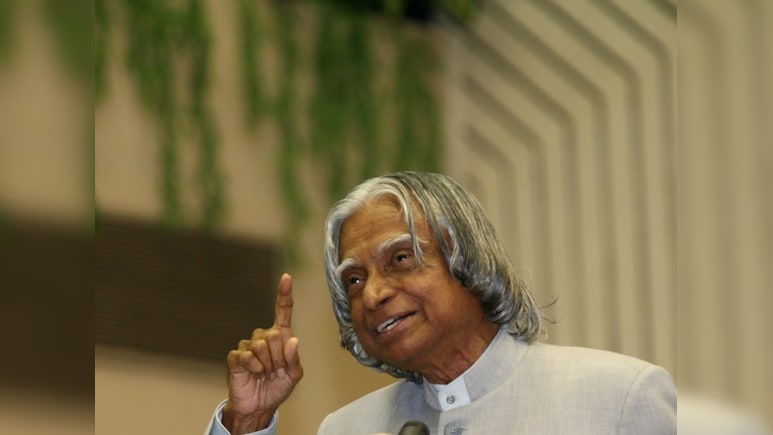
October 15 marks the birth anniversary of Dr. APJ Abdul Kalam, India's 11th President, a renowned aerospace scientist, author and teacher. Born in Rameswaram, Tamil Nadu, in 1931, Kalam became one of the country's most respected public figures for his contribution to science, his role in India's missile development programme as well as his efforts to inspire young people.
Popularly known as the 'Missile Man of India', Kalam served as the president of the country from July 2002 to July 2007. He died on July 27, 2015, while delivering a lecture at the Indian Institute of Management, Shillong. His legacy continues through his scientific contributions, books and messages about education, hard work, leadership and national development.
ALSO READ: Quote Of The Day By APJ Abdul Kalam: 'Be Active! Take On Responsibility'
Also Read | Layoffs Are Rising In Tech, But These Skills Are Helping People Unlock Better Pay
Lesser Known Facts
Kalam was born into a modest family in Rameswaram. According to biographical accounts published by the Press Information Bureau, his father owned a boat, and Kalam distributed newspapers during his childhood in order to support his family.
He studied physics at St. Joseph's College in Tiruchirappalli before pursuing aeronautical engineering at the Madras Institute of Technology. His education laid the foundation for a career that would bring him to the forefront of India's space and defence research programmes.
At the Indian Space Research Organisation (ISRO), Kalam served as project director of the Satellite Launch Vehicle - III (SLV-III). The vehicle successfully placed the Rohini satellite into near Earth orbit in July 1980, marking an important milestone in India's space programme.
He subsequently held key positions at the Defence Research and Development Organisation (DRDO) and led the Integrated Guided Missile Development Programme. His contributions to India's missile development earned him the title 'Missile Man of India'.
Kalam received the Padma Bhushan in 1981, the Padma Vibhushan in 1990 and the Bharat Ratna, India's highest civilian honour, in 1997.
After completing his presidential term in 2007, he returned to teaching, public speaking and interacting with students. Encouraging young people to develop scientific curiosity and contribute to the country's progress remained a central theme of his public life.
Books by APJ Abdul Kalam
Kalam authored and co-authored several books on his life, scientific achievements, education and vision for India's future.
1. Wings of Fire: Co-written with Arun Tiwari, the autobiography traces Kalam's journey from his childhood in Rameswaram to his work in India's scientific establishments.
2. India 2020: A Vision for the New Millennium: Co-authored with YS Ranjan, the book presents a roadmap for India's development, focusing on areas such as agriculture, healthcare, infrastructure, technology and industry.
3. Ignited Minds: Subtitled 'Unleashing the Power Within India', the book explores how students, teachers, scientists and citizens can contribute to national progress.
4. My Journey: The book recounts experiences and lessons from Kalam's life, offering insights into his personal values and professional journey.
5. Guiding Souls: Co-written with Arun Tiwari, the book explores questions about life's purpose, values and personal development.
Other books associated with Kalam include Indomitable Spirit, Children Ask Kalam, Dream Your Dreams, Envisioning an Empowered Nation and The Scientific Indian.
10 Inspirational Quotes
Kalam's speeches and writings frequently emphasised the importance of ambition, hard work, perseverance and turning ideas into action. Below are 10 quotes associated with his message:
1. On dreams and action: "Dreams always become the vision, vision transforms into missions and missions generate hundreds of goal oriented projects."
2. On the secret of success: "Dream, Sweat and Perseverance"
3. On hard work and perseverance: "Hard work and perseverance are beautiful angels who will support you."
4. On thinking and progress: "Thinking leads to action."
5. On knowledge and action: "Knowledge without action is useless and irrelevant."
6. On setting goals: "I realise, I have to set a goal in my life."
7. On developing talent: "All of us do not have equal talent. But, all of us have equal opportunity to develop our talents."
8. On the importance of effort: "Thinking is the capital, Enterprise is the way, Hard Work is the solution."
9. On overcoming difficulties: "You should face them boldly and become the master of the problem."
10. On working towards excellence: "I will work and work with courage to achieve success in all my tasks and enjoy the success of others."
World Students' Day
October 15 is also observed as World Students' Day in recognition of Kalam's association with education and young people. His interactions with students, teachers and researchers reflected his belief that education and scientific thinking could play a significant role in India's development.
In his writings, particularly in the book Ignited Minds, Kalam stressed the importance of encouraging young people to think independently, pursue ambitious goals and use their knowledge to address challenges facing the society.
His legacy therefore extends beyond his tenure as President and his contributions to India's scientific programmes. Through his books, speeches and engagement with students, Kalam left behind a message that continues to resonate - dreams must be supported by knowledge, hard work, perseverance and action.
Essential Business Intelligence, Sharp Market Insights, Practical Personal Finance Advice, Daily Fuel, Gold and Silver Prices and Latest Stories — On NDTV Profit.