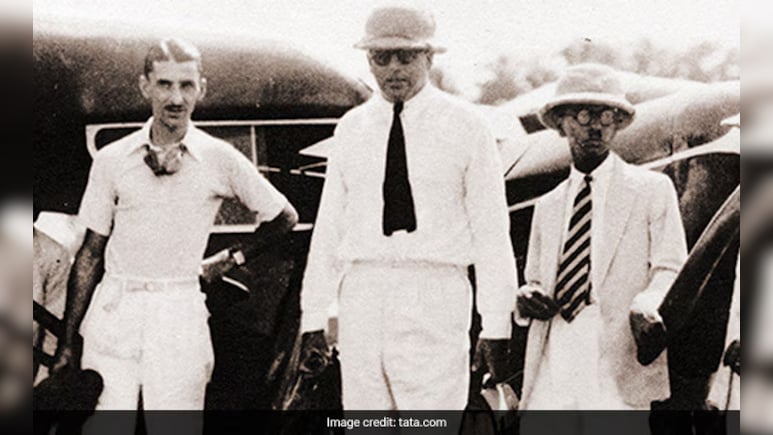
On October 15,1932, industrialist and aviation enthusiast, JRD Tata, piloted an aircraft carrying mail from Karachi to Bombay (now Mumbai). This flight marked the beginning of Tata's aviation venture, which eventually developed into Tata Airlines and later became Air India.
The aircraft was a small single-engine aircraft, a De Havilland Puss Moth, carrying a consignment of airmail rather than regular passenger load. It departed from Drigh Road Airport in Karachi which was then a part of British India and was scheduled to land in Bombay with a stop in Ahmedabad of refuelling.
Also Read | Layoffs Are Rising In Tech, But These Skills Are Helping People Unlock Better Pay
These details are documented in the Tata Group's historical account, Song of the Clouds, which recounts the preparation and events surrounding the inaugural flight.
ALSO READ: Air India Sets Up Committee Under CEO To Explore Cost-saving Measures
According to the Tata Group account, the aircraft took off from Karachi at 6:30 am. JRD Tata later recalled that the journey was affected by headwinds, particularly before reaching Ahmedabad. The aircraft arrived in Bombay at approximately 1:50 pm. At Ahmedabad, the aircraft stopped to refuel, with petrol brought in four-gallon cans on a bullock cart.
In a post on X, Air India Newsroom posted a visual representation of the petrol being transported on bullock carts. This detail offers a glimpse into the logistical challenges of early aviation, when the infrastructure required to operate an aircraft was still developing.
1/4 | A bullock cart helped refuel Air India's first flight. On 15 October 1932, J.R.D. Tata piloted the first flight of Tata Sons' aviation service, flying a De Havilland Puss Moth from Karachi to Ahmedabad and then Bombay, carrying airmail. At Ahmedabad, the aircraft stopped to refuel, with petrol brought in four-gallon cans on a bullock cart.
— Air India Newsroom (@AirIndia_News) October 15, 2026
The journey was significant because it launched a commercial airmail service operated by an Indian enterprise at a time when aviation infrastructure was still developing across the subcontinent.
The journey was part of a larger airmail operation. According to the Tata Central Archives, the mail was transferred to another Puss Moth after JRD Tata's arrival in Bombay. Nevill Vintcent then flew the onward leg towards Madras via Bellary.
Tata Airlines was renamed Air India Ltd in 1946. The airline subsequently entered international aviation, with Air India International's first international service departing Bombay for London on June 8, 1948.
The Government of India nationalised the airline sector in 1953. JRD Tata continued to serve as Air India's chairman after nationalisation, maintaining his association with the airline he had helped establish.
JRD Tata's achievements in aviation predated the historic flight. The Tata Group's official timeline records that he obtained India's first pilot's licence in 1929, receiving Private Licence No.1.
His connection with the inaugural journey continued decades later. Tata Central Archives records that he recreated the flight in 1962 to mark its 30th anniversary and again in 1982 for the golden jubilee of Indian civil aviation.
Air India's account of the bullock cart carrying petrol highlights how different the practical realities of flying were in 1932. What began with a small aircraft, a consignment of mail and improvised refuelling arrangements eventually developed into an airline with international operations.
The October 15 milestone remains a defining chapter in the history of Indian civil aviation, commemorating JRD Tata's role in turning an aviation ambition into a lasting enterprise.
ALSO READ: India Crosses 50% Milestone In Sustainable Aviation Fuel Readiness: Boeing-RSB Report
Essential Business Intelligence, Sharp Market Insights, Practical Personal Finance Advice, Daily Fuel, Gold and Silver Prices and Latest Stories — On NDTV Profit.