- SEBI will release a detailed study on retail futures and options trading losses soon
- The study will analyze participant categories and their performance in derivatives trading
- SEBI introduced a new cash-market closing mechanism to improve price discovery
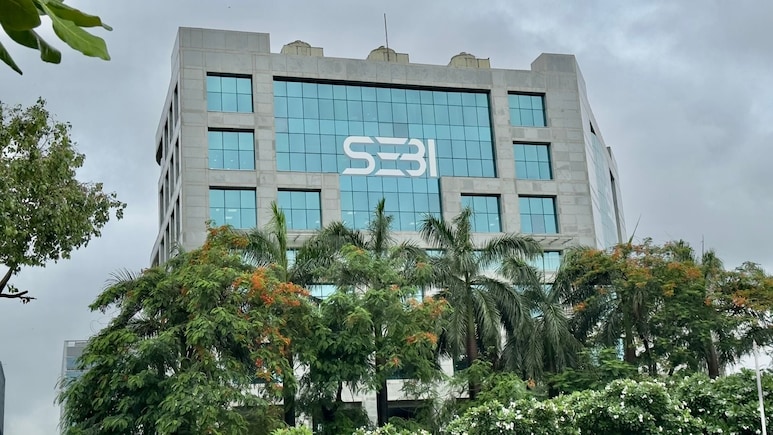
The Securities and Exchange Board of India will release a fresh, more granular study on retail participation and losses in futures and options trading within the next eight days to 10 days, Chairperson Tuhin Kanta Pandey said on Wednesday, as the regulator continues to examine the risks posed by growing derivatives activity.
The study will look beyond aggregate retail losses to examine who is trading, who is losing money and how different categories of participants are performing, Pandey said on the sidelines of the Global Commodity Conclave 2026. He added that the analysis would not be limited to retail investors, with even sophisticated market participants losing money in options trading.
"Even big players are losing money in options trading," Pandey said, stressing that options trading, particularly on expiry days, is not as easy as it may appear.
Also Read | Layoffs Are Rising In Tech, But These Skills Are Helping People Unlock Better Pay
The new study comes as SEBI continues to monitor participation and losses in derivatives markets and assess the impact of its regulatory interventions.
Closing Mechanism Major Market Microstructure Reform
Pandey described the recent change to the cash-market closing mechanism as a "major market microstructure reform", saying India had lagged several global markets on the issue.
Several global markets, including Japan, Hong Kong, the US, Germany, Europe and Australia, already use similar closing mechanisms. A credible closing price is important for indices, passive investing and mutual fund NAV calculations, he said.
Under the earlier VWAP-based mechanism, Pandey said, a trade close to the end of the session could disproportionately influence the closing price, creating scope for practices such as marking the close.
The new mechanism is intended to address those vulnerabilities while improving price discovery. A random closing time is also intended to reduce the scope for last-minute manipulation.
Pandey said the new mechanism is "not a black box" and that indicative prices will continue to be displayed. The system consolidates bids to determine the price at which the maximum number of bids can be matched.
Some brokers, including Zerodha and Upstox, are already displaying indicative prices, while ICICI Securities, Groww and Angel One are expected to begin displaying them in their apps around August 14. "We need more participation in the cash market," Pandey said.
SEBI is speaking with market stakeholders and monitoring feedback, including views emerging on social media. Pandey said the regulator could tweak or improve the framework if required, while acknowledging that existing systems, algorithms and industry processes were built around the older mechanism.
ALSO READ: SAT Questions SEBI's Rationale For 2-Month Market Ban On ZEEL
SEBI Seeks Deeper Participation Across Markets
The regulator is consulting on allowing foreign portfolio investors to participate in commodity derivatives, with the objective of bringing greater participation, depth and volumes to commodity markets.
Pandey said SEBI is also looking to reduce friction for FPIs through improvements in registration, the block-deal framework and netting. Some FPI-related taxation issues are also under consideration by the central government.
On commodity derivatives, Pandey said SEBI has sent proposals to the GST Council Secretariat aimed at resolving taxation issues around delivery-based contracts.
The proposal would move towards an IGST framework where commodities can be warehoused in different states, instead of requiring separate state-level registrations. A practical solution, he said, would make delivery-based commodity contracts easier to execute.
Pandey also said SEBI is continuously monitoring market data and participation patterns. He referred to periods when mutual fund participation had risen from around 5-7% to as much as 20-25%, underscoring how different categories of participants understand and behave in markets differently.
SEBI is engaging with market participants and welcoming suggestions as regulatory changes take effect. Pandey said the broader objective is to increase participation while preserving market integrity and improving how markets function.
"The market will settle once people understand the mechanism better," he said.
Essential Business Intelligence, Sharp Market Insights, Practical Personal Finance Advice, Daily Fuel, Gold and Silver Prices and Latest Stories — On NDTV Profit.