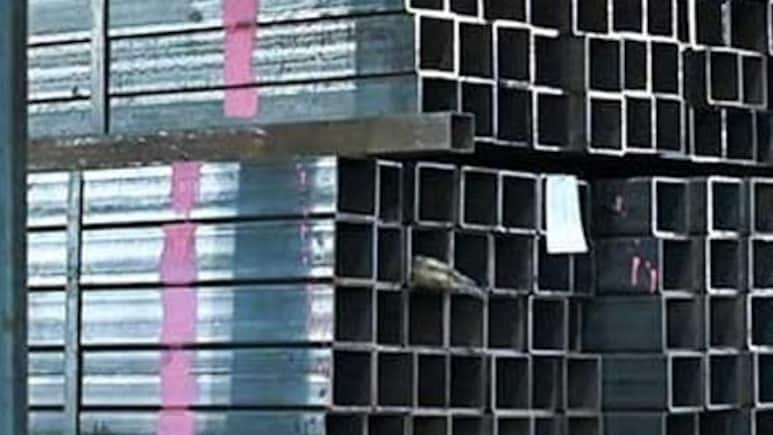
Sambhv Steel Tubes Ltd. is planning a threefold increase in finished product capacity by 2030, with a larger share of stainless steel expected to change the company's revenue mix and improve earnings per tonne. The company aims to increase capacity from around 0.6 million tonnes per annum (MMTPA) to 2 MMTPA and capture a 10-12% share of India's mild steel pipes and stainless steel coils markets.
The strategy combines new manufacturing facilities, higher-value products and an expansion of captive power generation. Sambhv expects stainless steel products to command higher realisations than mild steel pipes, while in-house power generation could lower energy costs as production scales up.
The financial commitment is substantial. The company had debt of Rs 378 crore at the end of FY26 and expects term debt to peak at Rs 800-850 crore by the end of FY27, alongside working capital borrowings of Rs 200-300 crore. The investment case therefore rests on more than adding capacity: Sambhv must commission projects on schedule, increase utilisation and improve earnings per tonne without allowing debt and working capital requirements to erode returns.
Also Read | Layoffs Are Rising In Tech, But These Skills Are Helping People Unlock Better Pay
The company's shares have risen 72% so far in 2026, while its enterprise value to EBITDA multiple stands at 17 times, above those of Shyam Metalics and Energy and JSW Steel. Delivering the planned improvement in product mix and profitability will be important to supporting that valuation.
READ | TARIL's Capacity Expansion Sets Up A Margin Test As Orders Grow
Integrated Model
Based in Chhattisgarh, Sambhv is an integrated secondary steel manufacturer whose operations span raw material processing and the production of finished steel pipes, tubes and coils. Its proximity to raw material sources helps reduce transportation costs and improve operational efficiency.
Its portfolio includes mild steel products such as sponge iron, blooms, hot-rolled and cold-rolled coils, and black electric resistance welded (ERW) pipes. It also makes coated mild steel products, including pre-galvanised coils, pipes and tubes, as well as stainless steel blooms, slabs, hot-rolled coils and cold-rolled coils.
The company distributes its products across India through 47 main distributors and more than 1,000 dealers and fabricators. In stainless steel, it uses a co-branding model under which 28 partner manufacturers use Sambhv's coils to produce finished pipes under a joint brand.
This manufacturing and distribution network provides the base for its planned expansion. The next phase is intended to increase production while shifting more of the portfolio towards stainless steel.
READ | Lloyds Engineering Shares Rise 94% in Six Months: Can Defence Drive The Next Leg?
Earnings Momentum
Sambhv reported revenue of Rs 732 crore in Q1FY27, up 31% year-on-year. Sales volume increased 16% to 107,771 tonnes, while volumes of value-added products (VAP) rose 27%.
Value-added products accounted for 92.7% of FY26 revenue. Their contribution supported EBITDA growth of 31% to Rs 100 crore in Q1FY27. EBITDA per tonne exceeded Rs 10,000, excluding sponge iron sales, while net profit increased 70% year-on-year to Rs 56 crore.
The company reported a blended realisation of Rs 67,940 per tonne across its product portfolio during the quarter. Higher value-added product volumes are central to its strategy because a richer product mix could support earnings per tonne as new capacity comes online.
For FY27, management is targeting VAP volumes of 0.4 million tonnes and blended EBITDA of Rs 7,500-8,500 per tonne.
Capacity Build-Up
Sambhv has installed finished product capacity of approximately 624,000 tonnes per annum. Pre-galvanised product lines are operating at more than 90% utilisation, while mild steel pipe lines run at around 65% and stainless steel coil lines at approximately 60%.
The company plans to increase finished product capacity by about 75%, from 0.6 MMTPA to approximately 1.1 MMTPA by Q4FY27. The expansion is intended to accommodate additional demand while creating room for a larger stainless steel business.
The largest addition will come from the greenfield Kesda Phase I project, which will add 360,000 tonnes per annum of stainless steel coil capacity. The project involves plant capital expenditure of Rs 810 crore within a total outlay of Rs 930 crore.
Once commissioned, total stainless steel cold-rolled coil capacity is expected to reach 476,000 tonnes per annum. Management expects average utilisation at Kesda to be around 35% in FY28 as production ramps up, rising to 60-65% in FY29.
Sambhv has also secured Consent to Establish for a stainless steel facility with capacity of 118,000 tonnes per annum at Kuthrel Unit II, providing another option for future expansion.
In mild steel, a brownfield expansion will add a 150,000-tonne-per-annum ERW pipeline, taking total mild steel ERW pipe capacity to 500,000 tonnes per annum. This will allow the company to supply a wider range of standard industry products.
The planned increase in capacity is significant, but the contribution to earnings will depend on how quickly the new lines move from commissioning to commercial production and higher utilisation.
READ | Aequs' $1 Billion Aerospace Order Book Faces A Test: Can Growth Deliver Profits?
Stainless Steel Shift
Stainless steel is central to Sambhv's plan to improve its product mix. The company's stainless steel capacity is projected to increase 4.1 times, raising its share of total finished product capacity from less than 20% to more than 43%.
The rationale is the difference in realisations. Mild steel pipes typically realise Rs 55,000-60,000 per tonne, while management is targeting around Rs 1,25,000 per tonne for stainless steel 200-series products and Rs 2,00,000 per tonne for 300-series products.
However, the benefits will not arrive immediately. During the initial phase of Kesda's operations in FY28, some stainless steel output will be sold as hot-rolled coils before cold-rolling facilities reach maturity.
Management expects these hot-rolled products to generate EBITDA of Rs 12,000-13,000 per tonne. As cold-rolled processing scales up, EBITDA per tonne on stainless steel coils is expected to increase to Rs 15,000-16,000.
Both ranges exceed Sambhv's current blended EBITDA guidance of Rs 7,500-8,500 per tonne. Management expects company-wide EBITDA per tonne to improve to Rs 8,000-10,000 by FY28.
The improvement will depend on the pace of production ramp-up and the share of higher-realisation products in total sales. Until the new facilities operate at higher utilisation, the company may not realise the full benefits of its planned product mix.
Power Savings
Captive power generation is another part of Sambhv's cost strategy. The company is increasing its captive power capacity from 25 MW towards 88-90 MW.
Management expects the expanded power assets to generate annual energy cost savings of Rs 180-200 crore once fully operational. If achieved, these savings could support margins as steel production expands.
The timing of the benefits will depend on the commissioning and operation of the additional power capacity. The expected savings are a target rather than a realised contribution to earnings.
Rising Debt
Funding the expansion will increase demands on Sambhv's balance sheet. Debt stood at Rs 378 crore at the end of FY26. Management expects term debt to peak at Rs 800-850 crore by the end of FY27, in addition to working capital borrowings of Rs 200-300 crore.
The company's average cost of debt is currently 7.5-8%. Annualised net debt to operating EBITDA stood at 1.0 times in Q1FY27, according to the company.
As production increases, Sambhv will need to fund inventory and receivables alongside its capital expenditure. New facilities will also need time to reach the utilisation levels assumed in the company's plans.
The combination of higher debt and working capital requirements makes cash generation an important measure of execution. Delays in commissioning or a slower production ramp-up could extend the period before the new investments contribute fully to earnings.
Valuation Premium
Sambhv trades at an enterprise value to EBITDA multiple of 17 times, compared with 13 times for Shyam Metalics and Energy and 11 times for JSW Steel. The premium reflects the company's planned expansion and the expected improvement in its product mix.
The valuation leaves execution central to the investment case. Delays in commissioning, slower utilisation, weaker steel realisations or higher-than-expected working capital requirements could constrain earnings growth.
Sambhv's Vision 2030 plan offers a route to larger scale and greater exposure to stainless steel products. The key measures to track are commissioning timelines, utilisation at Kesda, EBITDA per tonne, captive power savings and the trajectory of net debt.
The company is targeting a threefold increase in capacity, but the financial outcome will depend on how efficiently it uses that capacity. Higher realisations and lower energy costs could improve profitability; rising debt and a slow ramp-up could delay those gains.
Disclaimer: The views expressed in this article are solely those of the author and do not necessarily reflect the opinion of NDTV Profit or its affiliates. Readers are advised to conduct their own research or consult a qualified professional before making any investment or business decisions. NDTV Profit does not guarantee the accuracy, completeness, or reliability of the information presented in this article
Essential Business Intelligence, Sharp Market Insights, Practical Personal Finance Advice, Daily Fuel, Gold and Silver Prices and Latest Stories — On NDTV Profit.