A string of unusually well-timed trades across oil, equities, and prediction markets has triggered fresh scrutiny in the United States, with questions mounting over whether sensitive policy information linked to President Donald Trump's decisions may have been exploited for profit.
The concerns intensified amid media reports that the White House circulated an internal email on March 24 warning staff against using their positions to trade in financial markets or event-based betting platforms. The advisory came amid a growing pattern of trades placed just minutes, or even seconds, before major geopolitical and policy announcements.
Investigations and market data reviewed by global agencies such as Reuters and Bloomberg point to a recurring pattern: large, high-conviction bets placed shortly before market-moving announcements, often yielding outsized profits.
Also Read | Layoffs Are Rising In Tech, But These Skills Are Helping People Unlock Better Pay
Legal experts say the consistency, scale, and timing of these trades raise red flags. While no direct evidence has yet proven insider trading, the clustering of such incidents has intensified calls for regulatory scrutiny.
Timeline Of Key Suspicious Trades
- Tariff Options Surge: Large leveraged options trades, estimated at billions of dollars, were reportedly executed ahead of tariff policy pauses, leading to sharp equity market rallies and significant trader profits.
- Prediction Markets – High-Accuracy Binary Bets: Across multiple events, including Iran leadership targeting scenarios and geopolitical shifts, binary betting platforms saw concentrated wagers placed shortly before outcomes were confirmed, often by newly created or anonymous accounts.
- Early April 2026 – Ceasefire Oil Shorts: In another high-profile instance, traders placed nearly $950 million worth of short bets on oil just hours before a US-Iran ceasefire announcement. The move triggered a sharp 15% drop in crude prices, delivering windfall gains to those positioned early.
- Late March – Broader Market Moves: Similar patterns were observed across equities and derivatives. Unusual activity in S&P 500 futures and global markets preceded policy signals, including tariff-related decisions, amplifying suspicions of informed trading.
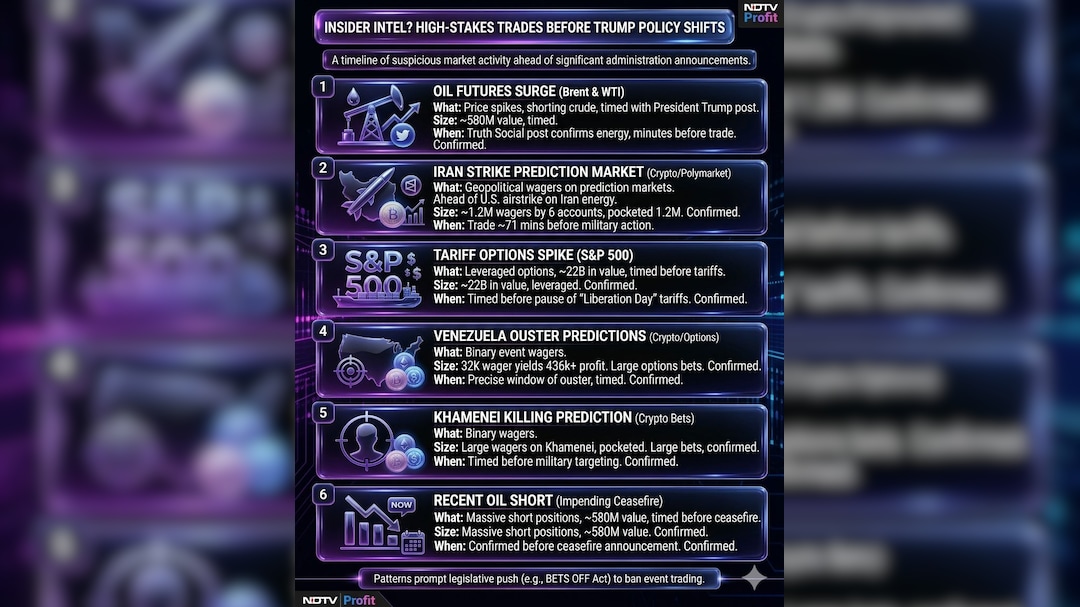
Photo Credit: NDTV Profit
- March 22–23 – Oil Futures Spike Before Trump Post: One of the most striking cases involved crude oil markets. Between 6:49–6:50 a.m. ET on March 23, traders placed bets worth roughly $500–$580 million in Brent and WTI futures, just minutes before Trump announced a pause in planned strikes on Iran. Oil prices dropped sharply following the announcement, making those pre-positioned trades highly profitable.
- Early March – Iran Strike Prediction Markets: In the first week of March, a handful of accounts placed large wagers on platforms like Polymarket predicting a US strike on Iran. Some of these trades were executed hours before military action, reportedly generating profits of over $1 million.
- January 2026 – Venezuela Ouster Bets: Early signs of unusual activity emerged when traders placed targeted wagers on political developments in Venezuela. Prediction market positions accurately anticipated regime change events, generating massive returns from relatively small bets.
The clustering of such trades has sparked debate over the adequacy of oversight in both traditional and emerging markets, particularly prediction platforms that fall into regulatory grey zones.
Experts note that insider trading laws clearly prohibit using non-public information for financial gain, but enforcement becomes complex when trades span multiple asset classes—commodities, equities, and crypto-based betting markets.
Essential Business Intelligence, Sharp Market Insights, Practical Personal Finance Advice, Daily Fuel, Gold and Silver Prices and Latest Stories — On NDTV Profit.