HUL Q1 Results: Profit Up 2%, Volume Growth Highest In Five Quarters
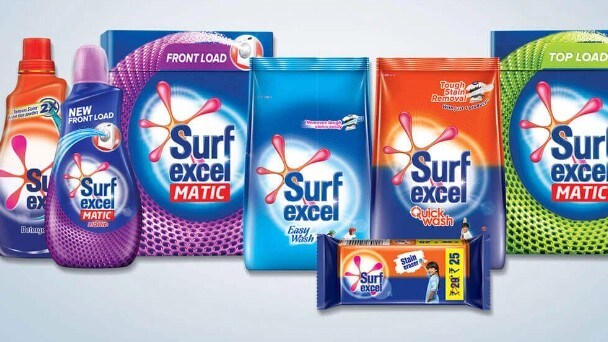
Hindustan Unilever Ltd.'s first-quarter profit rose, meeting analysts' estimates, driven by moderate uptick in volume even as revenue growth slowed on account of price cuts in the home and personal care divisions.
The consolidated net profit of India's largest consumer goods maker rose 2.2% year-on-year to Rs 2,612 crore in the quarter-ended June, according to an exchange filing. That compares with the Rs 2,601-crore consensus estimate of analysts tracked by Bloomberg.
HUL Q1 FY25 Key Highlights (Consolidated, YoY)
Revenue up 1.4% at Rs 15,707 crore (Bloomberg estimate: Rs 15,587 crore).
Ebitda up 2.2% at Rs 3,744 crore (Bloomberg estimate: Rs 3,690 crore).
Margin at 23.8% versus 23.7%. Analysts had pegged the metric at 23.7%.
Volume grew 4% over a year ago in Q1, as compared with 2% in the preceding three months, according to the company.
"The first quarter performance reflects our decisive actions of transforming our portfolio in high growth spaces aided by gradual recovery of rural markets," said Chief Executive Officer and Managing Director Rohit Jawa. The pace of improvement going forward will depend on how soon the rural market revives. "It will depend on employment generation, a good monsoon for the rest of the season and other macro factors like inflation."
Prices of key commodities, except tea, remained benign on a deflationary base during the quarter. Looking ahead, Jawa expects "near-zero" price growth, if input prices remain where they are.
He also expects to maintain operating margin at current levels.
Key Segment-Wise Highlights
Revenue from home care rose 4.6% to Rs 5,673 crore, with high-single digit volume growth.
Beauty and wellbeing grew 3.5% to Rs 3,281 crore, with mid-single digit volume growth.
Personal care revenue fell 4.4% to Rs 2,386 crore, but delivered low-single-digit volume growth.
Food and refreshments revenue grew 1.4% to Rs 3,850 crore, with flat volume growth.
The food business was impacted by a harsh summer season, according to the company. Its nutrition drinks—Horlicks and Boost—had subdued performance in the quarter. Tea sales were impacted because of lower production, but coffee delivered double-digit growth driven by pricing.
HUL's ice-cream delivered double-digit volume growth aided by strong launches during the summer season. The packaged consumer goods maker is still evaluating the future of this business that contributes less than 3% to its turnover. "We will be able to share the direction for the ice cream business in India by the end of this year," said Ritesh Tiwari, chief financial officer at HUL, during a post-earnings media briefing.
The skincare and colour cosmetics segment recorded muted volume growth with mass portfolio declining.
Jawa said that the company's strategy of premiumisation across its portfolio is yielding positive results. Over the past three years, the contribution from the premium portfolio has risen by 300 basis points.
Shares of HUL closed 1.09% higher ahead of the announcement, as compared with a flat benchmark S&P BSE Sensex.

-
India Exports Capital. Why Not Export Trusteeship?

The big question, then, is whether India can build an institution that global borrowers, investors, banks, and lawyers can trust, even without an Indian connection.
-
France's Economy & Politics Are In Crisis | The Reason Why
Let's look at how the French economy and politics evolved under Nicolas Sarkozy, Franois Hollande and Emmanuel Macron.
-
You May Inherit The Business. You Must Earn Its Credibility.
Succession tests the founder's ability to share authority as much as it tests the next generation's readiness to assume it.
-
Signing Deals Is One Thing; Making Them Work Is Another | The Week In Whys
Sometimes, things don't turn out as planned. Indian companies have lost some bids to rivals, some projects won't produce until 2030.
-
FOMC Wall, PERM Suspension, Hospital Stocks | Talking Points This Week
A PERM suspension would directly affect green-card sponsorship rather than H-1B visas, so the near-term earnings impact could remain relatively limited. The key question is whether this marks a new phase in US scrutiny of Indian IT.
-
Everything, Everywhere, All At Once: Dalal Street's Week To Forget | Joining The Dots
Visa curbs, a Starlink spat and cancer drug caps: what connects this week's shocks for Indian markets
-
India Is Going Abroad For Critical Minerals. But It May Take Years To Pay Off | The Reason Why
Although India's steps are in the right direction, they remain modest compared with India's growing dependence.
-
When Everyone Has AI, What Gives You An Edge?
India's young workforce is entering an uncertain world of work where powerful AI tools are becoming widely accessible. The advantage will belong to those who combine deep expertise with digital fluency, and the distinctly human capabilities that technology cannot manufacture.
-
Wrong Labels, High Pesticide Residues Holding Back Agri Exports | The Reason Why
India needs stronger domestic food-safety and labelling standards, with best practices becoming part of everyday business for farmers, traders and food companies.
-
India Is Easy To Enter, Harder To Attract | The Week In Whys
The question is no longer just whether India can attract companies and capital. It is how much value they create here, how deeply they invest, and whether India remains relatively attractive when they have plenty of other options.