HDFC Bank's Operational Income Set To Improve, Says Goldman Sachs — Stock Gets 15% Upside Target
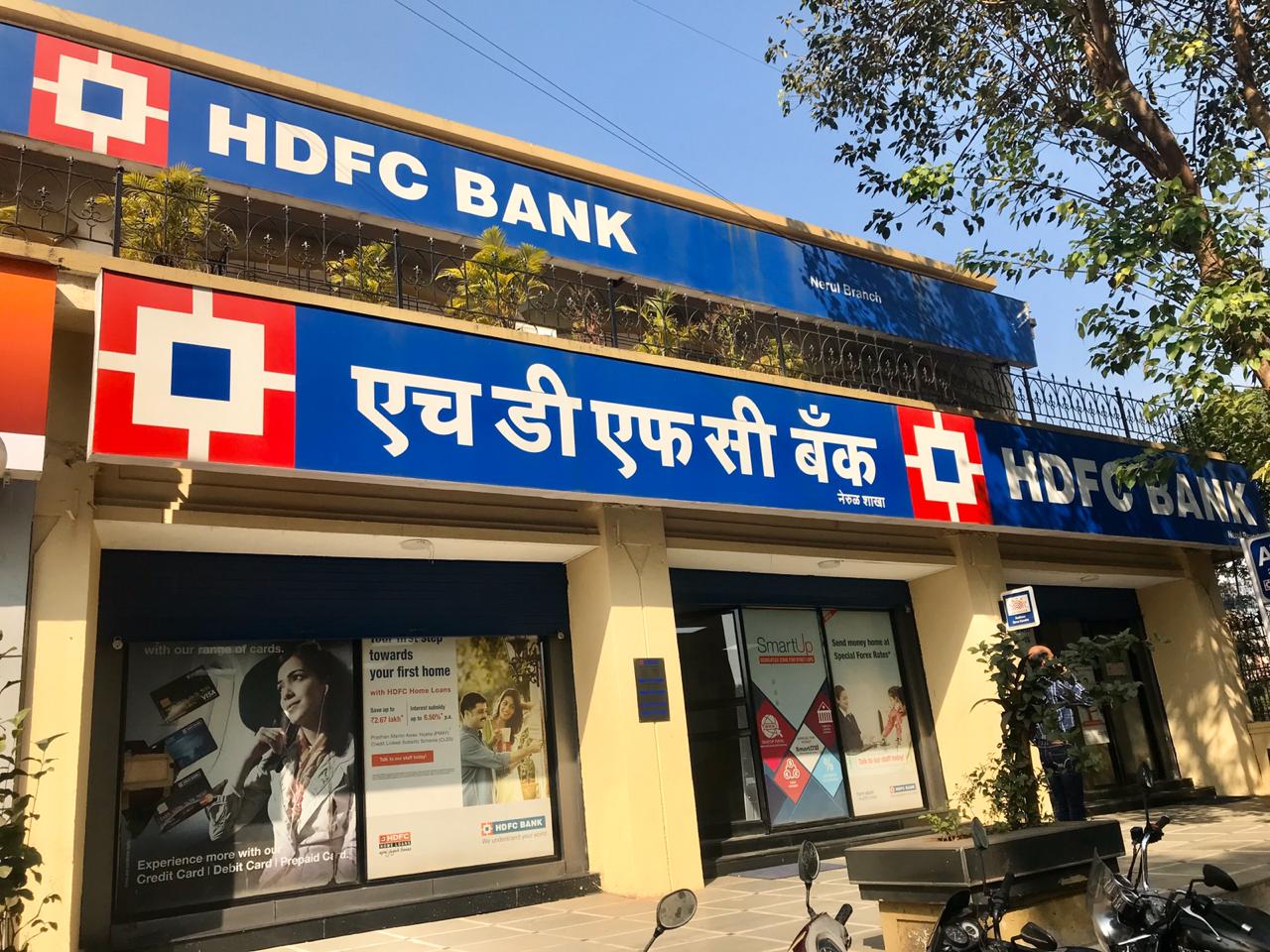
HDFC Bank Ltd.'s operational income, denoted in terms of PPOP (pre-provision operating profit), is set to grow next financial year as liquidity eases and the loan-to-deposit ratio consolidates, according to Goldman Sachs.
Analysts at the brokerage listed five factors that gave it confidence to place a 'buy' rating on the HDFC Bank stock, with a 12-month price target of Rs 2,090. The target implies a 14.7% potential upside to the previous close.
The stock has outperformed the benchmark Nifty 50 over the last six months as EPS cuts have started to bottom out by consensus, regulatory measures eased, and relative preference improved for the banking space amid the slowdown in other sectors and valuations, Goldman Sachs said in a note.
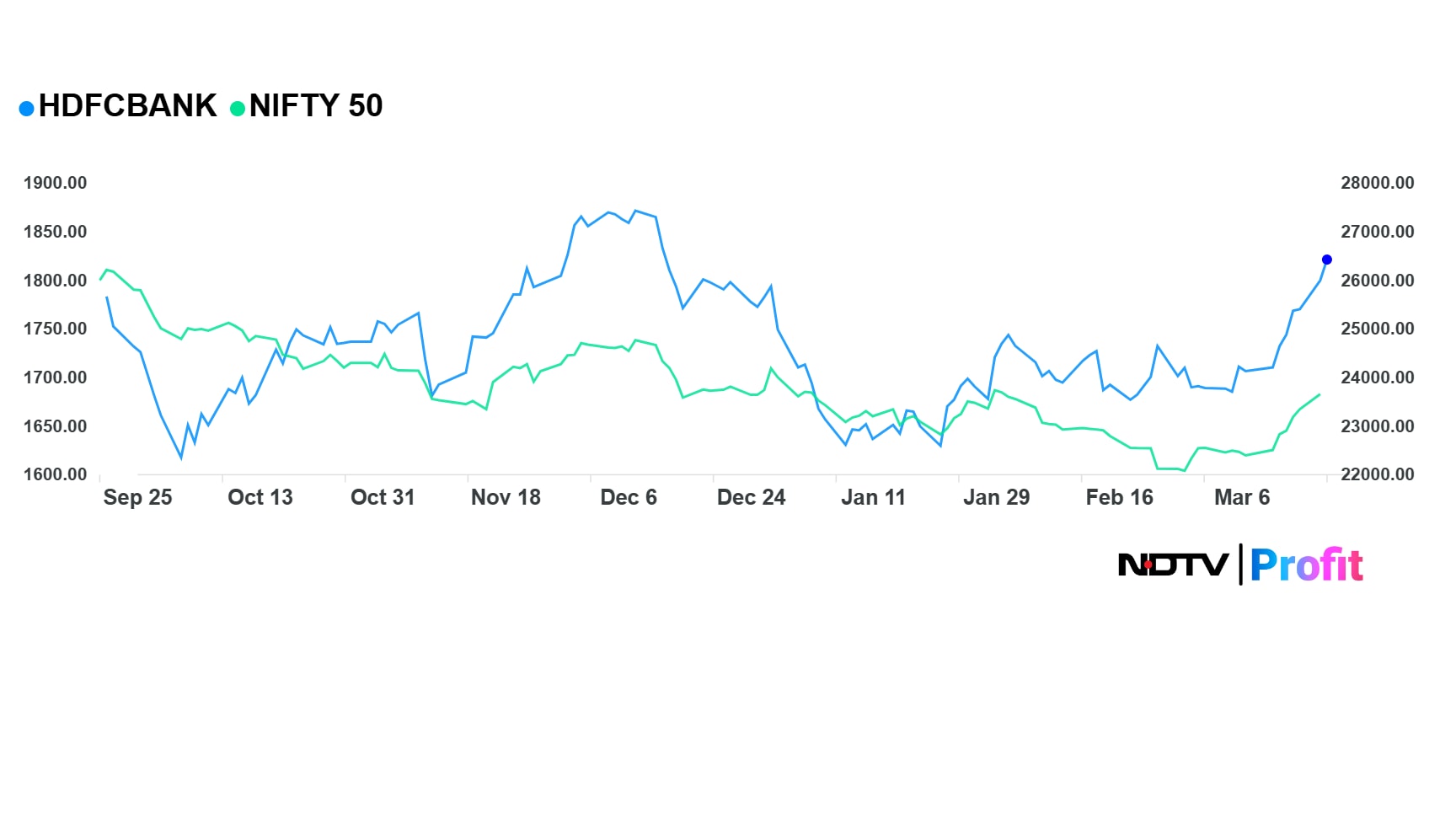
Six-month HDFC Bank stock performance compared to Nifty 50.
Besides, investors are eyeing the private lender's loan growth trajectory into FY26, pressure on net interest margin due to rate cuts, and PPOP-return on asset trajectory given divergent views on the street.
HDFC Bank is geared up to accelerate PPOP growth from 5% over the last four quarters to 13% over the next four quarters, analysts said. This is now possible as the LD ratio, a financial metric that compares a bank's total loans to its total deposits to gauge deposit composition within total loans, has declined from a peak of 111% to 98%.
Moreover, market share gains in deposits, loan growth in core segments such as retail and commercial and rural banking, accelerating market share gains in credit cards business and stable asset quality are contributing to analyst optimisim.
HDFC Bank share price was trading 0.24% lower at Rs 1,816 apiece by 12:20 p.m. The benchmark NSE Nifty 50 was down 0.3%.
The stock has risen 27% in the last 12 months and 2.5% on a year-to-date basis. The relative strength index was at 72.
Of the 48 analysts tracking HDFC Bank, 42 have a 'buy' rating on the stock and six recommend a 'hold', according to Bloomberg data. The average of 12-month analysts' price target implies a potential upside of 10%.

-
Navigating Friction And Energy Realities: An Analysis Of Marco Rubio's October Visit To India

Occurring at a critical juncture marked by stalled trade negotiations and escalating geopolitical pressures over global energy supplies, the visit offers a profound window into modern US-India relations.
-
India Exports Capital. Why Not Export Trusteeship?
The big question, then, is whether India can build an institution that global borrowers, investors, banks, and lawyers can trust, even without an Indian connection.
-
France's Economy & Politics Are In Crisis | The Reason Why
Let's look at how the French economy and politics evolved under Nicolas Sarkozy, Franois Hollande and Emmanuel Macron.
-
You May Inherit The Business. You Must Earn Its Credibility.
Succession tests the founder's ability to share authority as much as it tests the next generation's readiness to assume it.
-
Signing Deals Is One Thing; Making Them Work Is Another | The Week In Whys
Sometimes, things don't turn out as planned. Indian companies have lost some bids to rivals, some projects won't produce until 2030.
-
FOMC Wall, PERM Suspension, Hospital Stocks | Talking Points This Week
A PERM suspension would directly affect green-card sponsorship rather than H-1B visas, so the near-term earnings impact could remain relatively limited. The key question is whether this marks a new phase in US scrutiny of Indian IT.
-
Everything, Everywhere, All At Once: Dalal Street's Week To Forget | Joining The Dots
Visa curbs, a Starlink spat and cancer drug caps: what connects this week's shocks for Indian markets
-
India Is Going Abroad For Critical Minerals. But It May Take Years To Pay Off | The Reason Why
Although India's steps are in the right direction, they remain modest compared with India's growing dependence.
-
When Everyone Has AI, What Gives You An Edge?
India's young workforce is entering an uncertain world of work where powerful AI tools are becoming widely accessible. The advantage will belong to those who combine deep expertise with digital fluency, and the distinctly human capabilities that technology cannot manufacture.
-
Wrong Labels, High Pesticide Residues Holding Back Agri Exports | The Reason Why
India needs stronger domestic food-safety and labelling standards, with best practices becoming part of everyday business for farmers, traders and food companies.