- Gold prices fell Rs 1,162 to Rs 1.51 lakh per 10 grams in futures trade on Monday
- The decline was driven by a stronger dollar and US-Iran geopolitical tensions
- US plans to blockade the Strait of Hormuz raised global energy crisis concerns
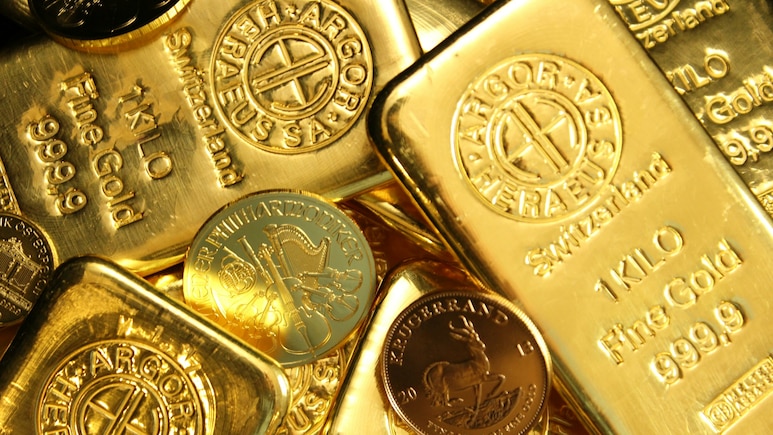
Gold prices declined by Rs 1,162 to Rs 1.51 lakh per 10 grams in the futures trade on Monday, as the dollar strengthened amid US plans to blockade the Strait of Hormuz after failed weekend talks with Iran, raising concerns about a worsening global energy crisis.
On the Multi Commodity Exchange, the yellow metal for June delivery fell by Rs 1,162, or nearly 1%, to Rs 1,51,490 per 10 grams in a business turnover of 7,739 lots.
"Gold prices witnessed a decline on Monday and were largely driven by a stronger dollar and ongoing geopolitical tensions in West Asia, particularly following the failure of US-Iran truce talks that have left investors cautious," Gaurav Garg, research analyst at Lemonn Markets Desk, said.
The domestic commodities market will remain closed for the morning session on Tuesday on account of Dr Baba Saheb Ambedkar Jayanti.
In the overseas market, Comex gold futures for the June contract fell $51.40, or 1.07%, to $4,736 per ounce in New York.
ALSO READ: Oil Prices May Rise To $150 If US Goes Ahead With Hormuz Blockade
Gold also slipped towards the $4,700 per ounce mark as the US's plans to blockade the Strait of Hormuz following failed weekend talks with Iran heightened concerns over a worsening global energy crisis, Jigar Trivedi, Senior Research Analyst at IndusInd Securities, said.
Meanwhile, US Central Command said it would begin a blockade of all Iranian Gulf ports and coastal areas on Monday at 10 am ET (7:30 pm in IST), effectively seizing control of maritime traffic in the Strait of Hormuz.
According to reports, the United States military has sent a note to seafarers warning that the blockade will apply to all vessel traffic, regardless of flag.
The collapse of negotiations between the US and Iran has failed to produce an agreement, amplifying concerns over supply disruptions and elevated curd prices, which could stoke inflation and complicate the global interest-rate outlook.
Higher energy costs and persistent inflation risks could prompt global central banks, including the US Federal Reserve, to delay interest rate cuts, limiting upside in bullion prices, Trivedi said.
Gold has declined by more than 10% in the international markets since the conflict began, as investors balanced demand for the precious metal against a firm US dollar and rising Treasury bond yields, he added.
(This story has not been edited by NDTV staff and is auto-generated from a syndicated feed.)
Essential Business Intelligence, Continuous LIVE TV, Sharp Market Insights, Practical Personal Finance Advice and Latest Stories — On NDTV Profit.