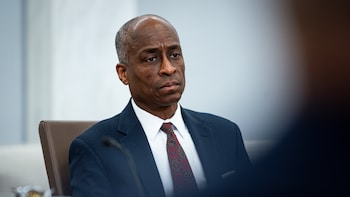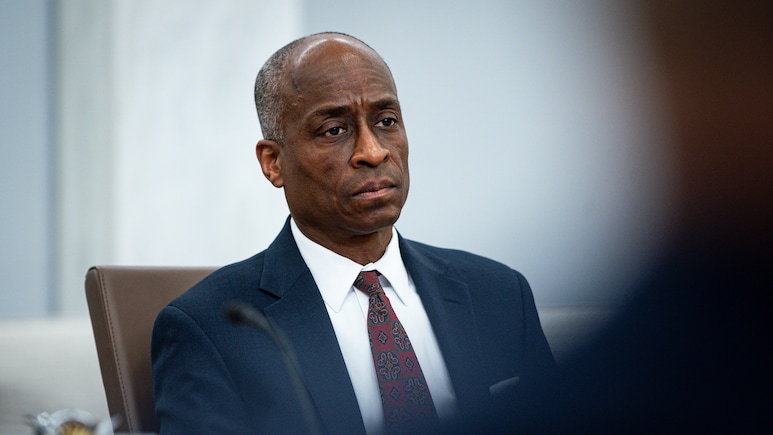
Federal Reserve Vice Chair Philip Jefferson said inflation has become the most important measure for policymakers as they consider additional interest-rate hikes.
Recent economic activity and labor market conditions have been solid, while price pressures remained persistent, Jefferson said. Price data for October was consistent with well-above-target inflation, he said.
“Accordingly, I see the trajectory of inflation as providing the more important signal for determining the appropriate stance of monetary policy,” Jefferson said in remarks prepared for a speech in San Diego, adding that policymakers should continue to watch incoming data in considering “further policy adjustments.”
Jefferson capped a week of Fed speakers this week who cemented market expectations for an interest-rate increase in December by voicing sharp concerns over price pressures.
Also Read | Layoffs Are Rising In Tech, But These Skills Are Helping People Unlock Better Pay
A number of other officials called for more rapid policy adjustments than they had previously, including Fed Governor Christopher Waller, who warned that a 50-basis-points move may be needed next month. A few others, however, like Philadelphia Fed President Anna Paulson, stuck with calls for a gradual pace of rate hikes.
Investors are expecting hikes in December and January, and another in either March or April, according to federal funds futures pricing.
In his speech, which was focused on technology and productivity, Jefferson said there's a risk that new technology upends the labor market by putting people out of work before they have an opportunity to retrain. That would force policymakers to asses how much of the increase in joblessness was structural — resulting from a persistent mismatch between workers' skills and employers' needs even with strong economic growth.
“Monetary policy can affect cyclical conditions, like a temporary downturn in employment and spending, but it cannot address the structural factors that determine long-run rates of employment,” Jefferson cautioned.
It's also possible the technology boom causes the neutral rate of interest — one that is neither slowing nor stimulating the economy — to rise, Jefferson said. Higher productivity growth that spurs consumer spending and robust investment into the AI buildout may ultimately push the neutral rate higher.
Still, that's not an easy level for policymakers to be sure about, the Fed official added.
“Predicting changes in the neutral rate of interest is challenging, given the historically noisy relationship between productivity growth and real interest rates,” Jefferson said.
(This story has not been edited by NDTV staff and is auto-generated from a syndicated feed.)
Essential Business Intelligence, Sharp Market Insights, Practical Personal Finance Advice, Daily Fuel, Gold and Silver Prices and Latest Stories — On NDTV Profit.