- US Fed Chair Kevin Warsh warned AI boom could end badly if tech fails investors
- AI stocks fell on Wall Street amid concerns about future economic impact
- Warsh outlined three AI economic scenarios, including possible job losses
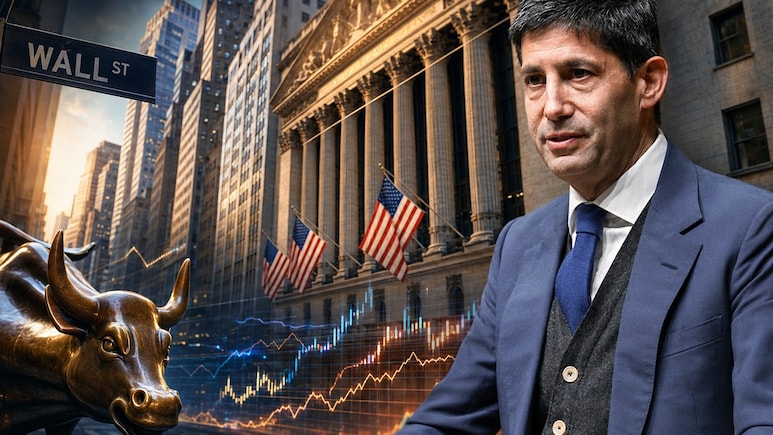
US Federal Reserve Chair Kevin Warsh on Monday warned that the artificial intelligence boom could end badly for investors if the technology fails to deliver. He made the remarks on a day when AI stocks were already taking a beating on Wall Street.
Addressing the Fed's Productivity and Jobs Task Force conference in San Francisco, Warsh called AI “an entirely new force in economic life and society.” He used the term “super intelligence” throughout, in line with the Trump administration's recent preference. Hours earlier, the Commerce Department had used the same language in a new rule restricting Chinese access to American AI chips.
Warsh said Fed staff had begun modelling the different ways the technology could shape the economy, though he was careful to call these “illustrative scenarios, not forecasts.” In the most optimistic case, productivity rises sharply and the gains are shared between workers and the owners of capital, keeping growth above its long-term average and the US close to full employment. A less rosy version would still deliver faster growth, but with automation displacing workers and pushing unemployment higher.
Also Read | Layoffs Are Rising In Tech, But These Skills Are Helping People Unlock Better Pay
It was the third scenario that is likely to catch the market's attention. “After significant capital investment and stock market gains, expected returns could turn down and equity valuations could fall, leading to an economic slowdown and a more notable rise in unemployment,” Warsh said. The economy would recover in time, he added, “but without the productivity gains.”
Wall Street Extends Losses
Those words landed as Wall Street's selloff gathered pace. At 11:02 p.m. IST, the Nasdaq Composite was down 2.02% at 24,629.67, while the S&P 500 had slipped 1.42% to 7,454.59. The Dow Jones Industrial Average was off 436.68 points, or 0.83%, at 51,910.87. All three indices were trading well below their opening levels.
Nvidia, which reports quarterly results on Tuesday, fell 3.48% to $157.18. The chipmaker is still reeling from the resignation of Jensen Huang as chief executive last week. Memory maker Micron dropped 6.16%, and the CBOE Volatility Index, often called Wall Street's fear gauge, climbed 12% to 21.62.
ALSO READ: AI Trade Cracks: Micron, AMD, Intel, Other Chip Stocks Crash Over 5% After Fresh US Export Curbs
No Clue On Interest Rates
Traders hoping for a clue on interest rates came away empty-handed. Warsh's prepared remarks made no reference to the Fed's next policy move, even though markets are fully pricing in a rate hike in December, according to CME FedWatch data cited by Reuters. The closest he came was to say that AI “will have significant impact on the economy, with important implications for monetary policy down the road.”
Since taking charge at the Fed, Warsh has repeatedly argued that AI could raise productivity and, over time, help bring down inflation. On Monday he struck a more cautious tone. “Our aim today is a humble one: to ask the right questions,” he said, adding that the Fed was not at the conference to act as “futurists.”
The bond market barely reacted. The yield on the 10-year Treasury note dipped 1.4 basis points to 5.139%, and the two-year yield eased 2.3 basis points to 4.851%. The dollar index rose to 103.50, a whisker away from its 52-week high of 103.60.
Precious metals continued to struggle against the strong dollar. Silver futures fell 4.10% to $47.11 an ounce and gold slipped 0.37% to $3,872.10, according to delayed COMEX data, with both trading close to one-year lows.
Warsh also made a case for the human role in an economy increasingly shaped by machines. “Machines that can amass or even exceed human knowledge are still machines,” he said, insisting that “humans must be the deciders.” He framed the technology as a question of national standing too. “Can you be a superpower without super intelligence?” he asked, admitting he was “not exactly impartial about American leadership” at such a moment.
ALSO READ: Three Reasons Why US Stock Markets Are Down
Essential Business Intelligence, Sharp Market Insights, Practical Personal Finance Advice, Daily Fuel, Gold and Silver Prices and Latest Stories — On NDTV Profit.