Gone are the days when late nights were considered rewarding. This generation is obsessed with better sleep, and can they be blamed? Hustle culture has also, for the most part, given way to a stronger focus on recovery and self-care.
But while sound sleep is essential, are we turning the search for the perfect night's rest into an unhealthy obsession? For a growing number of people, it has become something to optimise - measured, tracked and fine-tuned with supplements, gadgets and carefully controlled bedroom conditions.
Welcome to the world of 'sleepmaxxing'.
Also Read | Layoffs Are Rising In Tech, But These Skills Are Helping People Unlock Better Pay
What Exactly Is 'Sleepmaxxing'?
Among the many wellness trends doing the rounds, sleepmaxxing centres on intense "sleep optimisation". There are plenty of ways to improve a night's rest, but social media has turned sleep into something of a lifestyle project.
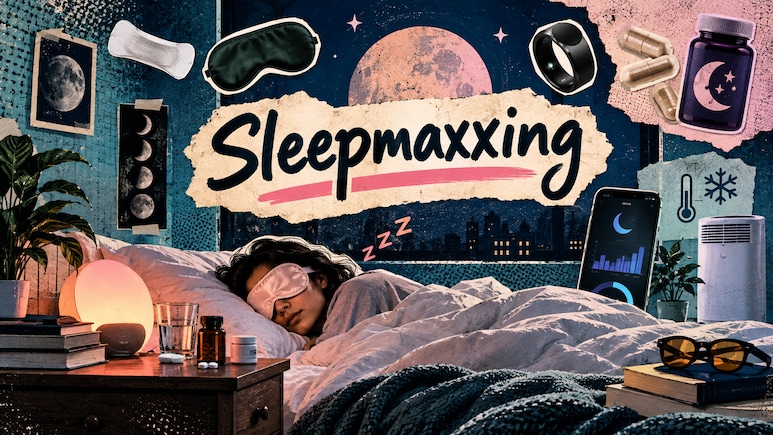
Magnesium supplements, mouth tape, smart rings, red-light therapy lamps and cooling pads have all found their way into the modern bedroom, turning sleep into a consumer trend.
The market around sleep is growing alongside the trend. According to Fortune Business Insights, the global sleep tracker market is valued at $7.74 billion and is expected to more than triple to $25 billion by 2034. The magnesium supplement market is growing too. Research from Mordor Intelligence estimates the global market at $8.34 billion, with the figure projected to cross $11.7 billion by 2031.
ALSO READ: India Faces 'Silent Sleep Epidemic', 46% Adults Sleep-Deprived
For a committed sleepmaxxer, the nightstand can start looking less like a bedroom and more like a recovery laboratory.
A 'sleepmaxxing' toolkit might include:
- Nutraceutical stacks: Magnesium glycinate powders, tart cherry extracts and adaptogenic bedtime gummies.
- Micro-gadgets and gear: Mouth tape for nasal breathing, contoured silk blackout masks and blue-light-blocking glasses.
- Environmental control: Smart ambient lighting that shifts from warm amber to darkness, white-noise machines and smart ACs set to keep room temperatures at 18°C to 19°C.
- Biometric tracking: Smart rings and watches measuring heart rate variability, sleep latency and different stages of sleep.
Why Are Gen Z And Millennials So Obsessed?
The appeal is easy to understand. Burnout has hit urban professionals hard, while the effects of exhaustion have made health and recovery a bigger priority.
But somewhere along the way, rest itself has become another performance metric.
Instead of simply going to bed, sleepmaxxers can find themselves setting targets for how many hours they should sleep, checking whether they got enough "deep" or REM sleep and waking up to a recovery score from their wearable.
And that is where sleepmaxxing can defeat its own purpose, and the response? Change the routine, add another supplement or monitor another metric.
The more we try to force ourselves to sleep, the harder it can become to actually switch off.
ALSO READ: Rising Nighttime Temperatures Costing Bengaluru, Chennai Hours Of Sleep
When Sleep Tracking Creates Anxiety
Medical professionals and sleep psychologists have raised concerns about orthosomnia, a term used for anxiety linked to an unhealthy preoccupation with achieving flawless sleep data.
The issue is not simply tracking sleep, but becoming overly concerned about what the tracking shows. Someone who wakes up after what felt like a good night's sleep may suddenly worry because their ring says they did not get enough restorative sleep. Others may become anxious about a low recovery score and start changing their routines, supplements and bedtime habits in response.
Dr. Pradeep Tiwari, a consultant neurologist based in Mumbai, said he has been seeing sleep-related anxiety associated with sleepmaxxing.
According to Tiwari, some patients then do not respond to melatonin and magnesium supplements and may eventually turn to anti-anxiety benzodiazepine medication, potentially resulting in prolonged use and dependency.
"They need to relax and allow the body to naturally fall into various sleep cycles," he also said, adding that sleep hygiene remains important and that eating and exercise habits also need to be regulated around sleep.
When Optimising Sleep Becomes The Problem
The more sleep becomes something to perfect, the more attention it can demand. It has also seemed to have moved past being a simple social media fad. Sleepmaxxing, in many ways, looks like a product of the same hyper-connected, round-the-clock work culture that made proper rest difficult in the first place.
The growing focus on sleep reflects a desire to recover from that lifestyle, and that leaves sleepmaxxing in an unusual capitalistic place: the same culture that has made rest harder to come by has also created a growing market around helping people get better at it.
And for those caught up in the numbers, the search for the perfect night's sleep can become yet another thing to worry about before bed.
ALSO READ: Sleeping Giant: Wakefit's 8.4% Market Share Makes Sheela Foam's Turf Look Vulnerable
Essential Business Intelligence, Sharp Market Insights, Practical Personal Finance Advice, Daily Fuel, Gold and Silver Prices and Latest Stories — On NDTV Profit.