The queues outside popular South Indian restaurant chains today are no longer merely about food. They are about aspiration, identity and consumer theatre. Whether it is Benne, Rameswaram Cafe or the latest regional food brand elevated by social media, urban customers willingly stand in long lines even in punishing summer heat to participate in what has become a branded cultural experience.
There is nothing inherently wrong with this success. India should celebrate entrepreneurs who have transformed regional cuisine into nationally recognised brands. Many of these establishments have also brought regional foods into mainstream urban consciousness in ways older restaurants never managed.
Yet beneath the excitement lies a quieter and more uncomfortable question. Why is a country with one of the richest vegetarian culinary traditions in the world slowly reducing itself to repetitive menus, excess butter and interchangeable gravies?
Also Read | Layoffs Are Rising In Tech, But These Skills Are Helping People Unlock Better Pay
When Simplicity Became Unfashionable
India historically produced sophisticated vegetarian cuisines from humble ingredients. Lauki, ridge gourd, colocasia, raw banana, pumpkin, drumstick, greens, curd, lentils and millets were transformed into refined everyday cooking across regions and communities. Entire culinary systems evolved around climate, soil conditions, local agriculture and seasonal rhythms.
A simple meal could balance nutrition, fermentation, texture, climate suitability and affordability. Regional cuisines mastered the art of extracting extraordinary flavour from modest ingredients without requiring excess richness.
Modern urban India increasingly associates such simplicity with inferiority.
Restaurants, therefore, compensate through visual spectacle and sensory excess. Butter becomes performance. Cheese signals indulgence. Heavy gravies create an illusion of value. Portions become oversized. Fusion gimmicks attract social media attention. Menus begin to resemble visual marketing exercises rather than thoughtful cooking traditions.
As incomes rise and urban consumers seek visible markers of lifestyle advancement, subtlety often loses commercial appeal. Simplicity begins to look ordinary. The old confidence of creating memorable meals from vegetables, lentils and grains gradually gives way to the belief that richness alone represents quality.
This transformation is increasingly visible across vegetarian dining.
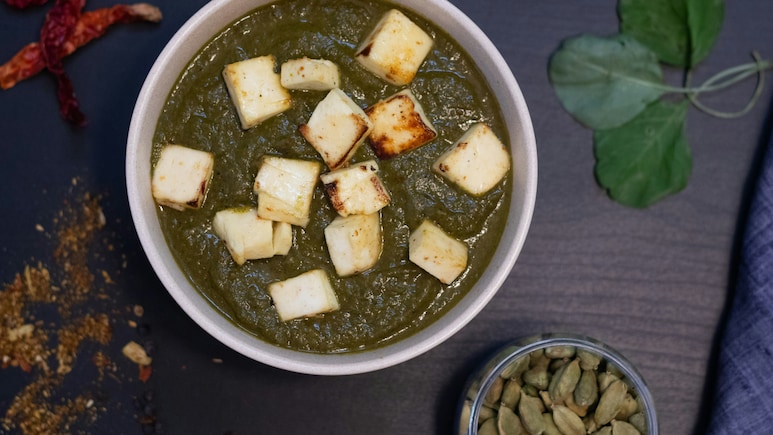
A traveller ordering vegetarian meals on flights or in hotels across India frequently encounters a predictable outcome. Paneer appears in endless variations. Thick gravies arrive with cosmetic differences in spice or colour. Soya replaces vegetables as though protein alone defines vegetarianism. Menus that should reflect local geography instead resemble standardised templates replicated across cities.
The Economics Behind Standardised Taste
One of the enduring misconceptions about Indian cuisine is that food from southern India can be casually grouped under the broad and inaccurate label of "Madrasi". South of the Vindhyas lies a vast culinary geography where flavours, ingredients and cooking styles shift dramatically every few hundred kilometres. Sambhar differs from kozhambu. Saar differs from rasam. A thayir vada carries a very different culinary memory from a dahi bhalla.
Yet modern restaurant economies increasingly flatten these distinctions.
Part of this transformation reflects the operational realities of India's hospitality sector. Across cities and towns, restaurants now depend heavily on migrant culinary labour. This is neither surprising nor undesirable. India's internal migration economy sustains industries across the country.
A cook working far from home naturally gravitates towards dishes that are commercially familiar, easy to standardise and operationally scalable. Over time, local nuance begins to disappear. The distinctions that matter deeply within households and regional cultures matter less within fast-moving kitchens attempting to optimise consistency and cost.
The rise of food delivery platforms has accelerated this standardisation further. Digital food economies reward dishes that travel well, photograph well and remain operationally predictable. Paneer fits this system perfectly. Hyperlocal vegetable dishes rooted in seasonality often do not.
This is perhaps why one can increasingly encounter paneer Manchurian biryani in a Tamil Nadu town, more easily than millet dosa or buttermilk kanji.
The consequences extend beyond authenticity. They affect nutrition and public health as well.
Traditional Indian vegetarian cuisines were not built around protein obsession alone. They evolved as systems of balance involving grains, pulses, vegetables, spices, curd, fermentation and seasonal adaptation. Contemporary urban dining increasingly reduces vegetarianism into a protein-delivery exercise dominated by paneer and soya.
At the same time, seasonal eating itself is quietly disappearing. Historically, Indian households adjusted meals according to monsoons, summer heat, fasting periods and harvest cycles. Menus changed because agriculture changed. Today restaurant menus often look identical across cities and seasons despite India's enormous ecological diversity.
Food is slowly becoming disconnected from climate.
The Real India Still Eats Outside Luxury Hotels
Much of contemporary food commentary in India revolves around celebrity chefs, luxury dining spaces and curated tasting experiences. Yet most Indians do not inhabit those worlds. The everyday culinary life of this country exists elsewhere.
It exists in Udipi restaurants, dhabas, railway canteens, office cafeterias and roadside stalls. It exists in modest eateries where families seek nourishment, affordability and familiarity without paying first-world prices for ordinary meals.
That is where the health of India's food culture must truly be judged.
Today many ordinary restaurants charge astonishing sums for simple vegetarian meals while delivering little freshness or originality. Rising rents, labour costs, compliance burdens and inflation are genuine business pressures. Consumers understand this reality. But higher prices should also produce better ingredients, greater thoughtfulness and more culinary effort.
Instead, many menus have become increasingly lazy.
The issue is not merely what restaurants serve. It is also what urban India is slowly forgetting inside homes. Intergenerational culinary knowledge is weakening across many families. Younger consumers increasingly recognise restaurant dishes more easily than traditional regional preparations once common within households. Local greens, fermented breakfasts, millet-based meals and seasonal recipes are quietly disappearing from urban memory.
This loss arrives at a particularly unfortunate moment globally.
Around the world, interest in plant-based eating, fermented foods, sustainable diets and millet cultures is growing rapidly. India should naturally lead this conversation. Few civilisations developed such sophisticated vegetarian systems across climates and communities.
Yet instead of confidently presenting this diversity to the world, much of urban Indian dining appears trapped between social media spectacle and culinary repetition.
India cannot aspire to become a confident global culinary power while reducing vegetarian food to standardised restaurant economics. The country possesses extraordinary agricultural diversity and centuries of accumulated food wisdom.
A society that once understood how to create flavour, nutrition and variety from humble local ingredients risks replacing that confidence with industrial sameness. India's food future cannot depend entirely on algorithms of social media virality and commercially safe gravies.
At some point, Indian vegetarian cuisine must rediscover faith in vegetables themselves.
Disclaimer: The views expressed in this article are solely those of the author and do not necessarily reflect the opinion of NDTV Profit or its affiliates. Readers are advised to conduct their own research or consult a qualified professional before making any investment or business decisions. NDTV Profit does not guarantee the accuracy, completeness, or reliability of the information presented in this article.
ALSO READ: The Ownership Mindset Gap In Family Businesses
Essential Business Intelligence, Sharp Market Insights, Practical Personal Finance Advice, Daily Fuel, Gold and Silver Prices and Latest Stories — On NDTV Profit.