In a significant legislative push, the government on Tuesday unveiled three Bills that could set the stage for a new delimitation exercise using updated Census data, alongside plans to expand the Lok Sabha to a possible 850 seats from the current 545. The measures are also intended to finally implement the long-awaited one-third reservation for women in Parliament and state assemblies.
The proposed framework comprises the Constitution (131st Amendment) Bill, 2026, the Delimitation Bill, 2026, and the Union Territories Laws (Amendment) Bill, 2026. It follows the Constitution (106th Amendment) Act, 2023, which cleared the path for women's reservation but tied its implementation to the completion of delimitation after a fresh Census.
ALSO READ | Women's Reservation Law On Track for 2029 Rollout, Parliamentary Session On April 16: PM Modi
Here is an explanation of the key takeaways from the legislation:
Women's Reservation
The proposed legislation lays the groundwork for a 33% quota for women in Parliament and state assemblies, fulfilling a long-standing political pledge. The earliest this reform could take effect is the 2029 general election.
While the Constitution (106th Amendment) Act, 2023, was passed in September 2023 to enable such reservation, its implementation was tied to delimitation based on the first Census conducted after the Act came into force.
The government has indicated that the long-delayed 2021 Census is unlikely to be completed in time, potentially pushing back the rollout of women's reservation. To address this, the new Bills propose carrying out delimitation using the “latest Census”, effectively referring to the 2011 data.
Size Of Lok Sabha
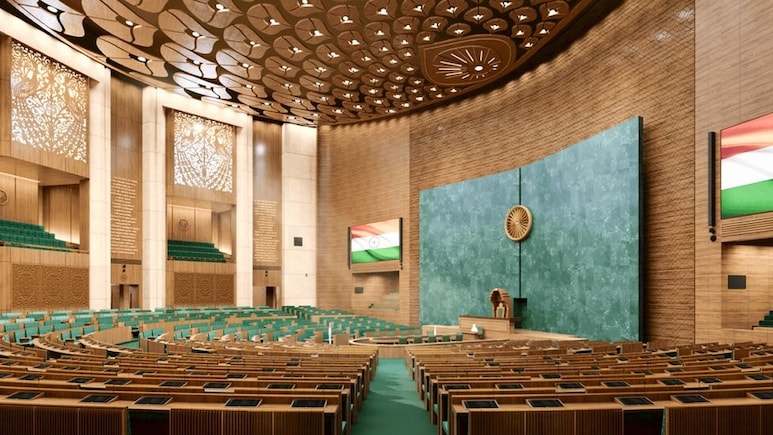
The Lok Sabha's strength could rise sharply to as many as 850 members from the current 543 if the Constitution (131st Amendment) Bill, 2026, is enacted. At present, the Constitution sets an upper limit of 550 seats in the House.
Under the proposed changes, the cap would be revised to allow up to 815 representatives from the states and 35 from Union Territories, effectively reducing the geographical spread of individual constituencies.
Delimitation
A key feature is the scrapping of the constitutional freeze that has governed seat allocation since it was anchored to the 1971 Census. The amendment permits delimitation based on the “latest published census figures” notified by Parliament, enabling a sweeping reallocation of seats to match contemporary population realities.
Several political parties from southern India have voiced concerns that a population-based delimitation exercise could reduce their representation in Parliament, especially in comparison to northern states that have seen faster population growth. They argue that states which have effectively implemented population control measures should not be disadvantaged.
Union Home Minister Amit Shah and Prime Minister Narendra Modi have publicly assured that southern states will not be put at a disadvantage in the delimitation exercise, though the proposed legislation does not spell out how this will be ensured.
ALSO READ | Amid 8th Pay Commission Buzz, PM Modi Vows 7th Pay Commission For West Bengal Govt Employees
The Delimitation Bill, 2026, envisages the creation of a Delimitation Commission to redraw constituency boundaries based on the “latest Census”. However, it remains unclear when the body will be constituted and what criteria it will adopt to preserve the existing regional balance.
Until now, the Constitution has required a delimitation exercise to follow every decennial Census, in line with Article 82, which deals with the “Readjustment after each Census”. The government is now seeking to sever this long-standing link between the two.
Under the proposed amendment, delimitation would be undertaken by a Delimitation Commission only when Parliament enacts a law to that effect. This effectively places the timing and manner of the exercise in the hands of the ruling dispensation, ending its status as a mandatory process every 10 years.
Essential Business Intelligence, Sharp Market Insights, Practical Personal Finance Advice, Daily Fuel, Gold and Silver Prices and Latest Stories — On NDTV Profit.