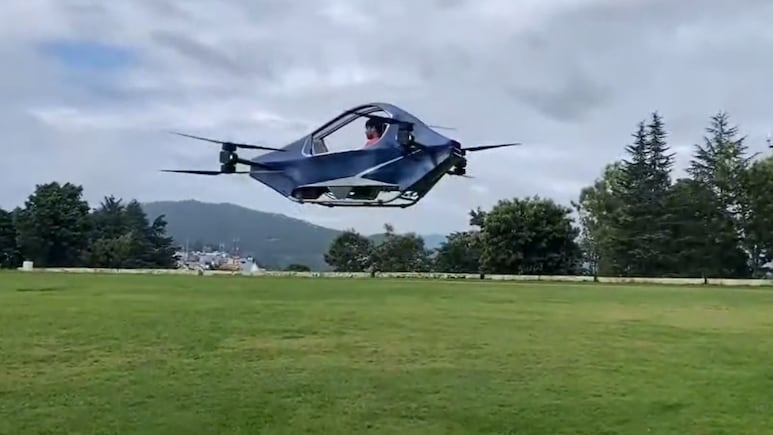
India's drive to develop next-generation transportation gained momentum after a young innovator from Uttarakhand successfully test-flew a prototype of a fully electric personal flying vehicle, signalling the growing role of homegrown startups in the country's emerging advanced air mobility ecosystem.
Ravi Tamta, an entrepreneur from Kaflikhan village in Almora district, of Uttarakhand has developed the HAPIDA SKYNeX through his startup, Hapida Sky Private Limited.
ALSO READ : Gadkari's Next Big Promise: 'Going To Bring A Bus That Flies In The Air'
The vehicle is still in the prototype stage and will require extensive testing and regulatory approvals before commercial deployment, but its successful demonstration underscores the growing capabilities of Indian innovators in developing next-generation mobility technologies.
The development also comes as the transportation sector increasingly looks beyond conventional internal combustion engines and even alternative fuels such as ethanol.
📍बधाई अल्मोड़ा, उत्तराखंड
— Mahipal Singh Rawat (@MahipalRawat18) August 7, 2026
अल्मोड़ा के युवा नवप्रवर्तक रवि टम्टा और उनकी टीम ने HAPIDA SKYNeX के प्रोटोटाइप का सफल प्रारंभिक परीक्षण कर उत्तराखंड का नाम गौरवान्वित किया है।#Uttarakhand #Almora #RaviTamta #HapidaSkynex #MadeInIndia #Innovation #FutureOfMobility #StartupIndia pic.twitter.com/CVsV3tgXen
HAPIDA SKYNeX is designed as a fully electric aerial vehicle, reflecting the global shift toward cleaner, low-emission aviation technologies. As battery technology improves and electric propulsion systems become more efficient, personal aerial mobility is attracting attention from startups, investors and policymakers worldwide.
Beyond its technological significance, the prototype illustrates how innovation is spreading beyond India's traditional technology hubs. Uttarakhand's rugged Himalayan terrain presents a compelling use case for electric aerial mobility, where difficult road connectivity, frequent landslides and disaster-related disruptions often limit access.
ALSO READ : 'Visa Services Can Follow': DK Shivakumar Appeals For Full-Fledged US Consulate In Bengaluru
If the technology matures, such vehicles could support emergency medical services, disaster response, last-mile logistics and connectivity to remote mountain communities while also opening new opportunities for high-value tourism.
For India, the prototype represents more than a technological achievement. It reflects the country's broader effort to build indigenous capabilities in advanced manufacturing, electric mobility and aerospace innovation—sectors expected to drive the next wave of economic growth.
Although commercial adoption remains several years away, Ravi Tamta's successful test flight demonstrates that Indian startups are beginning to position themselves in a market that analysts believe could redefine urban and regional transportation over the coming decades.
Essential Business Intelligence, Sharp Market Insights, Practical Personal Finance Advice, Daily Fuel, Gold and Silver Prices and Latest Stories — On NDTV Profit.