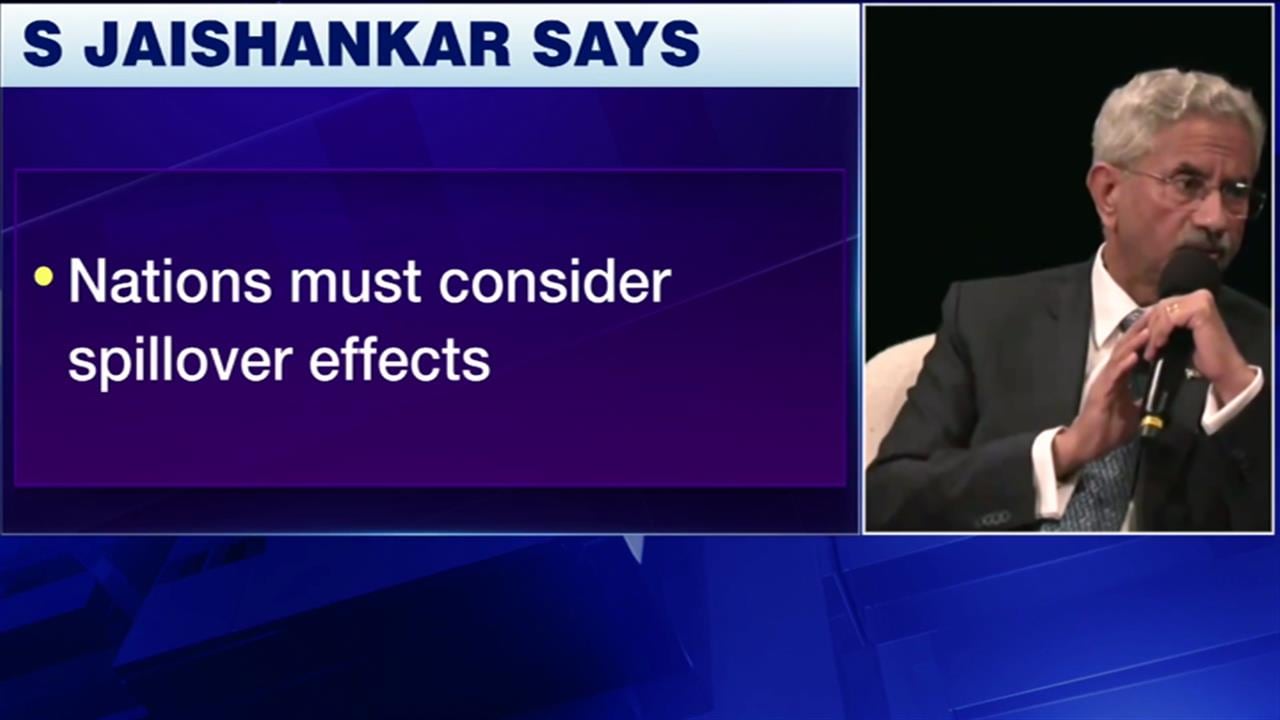
External Affairs Minister S Jaishankar on Tuesday warned that the world faces a major food crisis in the coming months, citing shortages of fertilisers, disrupted grain shipments and the threat of a Super El Niño, as the wars in Ukraine and the Gulf hit Global South economies.
Speaking at an Asia Society event in New York, Jaishankar said the two conflicts had a devastating impact on developing economies. He said India was particularly concerned about energy, where the market is very tight.
#WATCH | New York, USA: At the Asia Society event, External Affairs Minister Dr. S. Jaishankar says, "..If you look at these two conflicts, the Ukraine and the Iran-Gulf conflict, they've actually had a devastating impact on Global South economies. We are particularly concerned… pic.twitter.com/ClRBu0PQwo
Also Read | Layoffs Are Rising In Tech, But These Skills Are Helping People Unlock Better Pay
— ANI (@ANI) September 29, 2026
Any attempt to play politics with oil supplies, he said, would push up prices at a time when the world should be stabilising them. The security of supplies and the politics around them are feeding into each other and creating what he described as a double or aggravated crisis.
On food, Jaishankar said some of the major grain exporters would not be able to send out their shipments, and that significant fertiliser shortages were emerging. "There is going to be a major food crisis, probably in the coming months," he said, adding the Super El Niño to the list of pressures.
The warning comes as the US-Iran conflict has disrupted shipping through the Strait of Hormuz. About one-third of the world's seaborne fertiliser trade typically passes through the waterway, and traffic has been badly hit since the war began. The disruption has raised oil, gas and fertiliser costs.
ALSO READ: Deficient Rain Impact: Shadow of El Nino Threatens Upcoming Rabi Season After Kharif
El Niño is a periodic warming of the equatorial Pacific that typically alters rainfall patterns worldwide. The World Meteorological Organisation had put the risk of an El Niño developing this summer at around 60%, according to the Observer Research Foundation.
"Super El Niño" is not a formal scientific classification, but it is used informally for exceptionally strong events.
The phenomenon usually brings drought to Southeast Asia and Australia and a weaker monsoon in South Asia, threatening rice, grain, sugar and palm oil output. The ORF noted that India had forecast below-average monsoon rains for the first time in three years, while lower rainfall in Thailand and Vietnam, major rice exporters, raises concerns for import-dependent countries.
Analysts say the combination is especially dangerous. Reduced fertiliser use could lower harvests in 2027 and leave crops more vulnerable, which expects food prices to stay above trend even if the Hormuz blockade is lifted.
ALSO READ: El Nino To Hit Pulses, Sugarcane, Oilseeds; Not A Food Security Risk Yet, Says Expert
Essential Business Intelligence, Sharp Market Insights, Practical Personal Finance Advice, Daily Fuel, Gold and Silver Prices and Latest Stories — On NDTV Profit.