India and the United Arab Emirates (UAE) are targeting bilateral trade of $200 billion by 2030, building on a partnership that has seen total trade cross $101 billion in the previous Indian financial year.
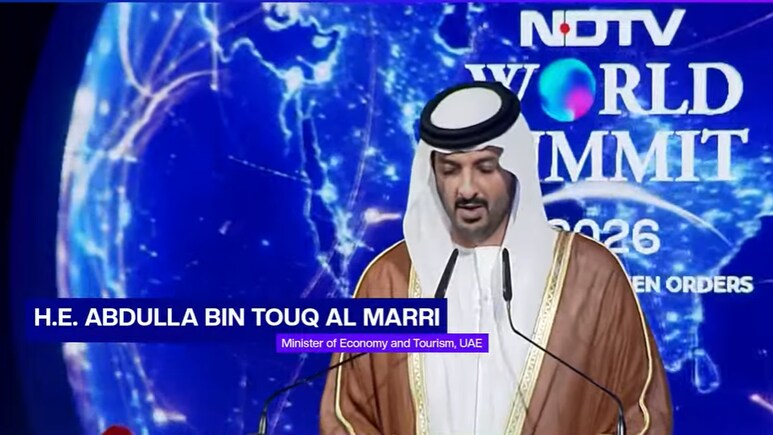
Speaking at the NDTV World Summit 2026 in New Delhi, UAE Minister of Economy and Tourism Abdullah bin Touq Al Marri highlighted the impact of the Comprehensive Economic Partnership Agreement (CEPA), signed by the two countries in February 2022.
According to Al Marri, non-oil trade between India and the UAE increased from around $51 billion in the agreement's first year to more than $76 billion in 2025. That represents growth of nearly 50% over three years, underlining the expanding commercial relationship between the two countries.
Also Read | Layoffs Are Rising In Tech, But These Skills Are Helping People Unlock Better Pay
ALSO READ: NDTV World Summit 2026 Live Updates: India Motivating The World For Development, Says PM Modi
"The agreement is an engine that drives us forward, not a station where we stop," Al Marri said, describing CEPA as a foundation for deeper economic engagement rather than an end in itself.
The minister said the partnership now extends beyond merchandise trade into capital flows, logistics, energy, manufacturing, payments, food security and advanced technology.
Al Marri traced the relationship to centuries of commercial and cultural exchanges, when sailing vessels carried spices, textiles and pearls between the two regions.
He said the partnership has evolved into a broader strategic and economic relationship, supported by growing cooperation between businesses and governments.
"The relationship has grown so wide that it has become a partnership that no longer needs a signing ceremony in order to grow," he said.
The remarks come as countries reassess their economic relationships amid shifts in the global order. Al Marri said the changing environment requires more than diplomatic goodwill, highlighting the importance of infrastructure, investment and execution.
"Resilience is built, not bought. A changing world needs more than friendship; it needs infrastructure, investment and execution," he said.
Al Marri said the UAE would seek to help shape the emerging global economic order rather than wait for others to define it. He called for an economic framework that combines openness with resilience, builds digital ambitions on trust and treats prosperity as an opportunity for cooperation.
He also acknowledged the challenges faced by Gulf economies, noting that the UAE's openness is a source of strength even as global uncertainty tests economic resilience.
ALSO READ: 'Never Done Till It's Done': Jaishankar On India-US Trade Deal And Tariff Risks
For India and the UAE, the next phase of cooperation will depend on translating trade ambitions into investment, infrastructure and new business opportunities.
Al Marri said the partnership was being built not only around the next trade target or project, but also for future generations. Drawing a parallel between historic maritime trade and today's economic links, he said the two countries were now building their relationship through ports, data and capital.
The $200 billion trade target by 2030 sets the next benchmark for a partnership that both sides are seeking to expand across traditional industries and emerging sectors.
Essential Business Intelligence, Sharp Market Insights, Practical Personal Finance Advice, Daily Fuel, Gold and Silver Prices and Latest Stories — On NDTV Profit.