India's annual domestic output of urea and complex fertilisers is likely to decline by 10-15% due to supply chain disruptions caused by the ongoing conflict in the Middle East, a Crisil Ratings report said on Thursday.
"The ongoing issues in the Middle East could disrupt the fertiliser supply chain at a crucial time for the kharif season. Disruption in LNG and ammonia supplies continuing for about three months could cut domestic urea and complex fertiliser production by 10-15%," Crisil Ratings Director Anand Kulkarni said.
However, he said the impact on production will be cushioned to some extent by the recent government directive allocating 70% of gas to urea manufacturers.
Also Read | Layoffs Are Rising In Tech, But These Skills Are Helping People Unlock Better Pay
He added that the fertiliser inventory of around three months, along with expected imports from alternative sources, will mitigate the risk of immediate supply shortages.
ALSO READ: WEF April Meet To Abu Dhabi Business Week — Iran War Disrupts Middle East's Global Events Line-Up
Further, Crisil Ratings said the increase in prices of raw materials and imported fertilisers is likely to increase working capital requirements of players and also raise the subsidy bill of the government by Rs 20,000-25,000 crore.
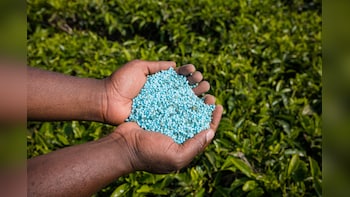
Urea accounts for 45% of fertiliser consumption in India, complex fertilisers (diammonium phosphate, or DAP, and nitrogen, phosphorus and potassium, or NPK) for one-third, and single super phosphate (SSP) and muriate of potash (MOP) for the rest.
Fertiliser sector dependence on imports remains high, with 20% of urea and one-third of complex fertilisers, primarily DAP, being imported.
The key raw materials for urea (natural gas, which comprises 80% of the raw material cost) and complex fertilisers (ammonia and phosphoric acid) are largely imported due to limited domestic reserves.
For both urea and DAP imports, the Middle East remains an important region, accounting for 40% of imports in the first nine months of fiscal 2026.
ALSO READ: PNG Available But Opting For LPG Cylinders? Soon Your Supply May Get Cut Off — Here's Why
For domestic fertiliser production, the dependence on the Middle East is even higher, with 60-65% of liquefied natural gas (LNG) and 75-80% of ammonia imports coming from the region, it added.
Crisil Ratings said the reduced capacity utilisation is likely to dent profitability, with urea manufacturers likely to see a larger impact as sub-optimal capacity utilisation will reduce energy efficiency.
The industry will require additional subsidy support from the government to mitigate the impact, the report added.
Given the strategic importance of the sector, the government has supported it in the past through increased Nutrient-Based Subsidy (NBS) rates and additional subsidy for DAP players.
"Factoring in the elevated input costs and imported fertiliser prices for a quarter, the overall subsidy budget is likely to increase by 12-15% from initial estimates of Rs 1.71 lakh crore for FY27.
"While the government has been prompt in clearing subsidy dues in the past five years, the timeliness and adequacy of subsidy support will have a bearing on the working capital cycle of players. In the interim, players do have adequate liquidity in the form of cash or funded bank lines to withstand temporary cash flow mismatches," Crisil Ratings Associate Director Nitin Bansal said.
The ability of fertiliser makers to source key raw materials and fertilisers from alternative sources and government intervention in this regard will bear watching in case the Middle East conflict prolongs, added the report.
(This story has not been edited by NDTV staff and is auto-generated from a syndicated feed.)
Essential Business Intelligence, Sharp Market Insights, Practical Personal Finance Advice, Daily Fuel, Gold and Silver Prices and Latest Stories — On NDTV Profit.