With around 35 million residents to serve, Delhi on Tuesday unveiled a Rs 1.03 lakh crore budget, laying out its roadmap for welfare, infrastructure and civic upkeep in the national capital. But hundreds of kilometres away, Mumbai — home to roughly 22 million people — is already operating with an Rs 80,952 crore municipal budget that is strikingly different in intent.
At first glance, the numbers seem comparable. Delhi's budget stands at a massive Rs 1.03 lakh crore, while Mumbai's BMC clocks in at Rs 80,952 crore. But this isn't an apples-to-apples comparison.
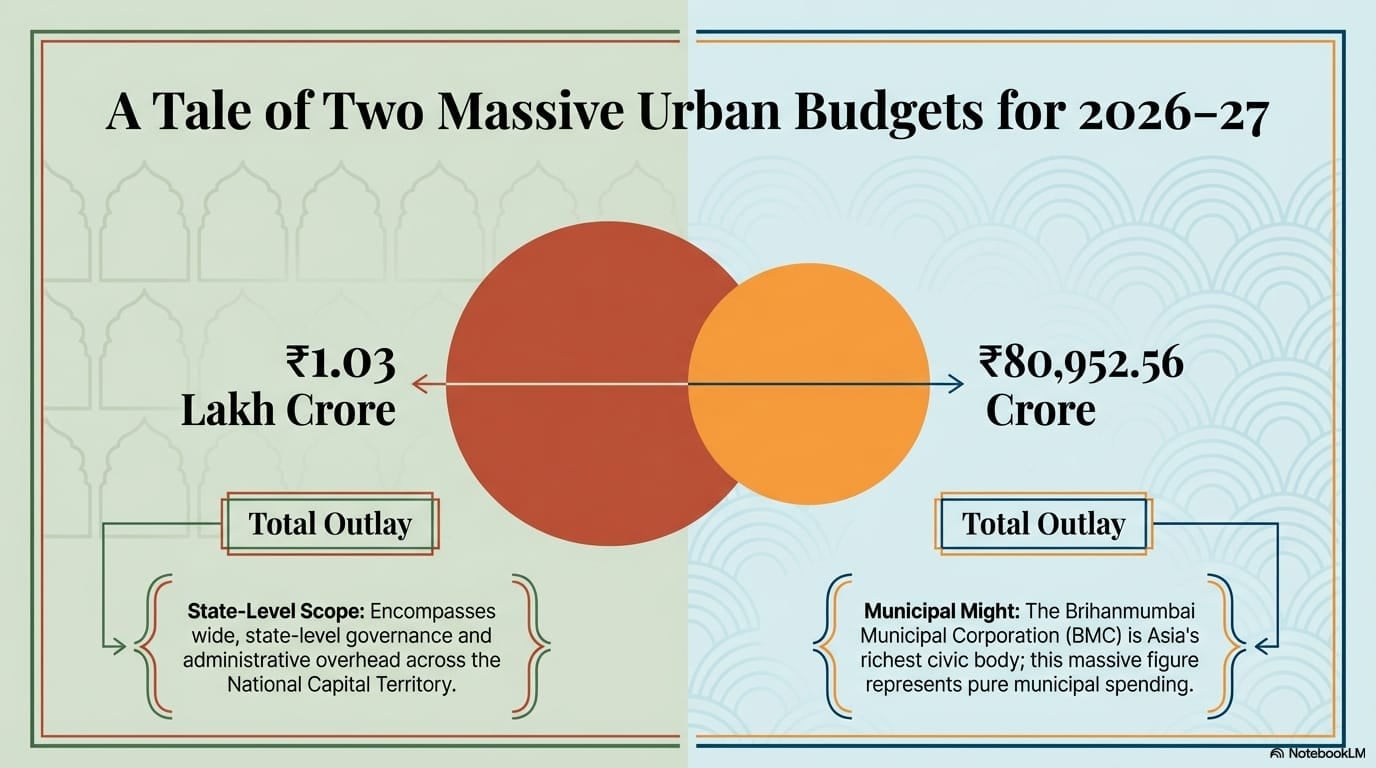
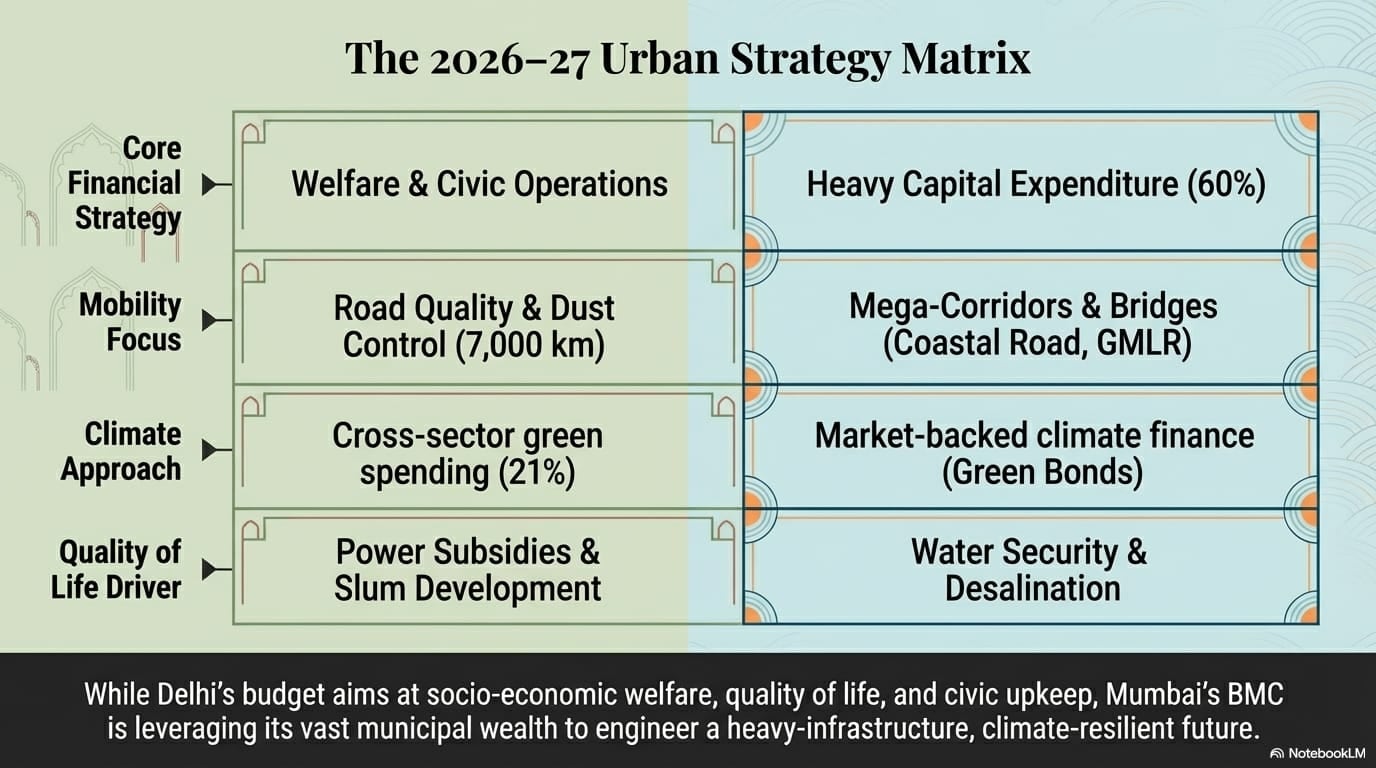
While Delhi's spending leans toward immediate quality-of-life improvements, Mumbai's civic body is doubling down on long-term infrastructure and capital expenditure. Together, the two megacities offer a revealing contrast in how India is choosing to fund its urban future.
Also Read | Layoffs Are Rising In Tech, But These Skills Are Helping People Unlock Better Pay
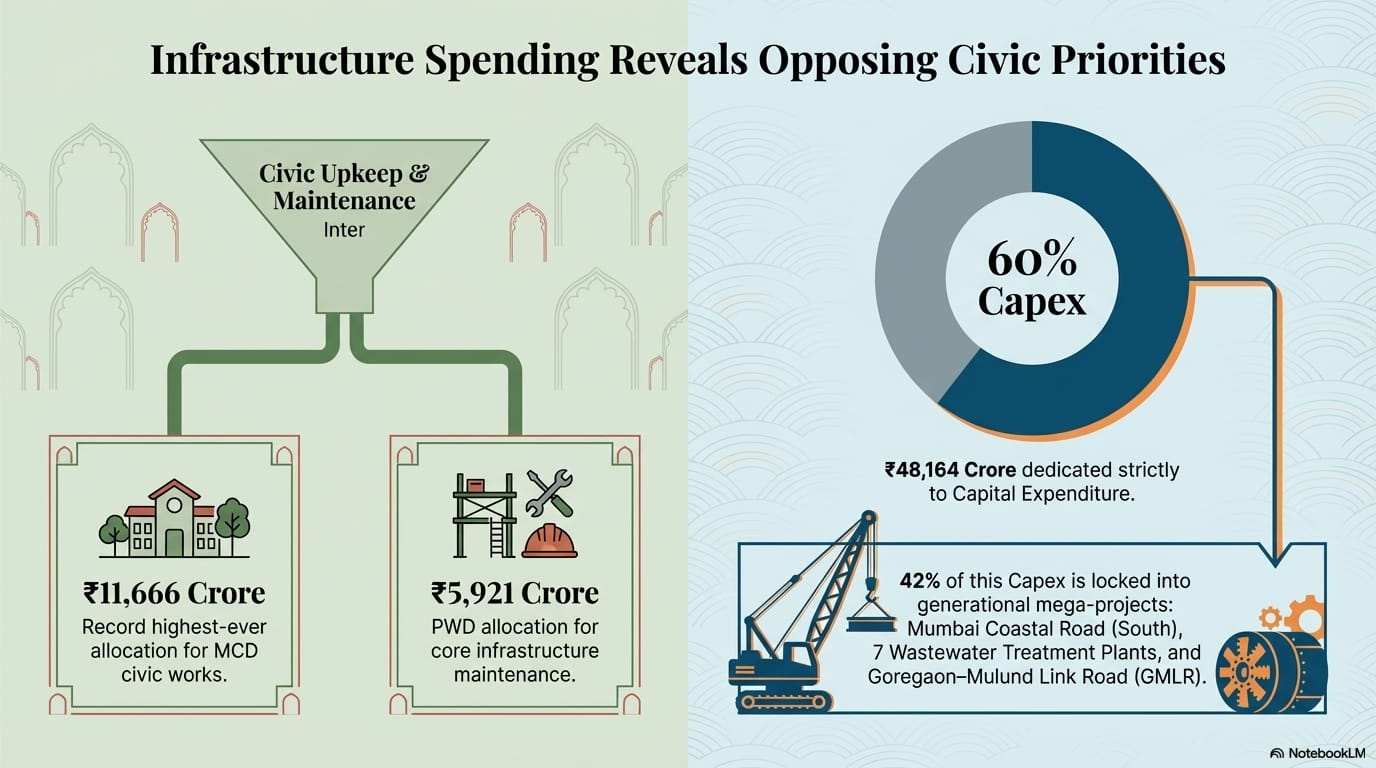
Here's where the divergence sharpens. Delhi's spending leans into civic upkeep — Rs 11,666 crore for municipal works and Rs 5,921 crore for maintenance. Mumbai, on the other hand, is going all in on capex, with nearly 60% of its budget (Rs 48,164 crore) dedicated to long-term infrastructure. Nearly half of that is locked into mega-projects like the Coastal Road and Goregaon-Mulund Link Road.
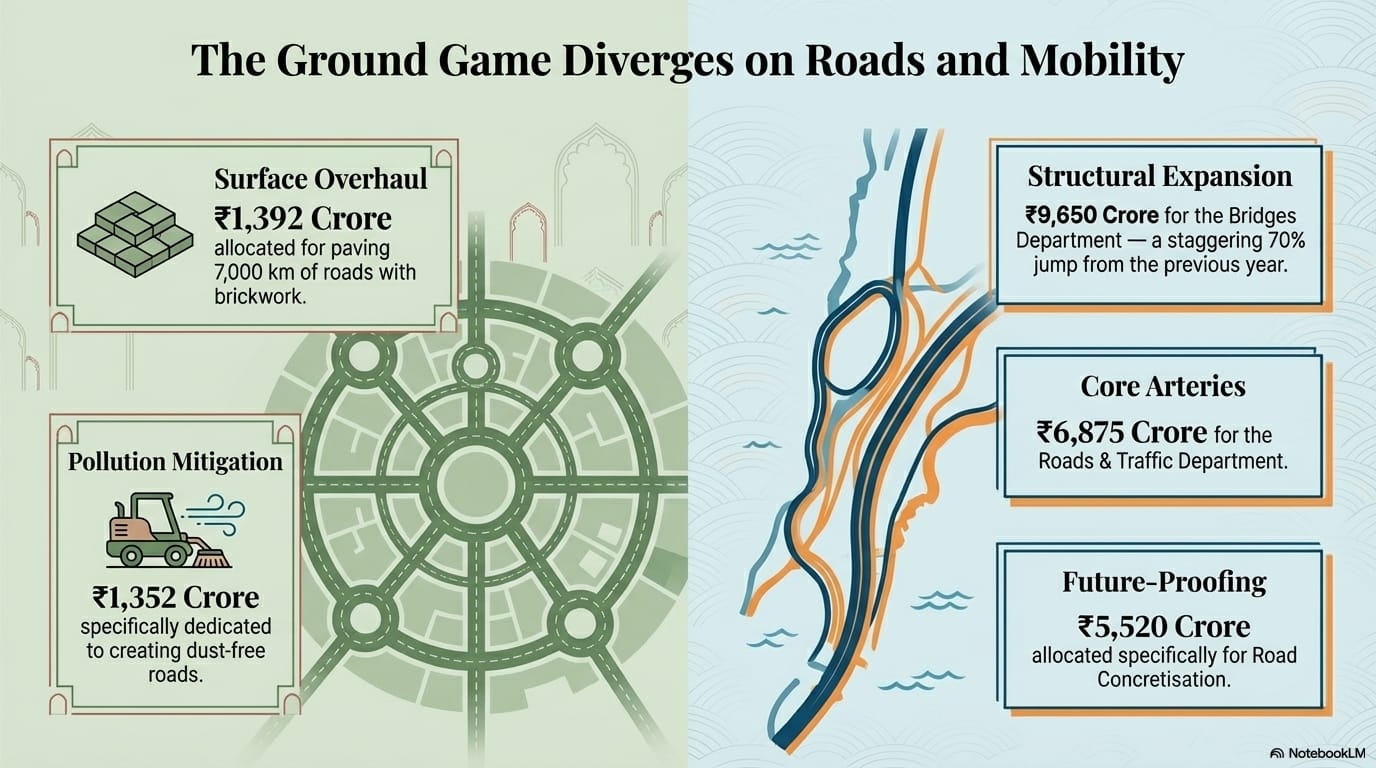
Delhi is fixing what exists — Rs 1,392 crore to pave 7,000 km of roads, alongside Rs 1,352 crore to tackle dust pollution. Mumbai is building what's next — Rs 9,650 crore for bridges (a 70% jump), Rs 6,875 crore for arterial roads, and Rs 5,520 crore for concretisation.
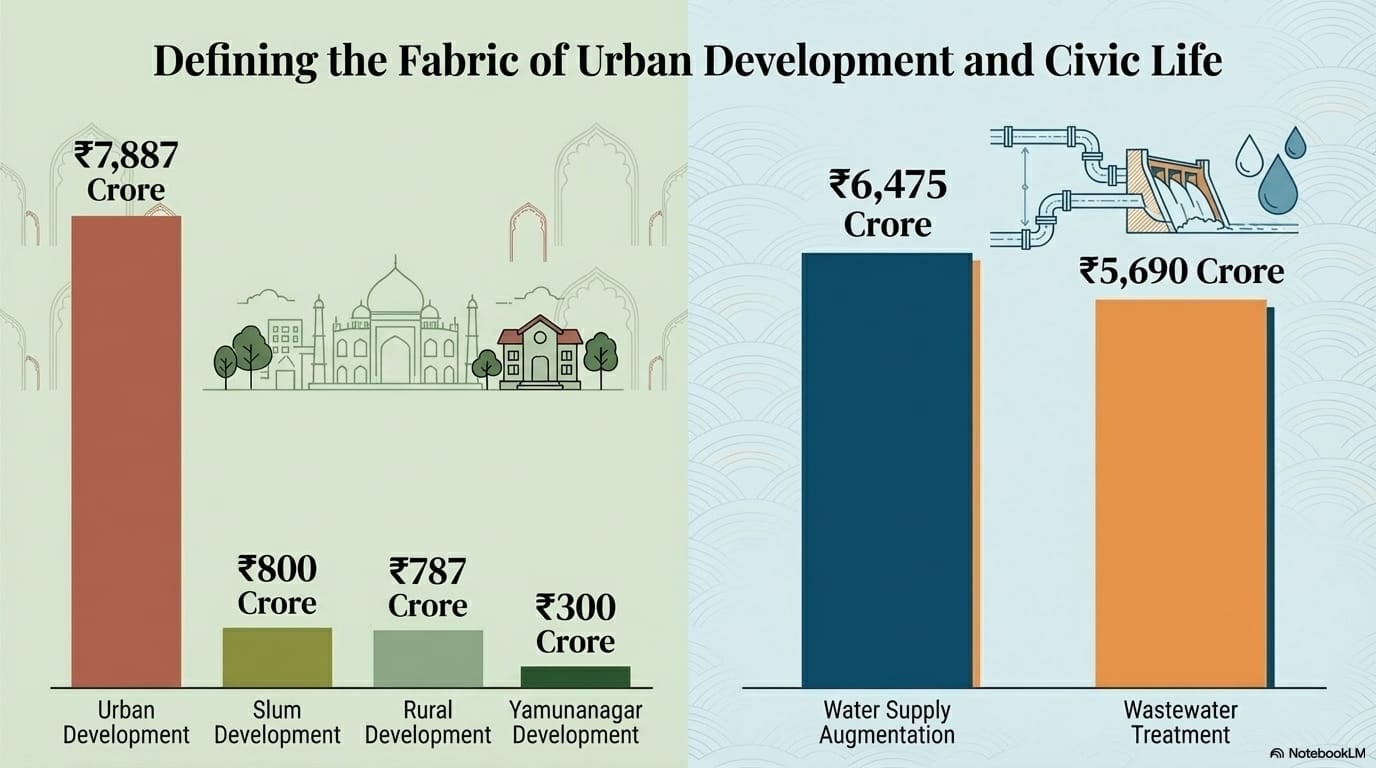
Delhi's social spending stands out—Rs 7,887 crore on urban development, with targeted allocations for slum and rural pockets. Mumbai's priorities tilt toward water security, with Rs 6,475 crore for supply augmentation and Rs 5,690 crore for wastewater treatment.
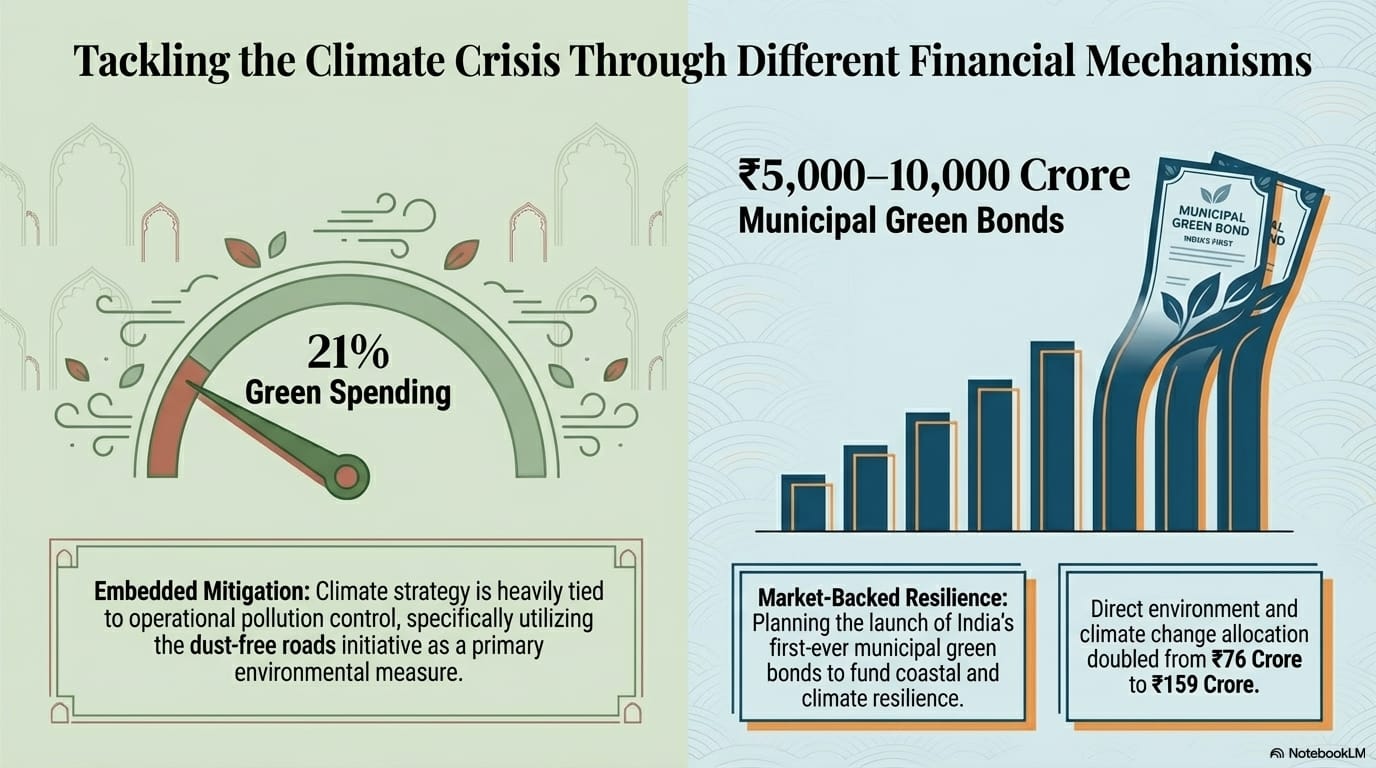
Delhi embeds climate action within operations — 21% green spending, largely tied to pollution control like dust-free roads. Mumbai is taking a financial markets route — planning Rs 5,000–10,000 crore in green bonds, signalling a shift toward market-backed climate resilience.
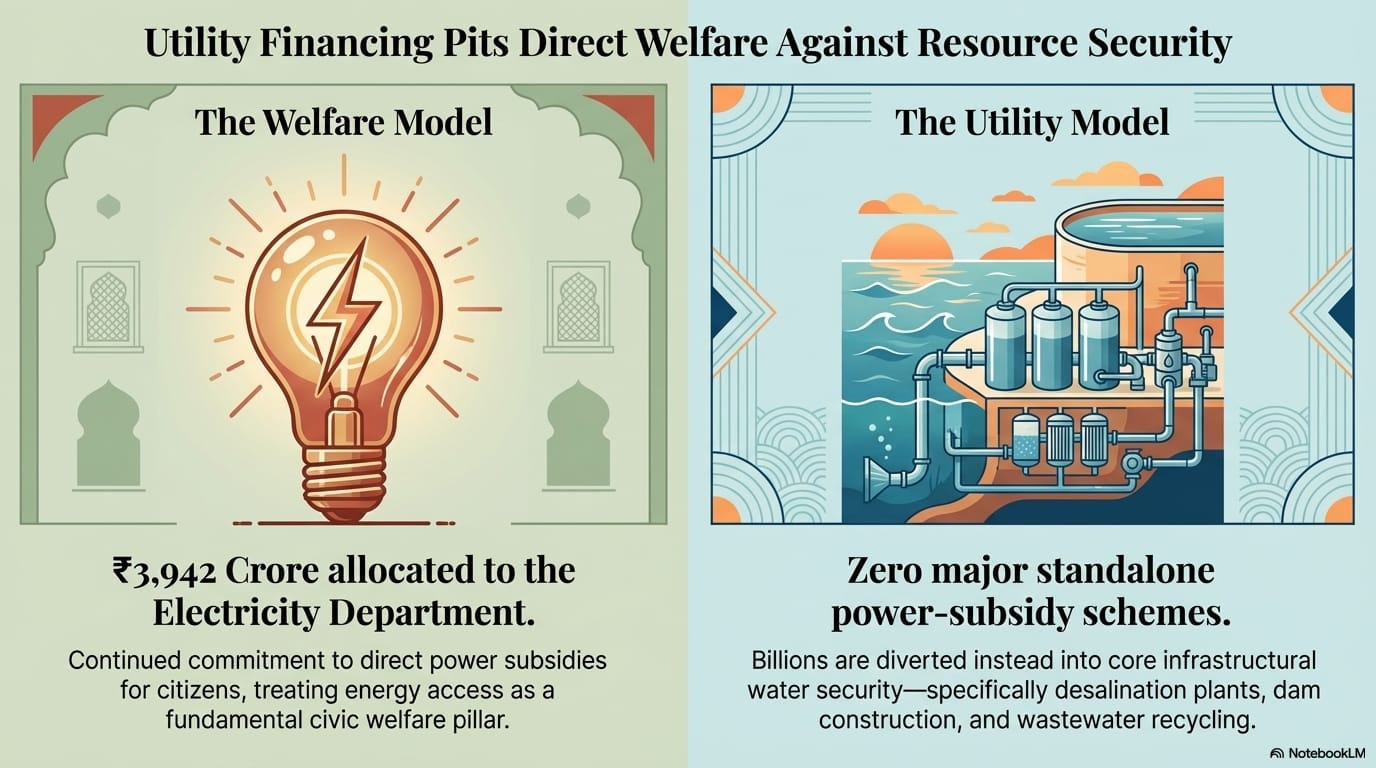
Delhi continues to subsidise — Rs 3,942 crore for electricity, reinforcing energy as a welfare right. Mumbai skips subsidies altogether, channeling funds into desalination, dams, and recycling. It's a classic trade-off: immediate relief vs long-term resource security.
ALSO READ: Delhi Budget 2026: From Green Budget To Electricity Subsidies - Check Key Highlights
Essential Business Intelligence, Sharp Market Insights, Practical Personal Finance Advice, Daily Fuel, Gold and Silver Prices and Latest Stories — On NDTV Profit.