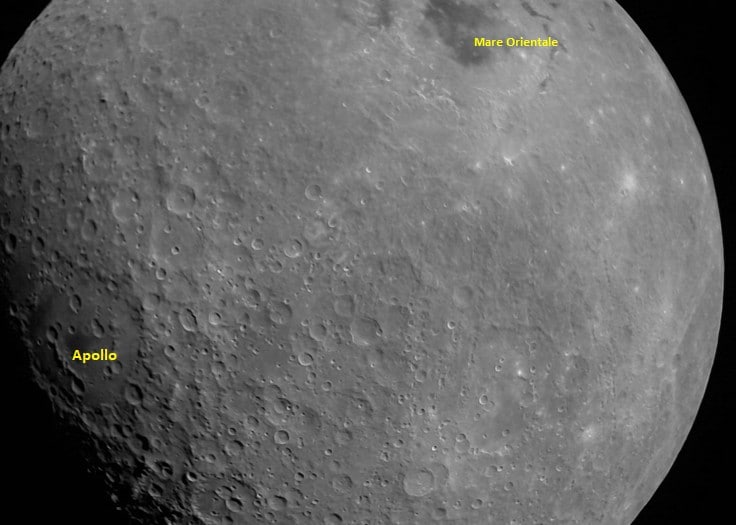
Chandrayaan-3 successfully landed near the south pole of the moon, making India the first country to achieve this feat. It also joins an elite list of three countries—U.S., Russia and China—to successfully land a module on the lunar surface.
The spacecraft launched last month touched the lunar surface at 6:04 p.m., according to the Indian Space Research Organisation.
"India is on the Moon," announced ISRO Chief S Somanath after the Vikram lander module was on the moon. Celebrations broke out at ISRO's Mission Operations Complex in Bengaluru as the Chandrayaan-3 lander module made the soft-landing.
Also Read | Layoffs Are Rising In Tech, But These Skills Are Helping People Unlock Better Pay
Chandrayaan-3 Mission:
'India🇮🇳,
I reached my destination
and you too!'
: Chandrayaan-3
Chandrayaan-3 has successfully
soft-landed on the moon 🌖!.
Congratulations, India🇮🇳!#Chandrayaan_3#Ch3August 23, 2023 
 Indian Markets Turning Corner After Two Tough Years, Says Sandeep Tandon
 NDTV Profit Ignite 2026: Experts See Opportunity In Equities, Stay Bullish For Long-Term
 Buy Right, Sit Tight Does Not Work for Individual Stocks, Says Dinshaw Irani
 'Worst Is Behind': Quant MF Sees Market Bottom, Flags 'Extreme Euphoria' In Midcaps
 India's Mutual Fund Industry Could Become A $1 Trillion Opportunity, Say Fund Managers
 'Foreign Investors Are Baraatis': Raamdeo Agrawal's Take On LTCG Tax
 Stay Invested Through Market Cycles: Raamdeo Agrawal at NDTV Profit Ignite
 Ramesh Damani Remains Bullish On India For Next 20-30 Years, Sees Bargains Amid Market Weakness
 CAS Came After A Long Consultation Process: SEBI Chairman Tuhin Kanta Pandey AT NDTV PROFIT IGNITE
 Aim To Cut FPI Onboarding Time From Mth To Five Days: SEBI Chairman Tuhin Kanta Pandey AT NDTV PROFI
The Pragyan rover will now analyse the surface of the moon in search of water. India will become the second country after China to have a rover operating on the moon.
The successful landing, after the failed moon landing of 2019, raises India's stature in the global space race. It laid to rest every fear after Russia's Luna-25 crashed on the moon earlier this week.
Prime Minister Narendra Modi joined the nation to congratulate ISRO on achieving this rare feat. "This is a historic movement and sounds the bugle for a developed India," said Modi, who was watching the historic landing on TV from South Africa.
Chandrayaan-3 lifted off from Sriharikota on July 14. The mission life on the Moon's surface will be of one lunar day, which is equivalent to 14 days on the Earth.
Why The Moon's South Pole Matters
The lunar south pole draws great interest from scientists worldwide because of the presence of water ice. Existence of water ice in sufficient quantities could be a source of drinking water for moon exploration and could help cool equipment. Water could also be broken down to produce hydrogen for fuel and oxygen to breathe, aiding humanity's efforts for a future lunar colony and deeper space explorations.
Previously, India's debut Moon mission—Chandrayaan-1—had detected traces of water on the lunar surface back in 2009.
According to NASA, the south pole is a good target for a future human landing because robotically, it's the most thoroughly investigated region on the Moon. Other than ice, the region may be rich in other mineral resources.
The floors of polar craters on the south pole reach frigid temperatures because they're permanently in shadow as a result of the low angle at which sunlight strikes the Moon's surface in the polar regions.
What Chandrayaan-3 Plans To Do
The Chandrayaan-3 lander houses seven scientific payloads. These include Chandra's Surface Thermophysical Experiment, or ChaSTE, to measure the thermal conductivity and temperature; an Instrument for Lunar Seismic Activity for measuring the seismicity around the landing site; and a Langmuir Probe to estimate the plasma density and its variations. A passive Laser Retroreflector Array from NASA is also part of the payload, and will be used for lunar laser ranging studies.
The rover carries two payloads—a LASER Induced Breakdown Spectroscope and an Alpha Particle X-ray Spectrometer—to ascertain the elemental composition around the landing site of Chandrayaan-3.
The Propulsion Module ferrying the Lander Module also has Spectro-polarimetry of Habitable Planet Earth payload to study the spectral and Polari metric measurements of Earth from the lunar orbit. It will be operated after the latter separates from it.
Essential Business Intelligence, Sharp Market Insights, Practical Personal Finance Advice, Daily Fuel, Gold and Silver Prices and Latest Stories — On NDTV Profit.