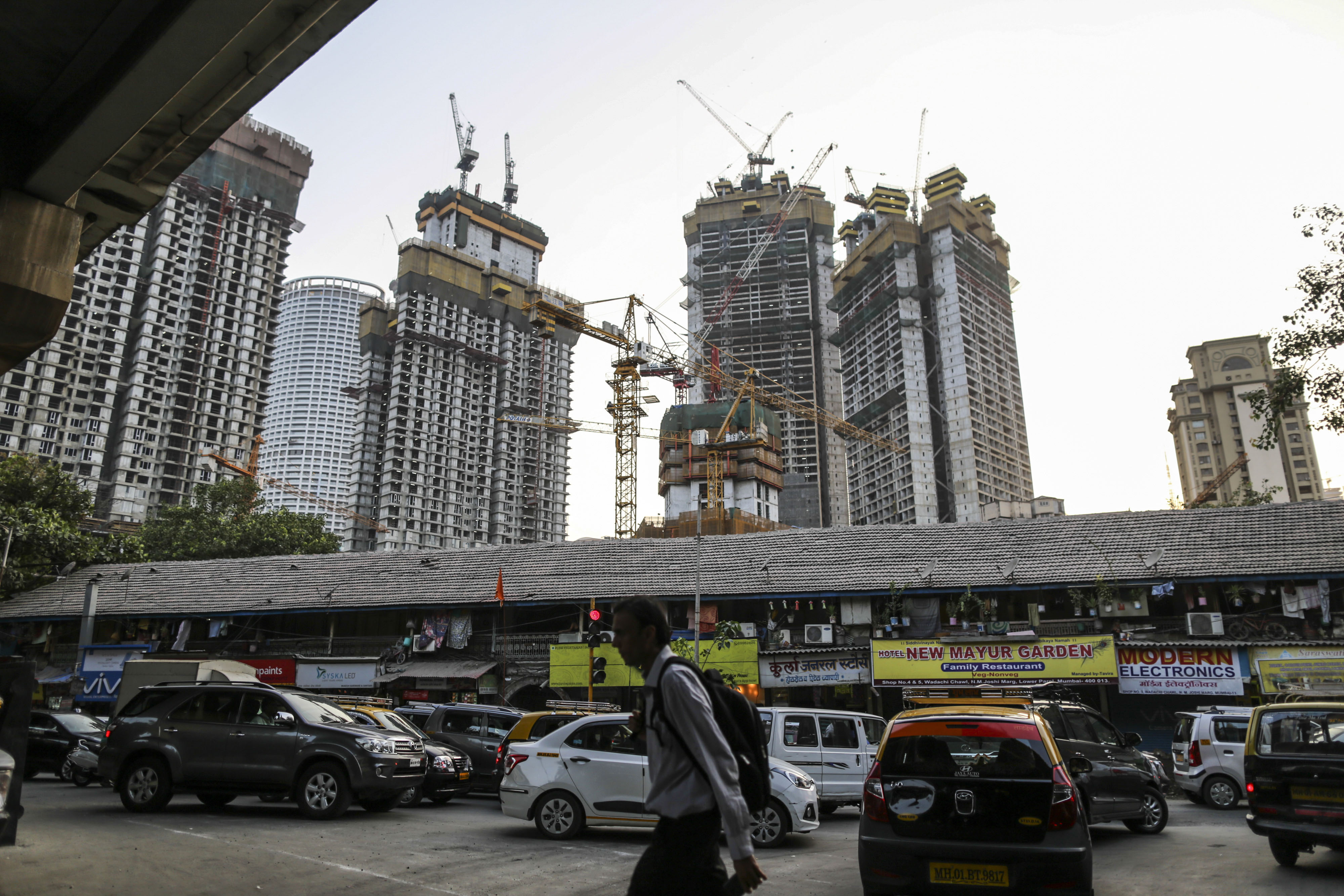
Come July 1, sale of all under-construction projects will attract a goods and services tax (GST) rate of 12 percent. The current indirect tax rate on the real estate sector is in the range of 9-11 percent, including service tax and VAT. But in the GST regime, developers will get the benefit of input tax credit. However, the impact of this on property prices is difficult to gauge at this stage because of the lack of clarity on abatement for land value, Niranjan Hiranandani, co-founder and managing director of Hiranandani Group told BloombergQuint on GST Countdown.
Wehave a 12 percent rate for the real estate sector that is inclusive of thevalue of land and developers will get the full input tax credit. How will thisrate impact pricing for home buyers once GST kicks in?
Also Read | Layoffs Are Rising In Tech, But These Skills Are Helping People Unlock Better Pay
There are three aspects. The firstaspect of it is the transition phase. The second is the fact that propertythat has already been sold, we have already paid 1 percent value added tax (VAT)and the third part of it is the development which will take place post July 1.
If you have already paid VAT, unfortunately, the issue looks very complex. A higher rate of tax, that is, 12 percent will definitely be applicable on the balance amount of payment made post July 1 but you will get input credit as far as the inputs which have been put into the project. That's something which is going to be available to you.
For instance, I have brought aproperty in January this year; so far, I paid 1 percent VAT. For this period,there is no tax credit but 24 days from now, I will pay 12 percent tax on thebalance payments and you, the developer, will get input tax credit forthat. How will you pass on that benefit to me?
That's a problem, and I think thetransition phase is not too clear on how this will happen and to what extent theinput credit will be available. All those things are not documented in the lawas yet. So, I think the transition phase certainly requires clarificationsespecially in context of the land component. Earlier, almost 45-50 percent setoff was allowed on land cost under as abatement. That part of it now looksconfusing.
We still don't have the final extent of abatement. Working out a calculation is not feasible at this point of time unless we get those figures. We are hoping that a clarification will be issued after the GST Council's June 11 meeting.
Having said that, in the future, affordable housing segment could benefit because the land cost would be lower in the areas where affordable housing is taking place and the set-off would be sufficient to cover all the other costs. Hence, there is a likelihood of the overall taxes remaining approximately the same as it was earlier.
But in case of higher-priced properties, I think the challenge will be that the input costs will go up and so, the cost to the end customer will be higher. So, this segment is going to be more expensive.
Also Read: GST: Consumer Electronics Retailers Brace For Transition Pain
What segments, other than affordable housing, will benefit, if at all, as a result of GST?
Since construction costs will be ahigher percentage of total cost in the affordable housing segment, the benefitof input tax credit will be significant.
Tax on goods and contracts currently comes to 18 percent. Of course, each project will have a different costing ratio as well as the benefit of input tax. But I think overall, affordable housing segment will be better off.
But middle-class housing will cost higher in the GST regime, because in the Mumbai region or the Mumbai Metropolitan Region, the land cost is definitely higher as compared to the rest of the country. So if the abatement of land comes, if it does, at a rate less than today, it will lead to increase in prices.
Currently, on purchase of under-construction property, the tax rate is 9-11 percent. Under GST, there is one rate of 12 percent, in addition to stamp duty and registration costs?
Stamp duty will continue; in fact, stamp duty may go up by 1 percent (in Maharashtra). There is a question of trying to arrive at the valuein terms of loss of octroi etc. Thatis also something which is likely to come up.
Yes, but the fact that developers will get input tax credit leads one to believe that prices may go down. Therewill be an anti-profiteering committee that will sit in judgment of whether the benefits of GST are passed on to the customers. If prices are likely to go up, as you say, how will developers explain the increase to the anti-profiteering committee?
Idon't see a problem relating to that. The Real Estate (Regulation and Development) Act, 2016 has brought in transparency - all the costs, other inputs in terms of whatis the projected cost, what is the taxation, all will be transparently disclosed. So I don't think there will be a problem in terms of what is thebenefit available to the developer in terms of input tax credit and otherthings. I think it will be totally transparent and certified from the charteredaccountants and so on and so forth. I don't think that will really be aproblem.
But the problem is, is it ultimately going to cost you more or not depending on the state and the benefit in terms of input tax credit and the set-off against land – that's a question mark till today in my mind and I would seek clarity on that to see what is the real benefit to the end customer in terms of input tax credit; especially in the transition mode.
Also Read: GST Countdown: ‘We Are At The Mercy Of GSTN'
Assuming that the abatement on land doesn't come in, howdoes the math look then?
For the people who have already purchased property,obviously there is going to be an additional tax which was not envisaged when they bought the property. So that part of it is definitely an additional taxwhich they didn't envisage. At least prospectively, he or she will know what isgoing to be the additional tax if they buy the property.
In the transition phase, the higher tax of 12 percent will come in from July 1 and there is likely be a part (land) where we won't get the benefit that we get today; to that extent it's bound to be onerous on the buyer.
So, what advise would you give to someone who is very close to buying property – seal the deal today or wait till GST kicks in?
No, I don't think so. You see what has happened is because of the confusion, the opportunities available to the buyer are so much more. When the markets are shaken orwhen the markets are depressed, that's the right time to buy an apartment. Ifpeople buy it only in boom times, it is good for the developer, butif you're asking from a customer's view point, obviously when the markets aresluggish, they get better options from the developer, they get better terms.
So, I don't think postponement is a good idea though it will ultimately bring clarity both to the buyer as well as the developer. But lots of people are buying property because they want to make the purchase before July 1. The logic is that they feel that whatever is the transition amount, pay that; at least that will not get stuck in the higher rates of duty subsequently. So a lot of people are paying deposits and taking properties before GST comes and also closing deals in terms of finished property before the end of the month.
Essential Business Intelligence, Sharp Market Insights, Practical Personal Finance Advice, Daily Fuel, Gold and Silver Prices and Latest Stories — On NDTV Profit.