(Bloomberg) --The US economy expanded at a robust pace in the third quarter as households and businesses stood tall in the face of global headwinds and uncertainty ahead of the November election.
Inflation-adjusted gross domestic product increased at a 2.8% annualized after rising 3% in the previous quarter, according to the government's initial estimate published Wednesday. The median forecast in a Bloomberg survey of economists was for a 2.9% pace.
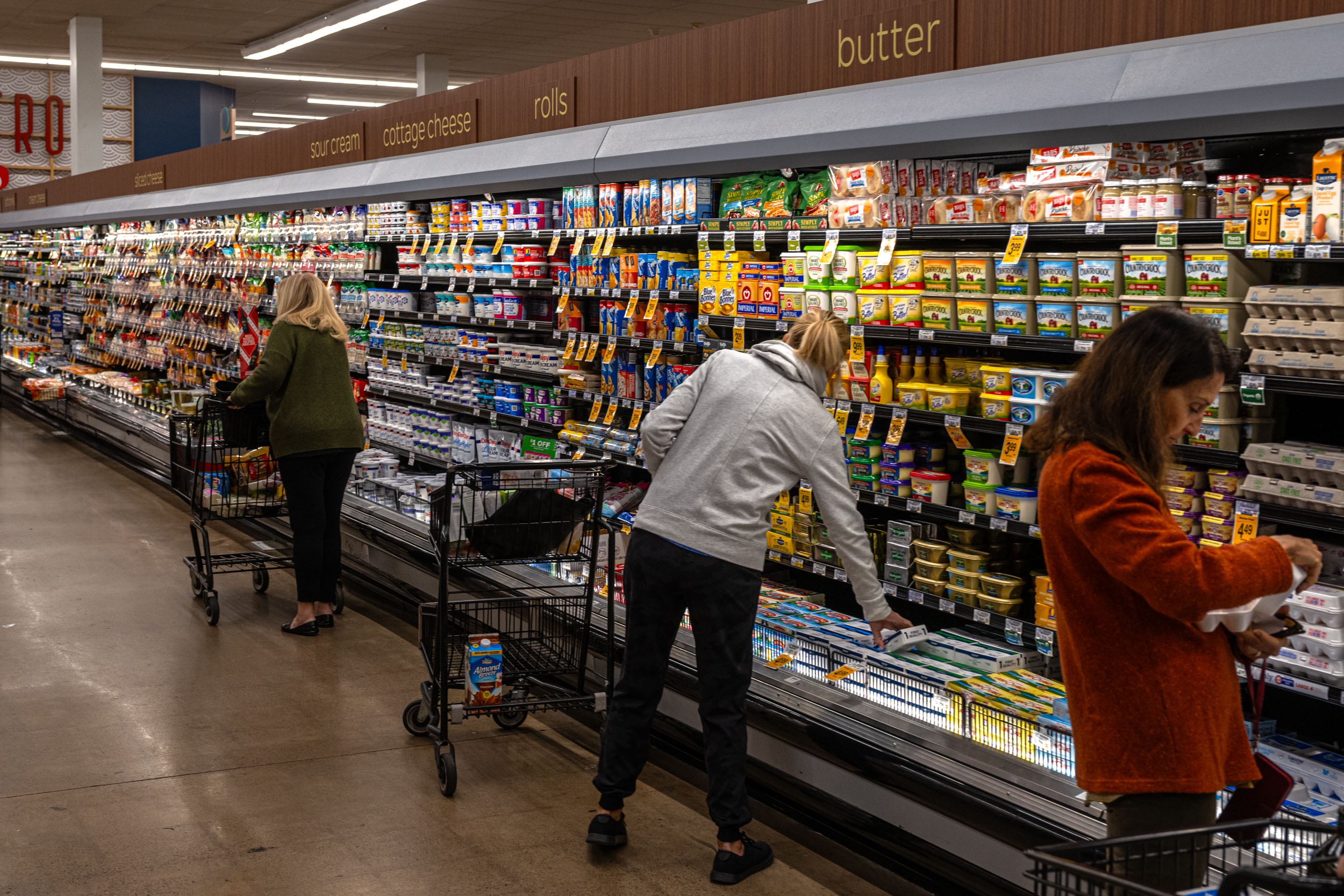
Consumer spending, which comprises the largest share of economic activity, advanced 3.7%, the most since early 2023.
At the same time, a closely watched measure of underlying inflation rose 2.2%, roughly in line with the Federal Reserve's target, figures from the Bureau of Economic Analysis showed.
The report card for the world's largest economy illustrates solid momentum in domestic demand as the Fed began unwinding its tightest monetary policy program in decades. It's also the last before Election Day, as American voters size up the general snapshot of US economic activity against their own financial situation, which has been beset in recent years by a high cost of living.
GDP in the third quarter was restrained by volatile trade figures, which showed net exports subtracted 0.56 percentage point from the top line. Retailers stepped up imports of consumer goods as the quarter drew to a close on fears of a lingering dockworkers strike. Inventories also subtracted 0.17 percentage point.
However, a measure of underlying growth trends favored by economists that combines consumer spending and business investment, known as final sales to private domestic purchasers, advanced 3.2%, the most this year.
Nonresidential fixed investment rose an annualized 3.3%, the slowest in a year and dragged down by spending on structures. However, business spending on equipment was the strongest since the second quarter of 2023. The acceleration in consumer spending was broad.
Residential investment declined an annualized 5.1%, the most since the end of 2022, as the housing market struggled under the weight of high mortgage rates and prices.
The numbers should keep the Fed on track to continue cutting interest rates in the coming quarters, including at their meeting next week. And while the figures showcase a solid momentum in the economy that may help bolster Vice President Kamala Harris's election chances against her opponent, former President Donald Trump, that growth has not been evenly distributed in recent years, as the share of income going to profits has remained well above historical norms.
A breakdown of corporate profits and employee compensation for the third quarter will be published next month with the BEA's second estimate of GDP for the period.
Essential Business Intelligence, Continuous LIVE TV, Sharp Market Insights, Practical Personal Finance Advice and Latest Stories — On NDTV Profit.