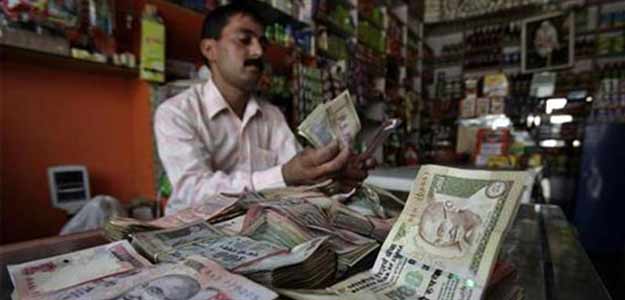
The Indian economy is facing a crisis like situation even though Prime Minister Manmohan Singh said last week that there is no question of going back to1991.
India's economic growth, measured in terms of GDP, grew at the slowest pace in a decade. Industrial production contracted a higher-than-expected 2.2 per cent in June from a year earlier, while headline inflation accelerated to a five-month high in July. The CPI inflation (retail) continues to be elevated at around 10 per cent.
Global brokerage Nomura says it should come as no surprise that economic misery is rising in India. The misery index is the difference between CPI inflation (retail inflation) and industrial production.
"This is the first time since 1991 that the index has remained persistently at these levels," Nomura economist Sonal Varma said in a note last week.
Such economic conditions hurt the poorer segments of society much more than the wealthy, Ms Varma said, adding that there are no short cuts.
"Taming inflation or the currency (as is the case currently) may require policies that result in increasing the economic misery for people in the near term," she said.
A weak growth trend lasting for 4-5 quarters would increase the risk of a vicious cycle building, whereby the economy becomes vulnerable and the risk increases of GDP growth sliding to 3.5-4 per cent, Morgan Stanley said in a note this month.
The economy's weakness has now spilled over to financial markets, with rupee trading at a record low and the Nifty hitting an 11-month low on Monday.
Essential Business Intelligence, Sharp Market Insights, Practical Personal Finance Advice, Daily Fuel, Gold and Silver Prices and Latest Stories — On NDTV Profit.