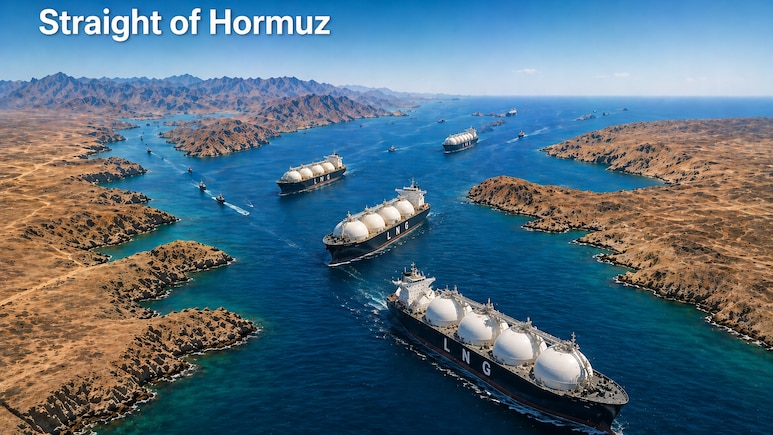
A sharp escalation in the Middle East crisis has upended global natural gas markets, delaying the much-anticipated wave of new LNG supply and triggering fresh volatility, the International Energy Agency (IEA) said in its latest quarterly report released on April 24, 2026.
According to the IEA, disruptions to shipping through the Strait of Hormuz since early March have effectively removed nearly 20% of global LNG supply, sending prices soaring across Asia and Europe to their highest levels since January 2023.
Markets by Zerodha posted on X, saying: "The IEA just released its Gas Market Report. It's a picture of chaos. Before the West Asian war, the world expected a massive LNG wave. That story is now effectively dead."
Also Read | Layoffs Are Rising In Tech, But These Skills Are Helping People Unlock Better Pay
ALSO READ | 'Putin Wants War': Lip Reader Claims What Donald Trump Told King Charles III During White House Visit
The IEA just released its Gas Market Report. It's a picture of chaos. Before the West Asian war, the world expected a massive LNG wave. That story is now effectively dead. So what happened, and how long until it recovers? 🧵👇
— Markets by Zerodha (@zerodhamarkets) April 28, 2026
The crisis has also reversed earlier signs of market stabilisation seen during the 2025–26 winter, when increased LNG output — particularly from North America — had eased prices.
The ripple effects are now being felt in India, one of the world's largest LPG importers, which sources over 60% of its requirement from overseas markets.
While LNG and LPG are distinct fuels, their pricing is closely linked to global energy benchmarks, allowing international shocks to quickly transmit into domestic markets.
The impact has been most visible in commercial LPG cylinder prices. In Delhi, rates for 19-kg cylinders have surged to Rs 2,078.50 in April, up by roughly Rs 300 to Rs 400 compared to the Rs1,740 to Rs 1,900 range seen in January-February, before the conflict intensified. Similar trends are visible in other metros, with Mumbai prices crossing Rs 2,000.
In contrast, domestic LPG prices have remained largely stable at around Rs 913 per 14.2-kg cylinder, reflecting government intervention and regulated pricing mechanisms aimed at shielding households from global volatility.
ALSO READ | Iran Pleading To Open Hormuz, Saying 'We're In State Of Collapse', Claims Donald Trump
The IEA also warned that damage to key LNG infrastructure in the Middle East — particularly in Qatar — could delay supply expansion by at least two years, potentially tightening global gas markets through 2026 and 2027.
This prolonged imbalance may continue to exert upward pressure on energy prices worldwide.
For India, the divergence between market-linked commercial LPG and subsidised domestic cylinders highlights the uneven impact of global energy shocks — raising input costs for businesses while temporarily insulating household consumers.
Essential Business Intelligence, Sharp Market Insights, Practical Personal Finance Advice, Daily Fuel, Gold and Silver Prices and Latest Stories — On NDTV Profit.