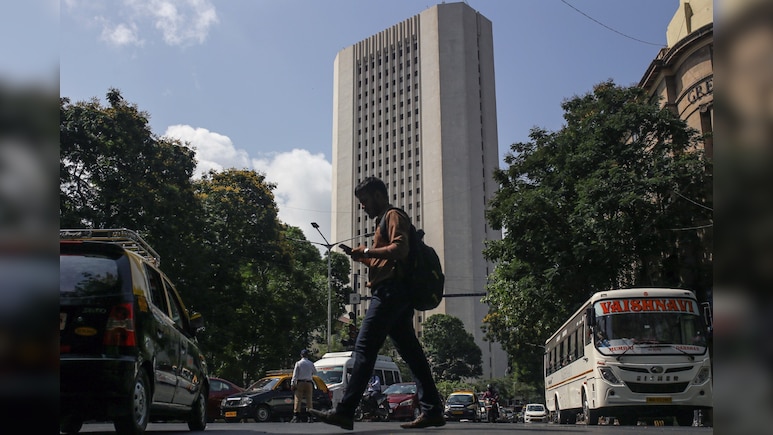
The Reserve Bank of India is expected to keep interest rates unchanged on Wednesday as policymakers assess whether higher energy costs from the renewed Middle East conflict spill over into broader inflation before raising borrowing costs.
The central bank's six-member Monetary Policy Committee, headed by Governor Sanjay Malhotra, is expected to leave the repurchase rate unchanged at 5.25%, according to all but one of 30 economists surveyed by Bloomberg. Policymakers are also likely to retain a neutral stance as inflation remains well within the RBI's 2%-6% tolerance band.
The RBI targets inflation at the 4% midpoint of the tolerance band, and Malhotra has said policymakers would respond only if price pressures become more broad-based rather than driven by temporary supply shocks.
Also Read | Layoffs Are Rising In Tech, But These Skills Are Helping People Unlock Better Pay
"We think the best thing to do amid this volatility is nothing," Barclays Plc economist Aastha Gudwani wrote in a note. Policymakers face an environment that is "no less challenging" than in June, supporting the case for the MPC to remain on pause, she said.
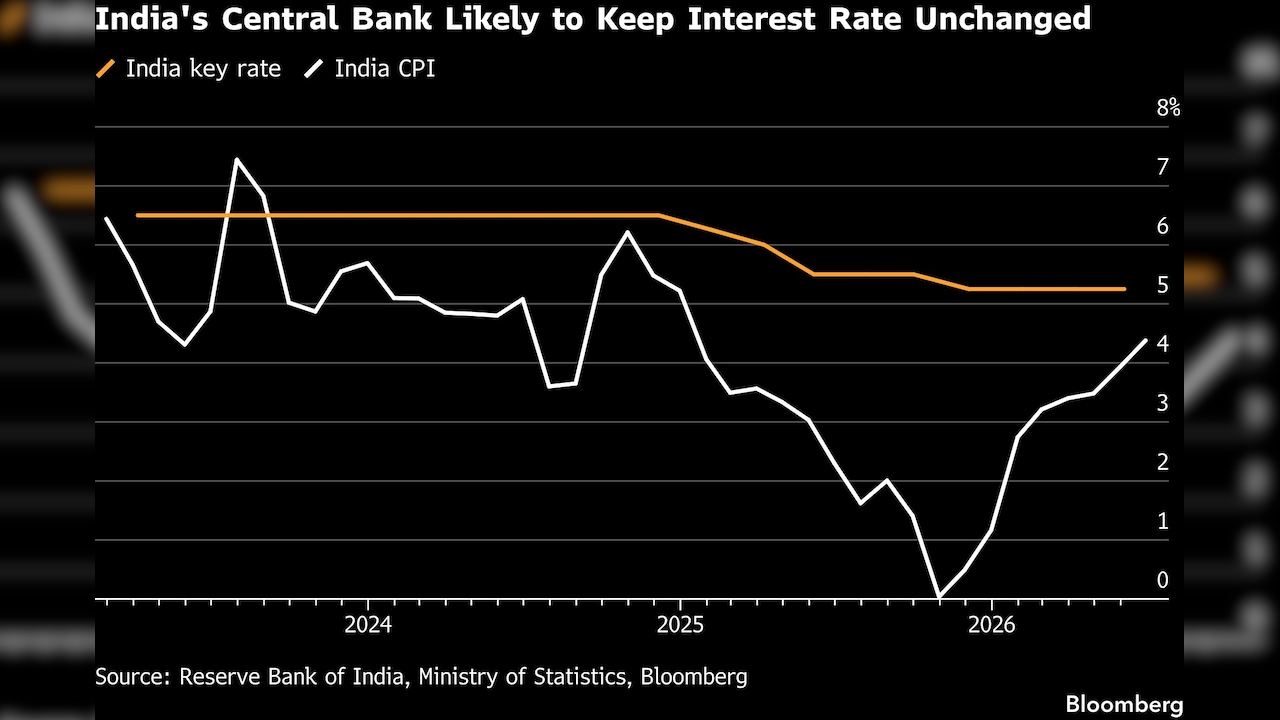
| India's retail inflation rate breached the RBI's target for the first time in 17 months, accelerating to 4.38% in June. Signs are emerging that price pressures may prove more persistent. The country's largest consumer companies are preparing a second straight quarter of price increases on products ranging from toothpaste to tires and paint, adding to signs that higher input costs are being passed on to consumers. The finance ministry last week issued its first official warning that inflation was broadening beyond food, saying higher fuel costs and unfavorable weather were feeding through to a wider range of consumer prices. Financial markets are fully pricing in a hold this week after the governor sought to temper expectations of any policy tightening in the near-term. Interest-rate swaps imply about 75 to 100 basis points of future rate hikes, although markets have pushed expectations for most of those increases into next year, according to Tata Asset Management. With a hold all but priced in, investors will look to Malhotra for signals on what could prompt future rate hikes and how the RBI plans to manage the rupee after easing rules to attract foreign-currency inflows. Many economists, including Santanu Sengupta of Goldman Sachs Group Inc. continue to expect the RBI to begin raising rates in October. Malhotra is scheduled to announce the policy decision in a televised address at 10 a.m. in Mumbai. Here's what analysts will be watching: Growth-Inflation OutlookMost economists expect the RBI to leave its inflation forecast unchanged at 5.1% for the fiscal year ending March 2027. Growth is also expected to remain at 6.6%. Those projections, published in June, were based on an assumption that crude oil would average about $95 a barrel. While Brent crude briefly touched $100 a barrel amid renewed Middle East tensions, it has traded below the RBI's assumption for much of the period. As a result, some economists, including those at Citigroup Inc. and Goldman Sachs Group Inc., see scope for the central bank to lower its inflation forecast. MarketsThe rupee has rebounded as much as 3% from its record low in May after the RBI and the government introduced measures to attract foreign capital. Over $40 billion has flowed into India since the central bank eased rules on foreign-currency deposits and overseas borrowing. State Bank of India estimates the measures could attract $80 billion to $85 billion by December this year. Most analysts expect the RBI to absorb much of those inflows into its foreign-exchange reserves, limiting further appreciation of the rupee while supporting domestic liquidity. 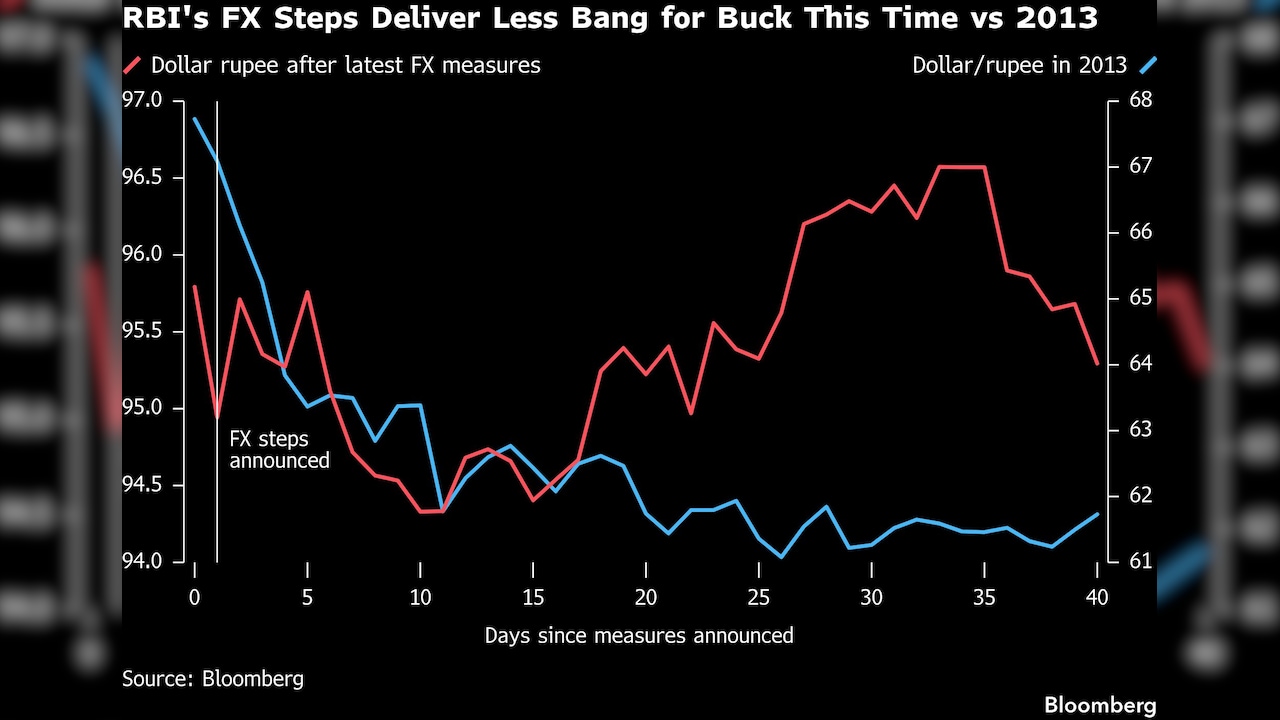 Yields on Indian government bonds have edged higher since June as renewed geopolitical tensions revived inflation worries, although shorter-term bonds have continued to outperform on expectations the banking system will remain flush with cash. “The market remains cautious about geopolitical developments in the Middle East and is therefore likely to favor the shorter end of the curve over longer-dated bonds,” said Sameer Karyatt, managing director and head of trading at DBS Bank India. The bank expects the benchmark 10-year government bond yield to remain above 6.70%. It closed at 6.83% on Monday. |
(This story has not been edited by NDTV staff and is auto-generated from a syndicated feed.)
Essential Business Intelligence, Sharp Market Insights, Practical Personal Finance Advice, Daily Fuel, Gold and Silver Prices and Latest Stories — On NDTV Profit.