- Food inflation in India was about 6% in August and is not expected to persist this year
- Monsoon rainfall is 15% below normal but crop production remains strong with minor planting drop
- Indian economy shows resilience amid monsoon shortfall and Middle East geopolitical uncertainties
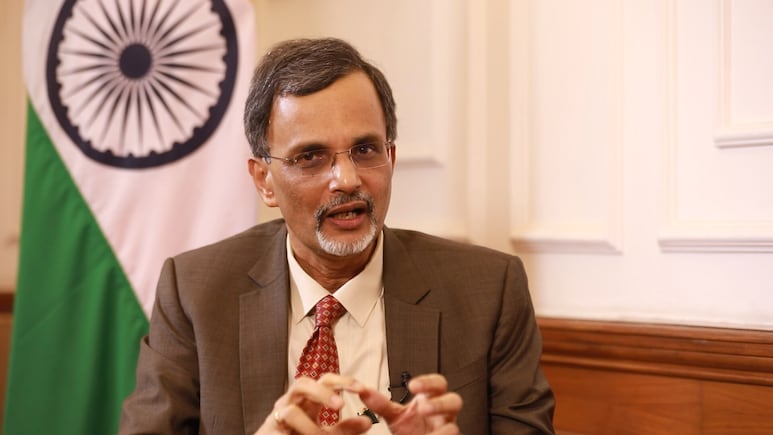
Chief Economic Adviser V Anantha Nageswaran said on Tuesday that food inflation in India, which stood at about 6% in August, is not expected to continue through the rest of the year, as the monsoon shortfall is "manageable" and crop production is anticipated to remain strong.
Food and beverages make up 36.75% of India's consumer price index basket, a measure used to track retail inflation.
Nageswaran said the Indian economy is expected to stay resilient despite facing two major challenges: a 15% shortfall in monsoon rainfall and rising geopolitical uncertainties in the Middle East, ANI reported, citing an official speech at an event hosted by the Associated Chambers of Commerce and Industry of India.
Also Read | Layoffs Are Rising In Tech, But These Skills Are Helping People Unlock Better Pay
ALSO READ: Gold Loses Glitter As Fed Decision Nears, Slips Below $4,300 On Strong Rate Hike Bets
Speaking to industry leaders, the official pointed out that although the monsoon deficit is currently about 15%, summer crop planting has fared surprisingly well, showing only a slight drop of 2% to 3% compared to the previous year. Yields for most summer-planted kharif crops are expected to stay strong, despite the seasonal fluctuations in rainfall.
Despite renewed geopolitical uncertainty driving crude oil prices above $107-108 per barrel and lifting global bond yields in the past week, Nageswaran told industry leaders at Assocham's Managing Committee Meeting and Special Session that "the Indian economy is more likely to be resilient rather than becoming more vulnerable", pointing to strong bank credit growth, solid GST collections, and sound corporate and banking sector balance sheets.
Observers and policymakers are closely monitoring whether the domestic economy can handle this new wave of instability as well as it managed during the market disruptions from March to July, according to CEA.
"This is a period of churn, and this is an inflexion point, and therefore what served us very well in the first 45 years since independence and then the next 30 years in the liberalisation era, both of these things may not necessarily be adequate for the next 25 years. We need to raise our game in multiple respects," Nageswaran said.
ALSO READ: August WPI Inflation: Wholesale Inflation Rises To 9.92% On Higher Fuel, Food Prices
The government is closely tracking the changing geopolitical situation and will evaluate specific responses as circumstances develop, he added.
The government's domestic policy will continue to support growth, grounded in macroeconomic stability, ongoing deregulation, and focused reforms designed to enhance the business environment, stated Nageswaran.
Essential Business Intelligence, Sharp Market Insights, Practical Personal Finance Advice, Daily Fuel, Gold and Silver Prices and Latest Stories — On NDTV Profit.