- India's kharif sowing area fell 1.5% to 105.7 million hectares by August 17
- Rice acreage dropped 3.2% to 40.5 million hectares amid deficient monsoon rains
- Coarse cereals saw a 1.9% decline, with ragi down 27% and maize down 4%
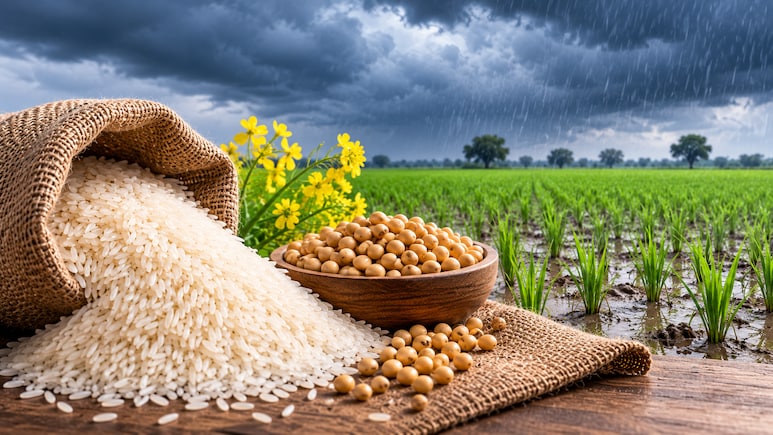
India's kharif sowing acreage fell 1.5% year-on-year to 105.7 million hectares as of August 17, with deficient monsoon rainfall weighing on planting activity, particularly for rice, coarse cereals and oilseeds, according to a report released by ICICI Direct on Tuesday.
Kharif acreage stood at 107.3 million hectares during the corresponding period last year. The decline comes as cumulative monsoon rainfall through August 24 remained 13% below the long period average (LPA), while rainfall between August 1 and 24 was 15% below normal.
Rice has taken the biggest hit among major kharif crops. Acreage under the crop fell 3.2% year-on-year to 40.5 million hectares. Rice is the largest kharif crop and remains a key indicator of the season's progress.
Also Read | Layoffs Are Rising In Tech, But These Skills Are Helping People Unlock Better Pay
Coarse cereal acreage declined 1.9%, mainly due to a sharp 27% fall in ragi sowing and a 4% decline in maize. However, jowar and bajra acreage increased 6.3% and 2.1%, respectively.
ALSO READ: Onion Prices Spike 60%: Sluggish Kharif Crop To Wholesale Pressure - 3 Reasons Behind The Surge
Oilseed acreage was marginally lower by 0.2%. Within the segment, soybean acreage declined 1.1%, while castor seed acreage dropped 20.8%. Sugarcane and cotton acreage also fell 0.7% and 0.3%, respectively.
Pulses and jute provided some support to the complete sowing. Pulse acreage increased 1.3% year-on-year to 11.4 million hectares, while jute and mesta acreage rose 1.8%. The report said sowing activity has improved, with the gap in rice acreage narrowing along with improvements in pulses and coarse cereals.
The uneven rainfall pattern remains a key concern. East India recorded a 27% rainfall deficit through August 24, followed by South India at 22%. Northwest India was 11% below LPA, while Central India recorded a relatively smaller 2% deficit.
Reservoir storage offers some support. As of August 20, live storage across 150 reservoirs stood at 117.3 billion cubic metres, equivalent to 64.3% of their combined capacity. However, current storage was only around 82.6% of last year's level.
ALSO READ: El Nino Bites: India On Track To Record Worst Monsoon In 17 Years
Western India had the highest storage at 81.5% of capacity, followed by Central India at 65.8% and Eastern India at 58.3%. The report said relatively better reservoir levels in these regions could support kharif sowing in the coming weeks.
Despite recent pressure on food prices from sugar and onions, cereal prices are expected to remain relatively stable due to surplus government stocks, according to the report.
Essential Business Intelligence, Sharp Market Insights, Practical Personal Finance Advice, Daily Fuel, Gold and Silver Prices and Latest Stories — On NDTV Profit.