- The US Federal Reserve kept key lending rates at 3.5%–3.75% amid inflation concerns
- Inflation rose to 3.3% in March, the highest in 22 months, driven by energy price hikes
- The Fed's decision saw a rare dissent with four members favoring rate cuts
The US Federal Reserve has kept its key lending rates on hold, as the US-Iran war and resultant strain in energy supplies has sparked inflation concerns.
Accordingly, it has retained the benchmark lending rates, or the federal funds rate, in the range of 3.5%–3.75%. The decision was in line with estimate, as the CME FedWatch tool had projected a 99% probability of the Fed sticking to status quo.
"Inflation is elevated, in part reflecting the recent increase in global energy prices," said the statement issued by the Federal Open Market Committee (FOMC) following the conclusion of its two-day meeting on Wednesday.
Also Read | Layoffs Are Rising In Tech, But These Skills Are Helping People Unlock Better Pay
Notably, the US consumer price index-based inflation jumped 3.3% in March—the highest in 22 months—and sharply as compared to February, when it stood at 2.4%.
The Fed decision was not unanimous, as eight members voted to keep the rates on hold, whereas four were in favour of cuts. This was the highest level of dissent seen in the FOMC since 1992.
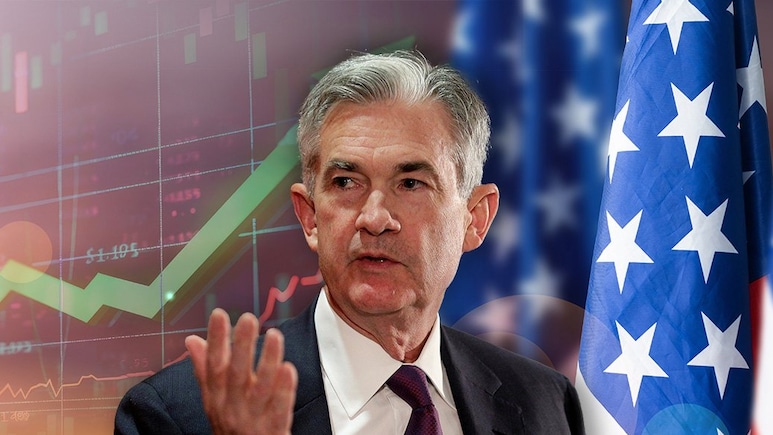
While Chair Jerome Powell was among the eight officials who voted against the rate cut, four others, including FOMC members Philip Jefferson, Anna Paulson, Christopher Waller and Stephen Miran voted in favour of lowering the rates.
Track LIVE Updates From Fed Chair Jerome Powell's Press Briefing
The FOMC stated that future rate decisions would depend on the incoming data, the evolving outlook, and the balance of risks. It, however, noted that the war in Middle East has raised cloud over the economic outlook.
"Developments in the Middle East are contributing to a high level of uncertainty about the economic outlook," the statement said, while noting that the monetary policy authority remains committed to achieving its goal of 2% inflation.
"The committee's assessments will take into account a wide range of information, including readings on labor market conditions, inflation pressures and inflation expectations, and financial and international developments," it noted.
The Fed had last slashed the rates in December 2025, when it announced a 25-basis point cut to support growth. Since then, however, inflation concerns have mounted. The outbreak of US-Iran war in late February has rattled the global energy market, with gas prices in the US also souring to a four-year high. The rising fuel costs, according to analysts, is expected to drag inflation high over the next couple of quarters.
ALSO READ: Gold Price Plunges 1.5% As Fed Keeps Rates Steady, Cites War-Triggered Inflation
Essential Business Intelligence, Sharp Market Insights, Practical Personal Finance Advice, Daily Fuel, Gold and Silver Prices and Latest Stories — On NDTV Profit.