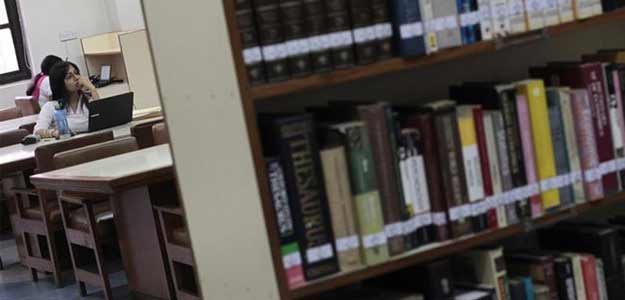
Indian students spend $7 billion or around Rs 45,000 crore per year on foreign education because of "sub-standard" quality of higher education in the country, according to a study by industry body Assocham and Mumbai-based Tata Institute of Social Sciences.
The study was made public a day after the prestigious Times Higher Education ranking revealed that none of India's universities could make it to the list of "100 most prestigious global universities". (Read)
Even the prestigious IITs have failed to create a mark, when it comes to research and innovation, reflecting the state of higher education in the country, the Assocham study says.
"While the much touted IITs have an annual enrolment of 10,000-15,000, focused only on the brightest of the bright, not a single great worldwide patent has emerged, nor have they produced a single Nobel Laureate. This is despite the government pouring thousands of millions of rupees into their establishment and upkeep," the study notes.
Interestingly, the money spent on foreign education is nearly 60 per cent of the funds Finance Minister Arun Jaitley has allocated to the education sector for next fiscal.
According to the study, 90 per cent of state and central funding goes into payment of salaries and creating physical infrastructure, leaving little money for research and innovation. Unsurprisingly, India ranks lowly when it comes to new patents and start-ups in technology and innovation, the study revealed.
"We still do not have a single equivalent of a Google, Facebook, Microsoft or Walmart or a Nike". Even a small country like Italy or Finland does better!" said DS Rawat of Assocham.
Other Highlights of the Study:
1) It is not just the elite who spend generously on good education but middle class families also spend their lifetime savings for educating their children abroad.
2) Many IITians, who go abroad for research, do not return home after obtaining their doctoral programmes.
3) Political interference and using universities as hubs for political activities compounds the problems.
4) Outdated curriculums, teachers and student unions ensure that status quo is preserved.
5) Government bodies like UGC and AICTE have a stranglehold over policy and have stifled any possible innovation and new ways of thinking.
Essential Business Intelligence, Sharp Market Insights, Practical Personal Finance Advice, Daily Fuel, Gold and Silver Prices and Latest Stories — On NDTV Profit.